
🚀 宇宙の記憶・カレンダー検索
🚀 象徴的な写真:
APOD第1回
🚀 創造の柱
🚀 スピリット火星着陸
🚀 ハッブル超深宇宙
🚀 地球へようこそ|ブルー・マーブル
🚀 エンケラドス
🚀 ベテルギウス
🚀 火星着陸
🚀 青い夕焼け
🚀 冥王星のハート
🚀 皆既日食
🚀 アースライズ再構築
🚀 ブラックホール
🚀 ウェッブ初画像
🚀 アポロ11着陸
APOD30周年(2025年6月16日)
人魚星雲超新星残骸
The Mermaid Nebula Supernova Remnant
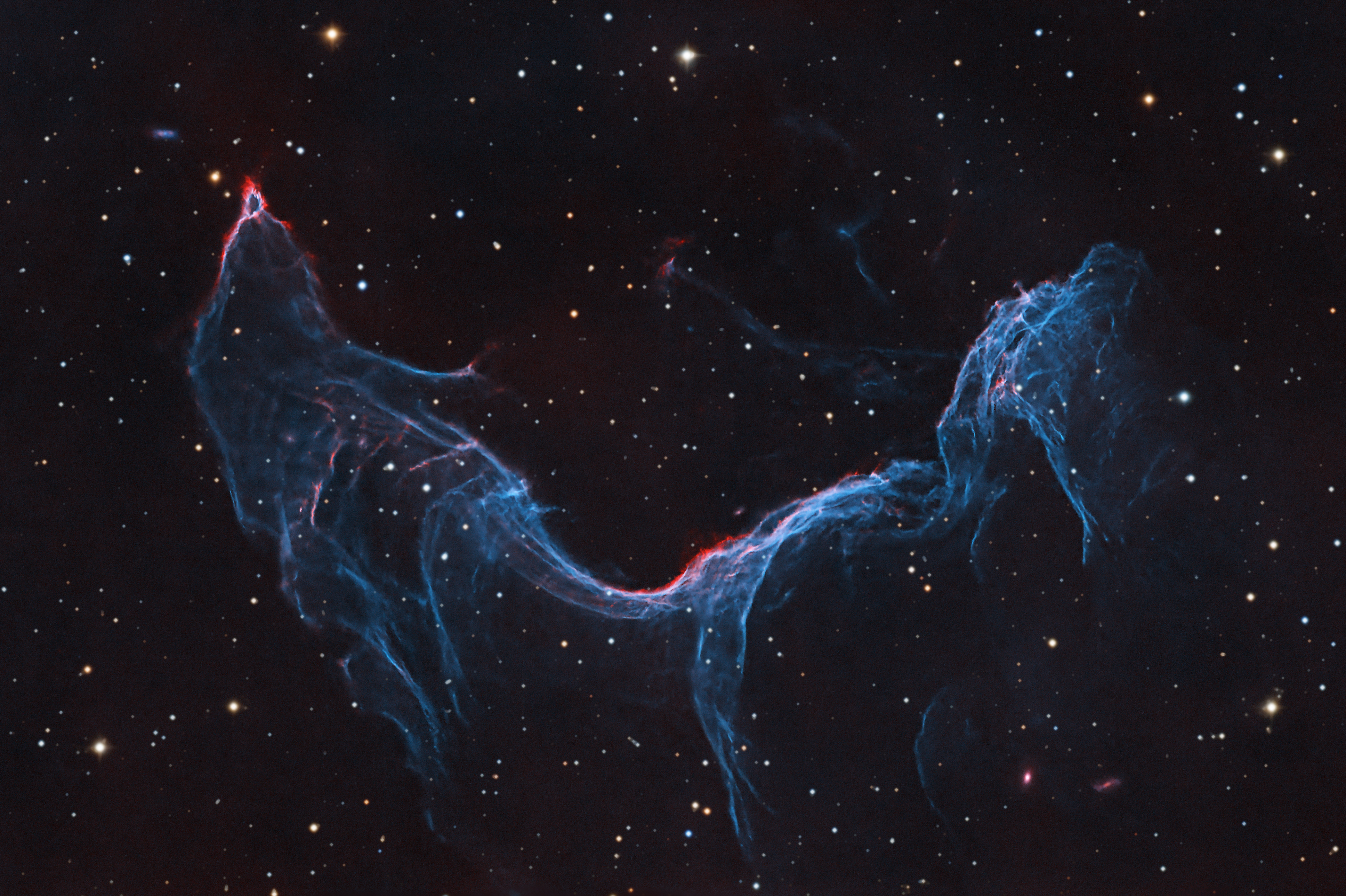
新しい星は死んだ星の残骸から生まれます。私たちの銀河系にある非常に質量の大きな星の重力崩壊とその後の死によって生じたガス状の残骸が、G296.5+10.0超新星残骸を形成し、ここで紹介する人魚星雲はその一部です。ベタ星雲としても知られる人魚星雲は、両面がほぼ円形という珍しい超新星残骸のサブクラスに属します。もともとX線で発見されたこのフィラメント状の星雲は、電波やガンマ線でも頻繁に研究されています。ここで見られる青色は二重電離酸素(OIII)に由来し、濃い赤色は水素ガスから放出されています。この星雲の人魚のような形は、星間磁場の測定に役立つことが証明されています。ギャラリー:昨夜のスーパームーン皆既月食
原文(English)
New stars are born from the remnants of dead stars. The gaseous remnant of the gravitational collapse and subsequent death of a very massive star in our Milky Way created the G296.5+10.0 supernova remnant, of which the featured Mermaid Nebula is part. Also known as the Betta Fish Nebula, the Mermaid Nebula makes up part of an unusual subclass of supernova remnants that are two-sided and nearly circular. Originally discovered in X-rays, the filamentary nebula is a frequently studied source also in radio and gamma-ray light. The blue color visible here originates from doubly ionized oxygen (OIII), while the deep red is emitted by hydrogen gas. The nebula's mermaid-like shape has proven to be useful for measurements of the interstellar magnetic field. Growing Gallery: Last night's supermoon eclipse
\ この感動を宇宙仲間にシェア /
宇宙をXでシェア
© Neil Corke;
Text: Natalia Lewandowska
(SUNY Oswego) / APOD