
🚀 宇宙の記憶・カレンダー検索
🚀 象徴的な写真:
APOD第1回
🚀 創造の柱
🚀 スピリット火星着陸
🚀 ハッブル超深宇宙
🚀 地球へようこそ|ブルー・マーブル
🚀 エンケラドス
🚀 ベテルギウス
🚀 火星着陸
🚀 青い夕焼け
🚀 冥王星のハート
🚀 皆既日食
🚀 アースライズ再構築
🚀 ブラックホール
🚀 ウェッブ初画像
🚀 アポロ11着陸
APOD30周年(2025年6月16日)
NGC 6727:暴れまわるヒヒ星雲
NGC 6727: The Rampaging Baboon Nebula
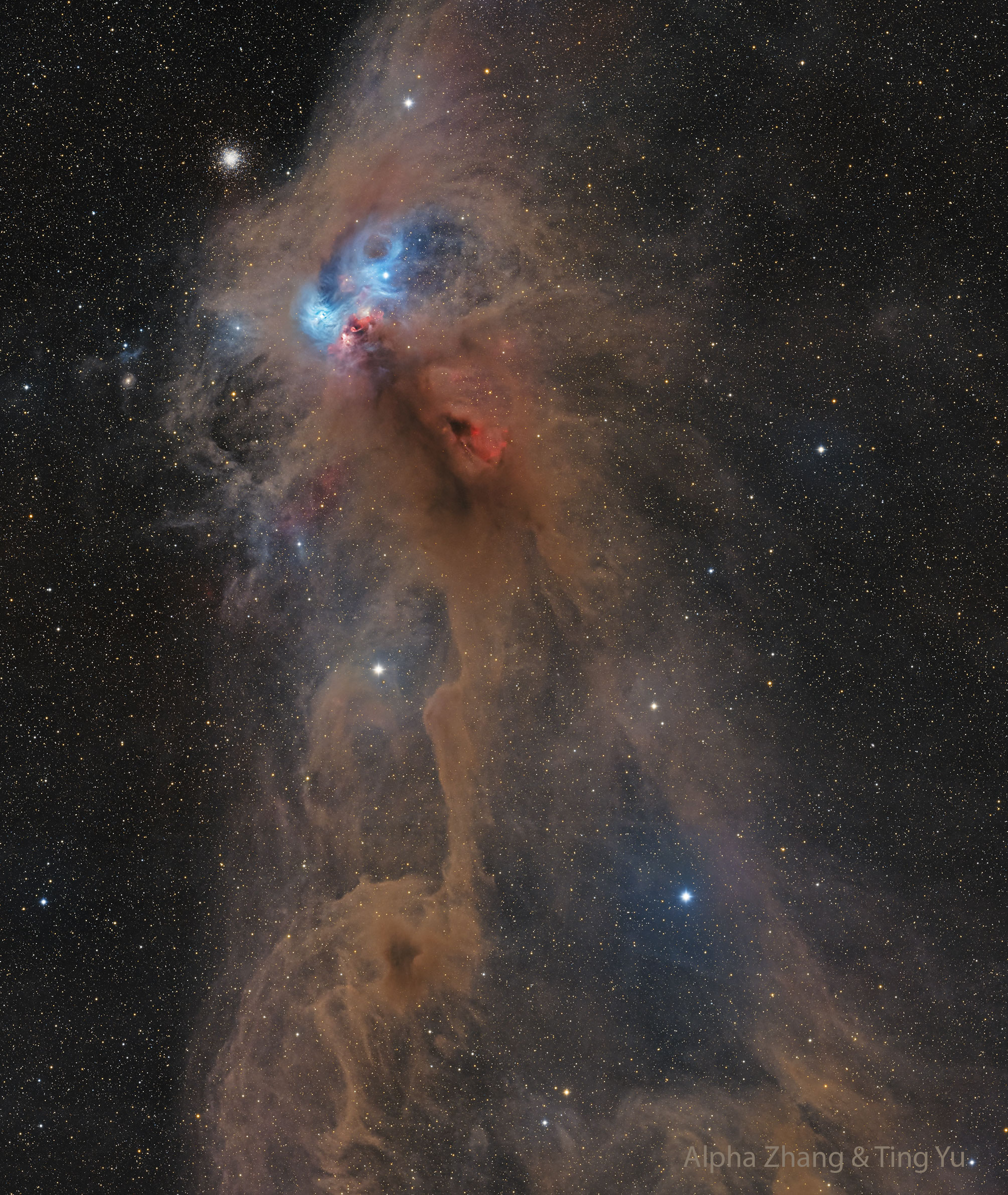
この塵に覆われた領域では星が形成されています。広大な分子雲複合体の一部であり、人によっては暴れ回るヒヒのように見えるこの領域は、みなみのかんむり座の方向に500光年という比較的近い距離にあります。これは、より有名な星形成領域であるオリオン星雲の約3分の1の距離です。明るい星雲と混ざり合った茶色の塵雲は、天の川のより遠くにある背景の星からの光を効果的に遮断し、形成過程にある埋め込まれた星を視界から隠しています。掲載画像に写っている塵の生き物の目は、実際にはNGC 6726、6727、6729、IC 4812としてカタログ化されている青色反射星雲であり、赤い口は水素ガスから放出される光で輝いています。ヒヒの頭の左上には、約3万光年離れたところにある球状星団NGC 6723があります。宇宙を探検しよう:ランダムAPODジェネレーター
原文(English)
This dusty region is forming stars. Part of a sprawling molecular cloud complex that resembles, to some, a rampaging baboon, the region is a relatively close by 500 light-years away toward the constellation Corona Australis. That's about one third the distance of the more famous stellar nursery known as the Orion Nebula. Mixed with bright nebulosities, the brown dust clouds effectively block light from more distant background stars in the Milky Way and obscure from view embedded stars still in the process of formation. The eyes of the dust creature in the featured image are actually blue reflection nebulas cataloged as NGC 6726, 6727, 6729, and IC 4812, while the red mouth glows with light emitted by hydrogen gas. Just to the upper left of the baboon's head is NGC 6723, a whole globular cluster of stars nearly 30,000 light years in the distance. Explore Your Universe: Random APOD Generator
\ この感動を宇宙仲間にシェア /
宇宙をXでシェア
© Alpha Zhang &
Ting Yu / APOD