
🚀 宇宙の記憶・カレンダー検索
🚀 象徴的な写真:
APOD第1回
🚀 創造の柱
🚀 スピリット火星着陸
🚀 ハッブル超深宇宙
🚀 地球へようこそ|ブルー・マーブル
🚀 エンケラドス
🚀 ベテルギウス
🚀 火星着陸
🚀 青い夕焼け
🚀 冥王星のハート
🚀 皆既日食
🚀 アースライズ再構築
🚀 ブラックホール
🚀 ウェッブ初画像
🚀 アポロ11着陸
APOD30周年(2025年6月16日)
夜の海王星
Neptune at Night
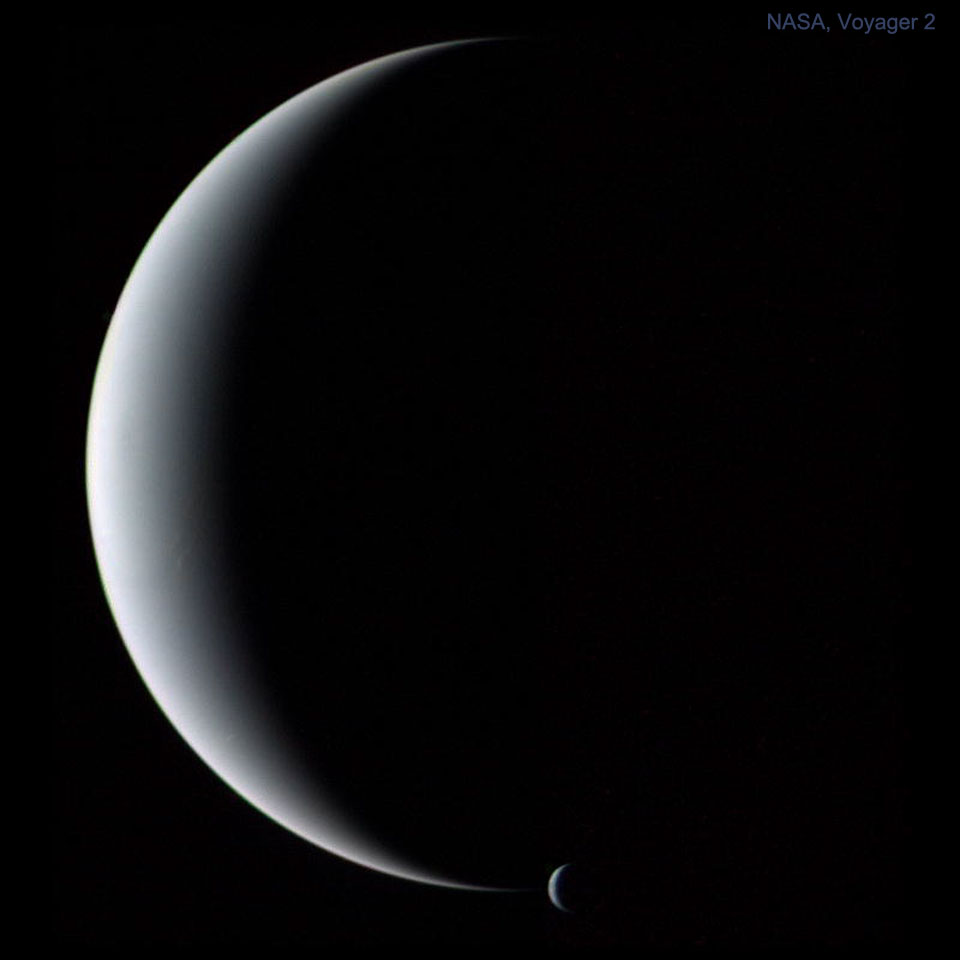
氷の巨星ネプチューンは、地球の夜空ではかすかにしか見えません。太陽から地球の約30倍も遠いため、この暗く遠い世界を垣間見るには望遠鏡が必要です。しかし、地球の近くにある望遠鏡では、ネプチューンの夜の劇的な眺めを見ることはできません。太陽系の内側から見上げると、ネプチューンの昼側しか見えません。実際、ネプチューンの細い三日月と大きな衛星トリトンの三日月が隣り合ったこの夜側の画像は、ボイジャー2号によって撮影されました。1977年に地球から打ち上げられたボイジャー2号は、1989年に太陽系の最外惑星であるネプチューンに接近し、星間空間への航海を続ける中で、夜のネプチューンを振り返りました。
原文(English)
Ice giant Neptune is faint in Earth's night sky. Some 30 times farther from the Sun than our fair planet, telescopes are needed to catch a glimpse of the dim and distant world. This dramatic view of Neptune's night just isn't possible for telescopes in the vicinity of planet Earth though. Peering out from the inner Solar System they can only bring Neptune's day side into view. In fact this night side image with Neptune's slender crescent next to the crescent of its large moon Triton was captured by Voyager 2. Launched from planet Earth in 1977 the Voyager 2 spacecraft made a close fly by of the Solar System's outermost planet in 1989, looking back on Neptune at night as the robotic spacecraft continued its voyage to interstellar space.
\ この感動を宇宙仲間にシェア /
宇宙をXでシェア
© Voyager / APOD