
🚀 宇宙の記憶・カレンダー検索
🚀 象徴的な写真:
APOD第1回
🚀 創造の柱
🚀 スピリット火星着陸
🚀 ハッブル超深宇宙
🚀 地球へようこそ|ブルー・マーブル
🚀 エンケラドス
🚀 ベテルギウス
🚀 火星着陸
🚀 青い夕焼け
🚀 冥王星のハート
🚀 皆既日食
🚀 アースライズ再構築
🚀 ブラックホール
🚀 ウェッブ初画像
🚀 アポロ11着陸
APOD30周年(2025年6月16日)
LDN 1471: 風に吹かれた星空洞
LDN 1471: A Windblown Star Cavity
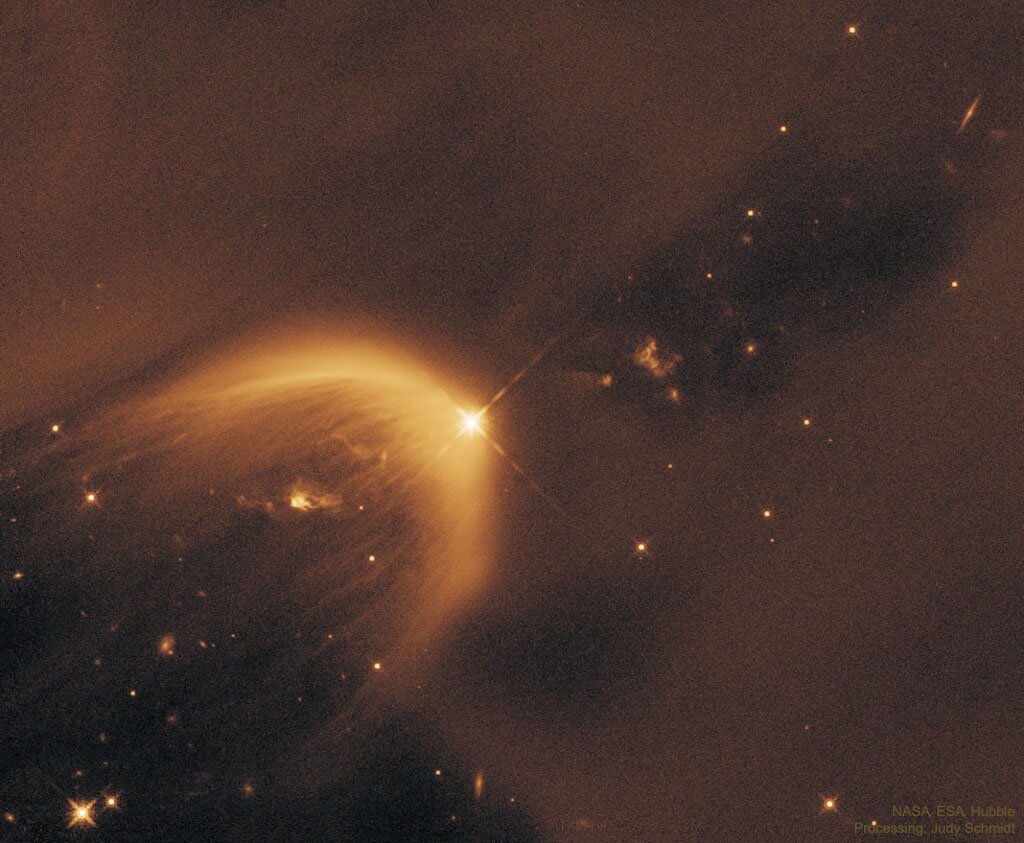
この珍しい放物線状構造の原因は何でしょうか? LDN 1471として知られるこの光り輝く空洞は、放物線の頂点にある明るい光源として見える、新たに形成された星によって作られました。この原始星は恒星流出を経験しており、それがペルセウス分子雲の周囲の物質と相互作用することで明るくなっています。私たちは空洞の片側しか見ることができず、もう片側は暗い塵に隠れています。放物線状の形状は、恒星風によって吹き飛ばされた空洞が時間とともに拡大することによって生じます。原始星の両側にはさらに2つの構造が見られます。これらはハービッグ・ハロー天体として知られており、これもまた流出と周囲の物質との相互作用によって生じます。しかし、空洞の壁にある縞模様の原因は依然として不明です。この画像は、スピッツァー宇宙望遠鏡による最初の検出の後、NASAとESAのハッブル宇宙望遠鏡によって撮影されました。宇宙を探検しよう:ランダムAPODジェネレーター
原文(English)
What is the cause of this unusual parabolic structure? This illuminated cavity, known as LDN 1471, was created by a newly forming star, seen as the bright source at the peak of the parabola. This protostar is experiencing a stellar outflow which is then interacting with the surrounding material in the Perseus Molecular Cloud, causing it to brighten. We see only one side of the cavity -- the other side is hidden by dark dust. The parabolic shape is caused by the widening of the stellar-wind blown cavity over time. Two additional structures can also be seen either side of the protostar; these are known as Herbig-Haro objects, again caused by the interaction of the outflow with the surrounding material. What causes the striations on the cavity walls, though, remains unknown. The featured image was taken by NASA and ESA’s Hubble Space Telescope after an original detection by the Spitzer Space Telescope. Explore Your Universe: Random APOD Generator
\ この感動を宇宙仲間にシェア /
宇宙をXでシェア
© NASA / APOD