
🚀 宇宙の記憶・カレンダー検索
🚀 象徴的な写真:
APOD第1回
🚀 創造の柱
🚀 スピリット火星着陸
🚀 ハッブル超深宇宙
🚀 地球へようこそ|ブルー・マーブル
🚀 エンケラドス
🚀 ベテルギウス
🚀 火星着陸
🚀 青い夕焼け
🚀 冥王星のハート
🚀 皆既日食
🚀 アースライズ再構築
🚀 ブラックホール
🚀 ウェッブ初画像
🚀 アポロ11着陸
APOD30周年(2025年6月16日)
ラス・カンパナス天文台上空の波状雲
Undulatus Clouds over Las Campanas Observatory
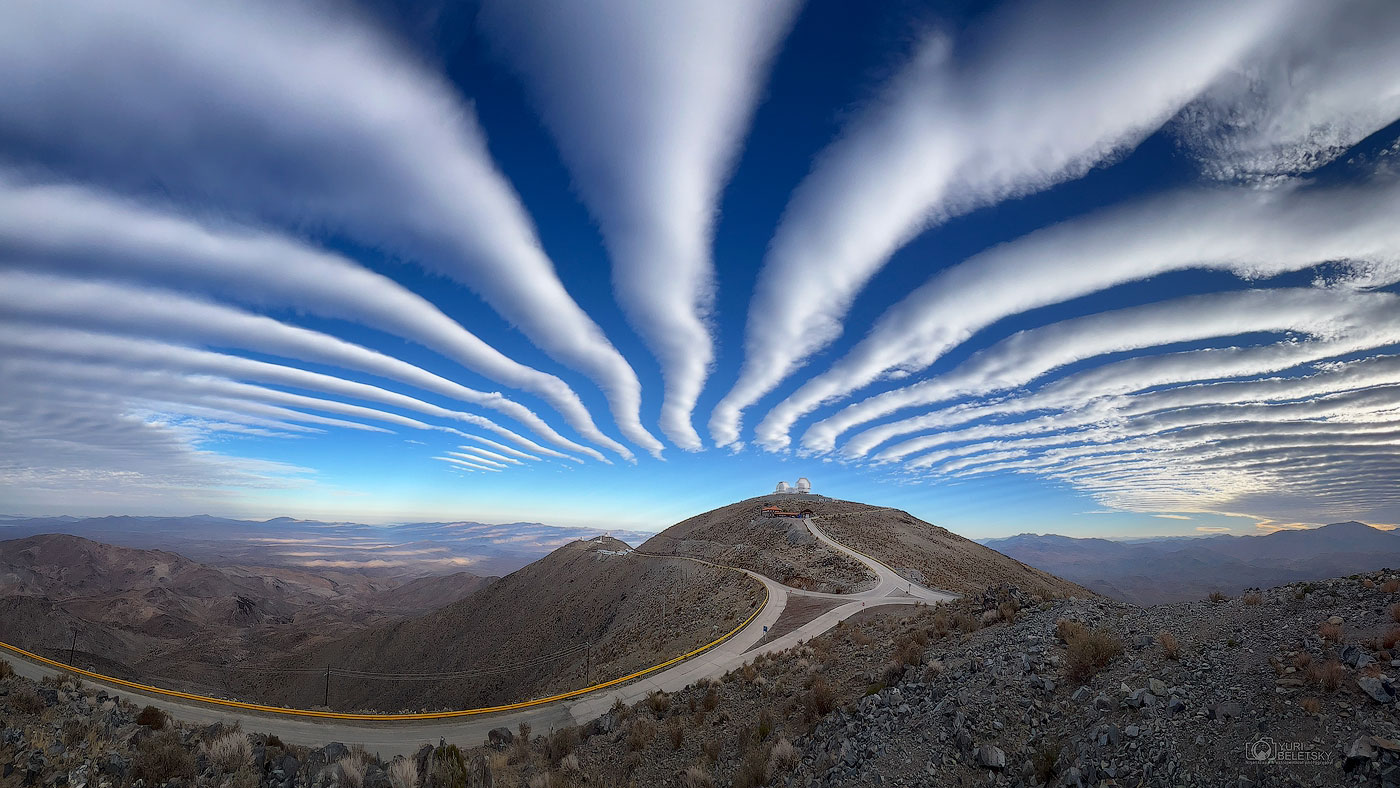
これらの雲は一体何なのでしょうか? 細長く伸びたこれらの雲が丘の頂上に向かっているように見え、もしかしたらそこに世界的に有名な天文台があるのかもしれないと思うかもしれませんが、それは一部しか正しくありません。雲について言えば、この雲は地球の下層大気における周期的に波打つ気流が偶然重なり合って形成されたものです。アスペリタス雲の一種であるアンジュラトゥスは、空気が十分に冷え、不透明な水滴が凝結する山頂で形成されます。このパノラマ写真の広角撮影の特性が、雲が丘の上で収束しているように見える錯覚を生み出しています。しかし、実際にその山頂には世界的に有名な天文台があります。それは、チリのアタカマ砂漠にあるカーネギー科学財団のラス・カンパナス天文台です。写真に写っている2つの望遠鏡ドームは、口径6.5メートルのマゼラン望遠鏡です。この偶然の光景は驚きでしたが、9月下旬に機転の利く写真家が携帯電話で撮影しました。あなたの誕生日にAPOD(今日の写真)に掲載された写真は何ですか?(1995年以降生まれの方対象)
原文(English)
What's happening with these clouds? While it may seem that these long and thin clouds are pointing toward the top of a hill, and that maybe a world-famous observatory is located there, only part of that is true. In terms of clouds, the formation is a chance superposition of impressively periodic undulating air currents in Earth's lower atmosphere. Undulatus, a type of Asperitas cloud, form at the peaks where the air is cool enough to cause the condensation of opaque water droplets. The wide-angle nature of the panorama creates the illusion that the clouds converge over the hill. In terms of land, there really is a world-famous observatory at the top of that peak: the Carnegie Science's Las Campanas Observatory in the Atacama Desert of Chile. The two telescope domes visible are the 6.5-meter Magellan Telescopes. The featured coincidental vista was a surprise but was captured by the phone of a quick-thinking photographer in late September. Your Sky Surprise: What picture did APOD feature on your birthday? (post 1995)
\ この感動を宇宙仲間にシェア /
宇宙をXでシェア
© Yuri Beletsky / APOD