
🚀 宇宙の記憶・カレンダー検索
🚀 象徴的な写真:
APOD第1回
🚀 創造の柱
🚀 スピリット火星着陸
🚀 ハッブル超深宇宙
🚀 地球へようこそ|ブルー・マーブル
🚀 エンケラドス
🚀 ベテルギウス
🚀 火星着陸
🚀 青い夕焼け
🚀 冥王星のハート
🚀 皆既日食
🚀 アースライズ再構築
🚀 ブラックホール
🚀 ウェッブ初画像
🚀 アポロ11着陸
APOD30周年(2025年6月16日)
Nova V462 Lupiが見えるようになりました
Nova V462 Lupi Now Visible
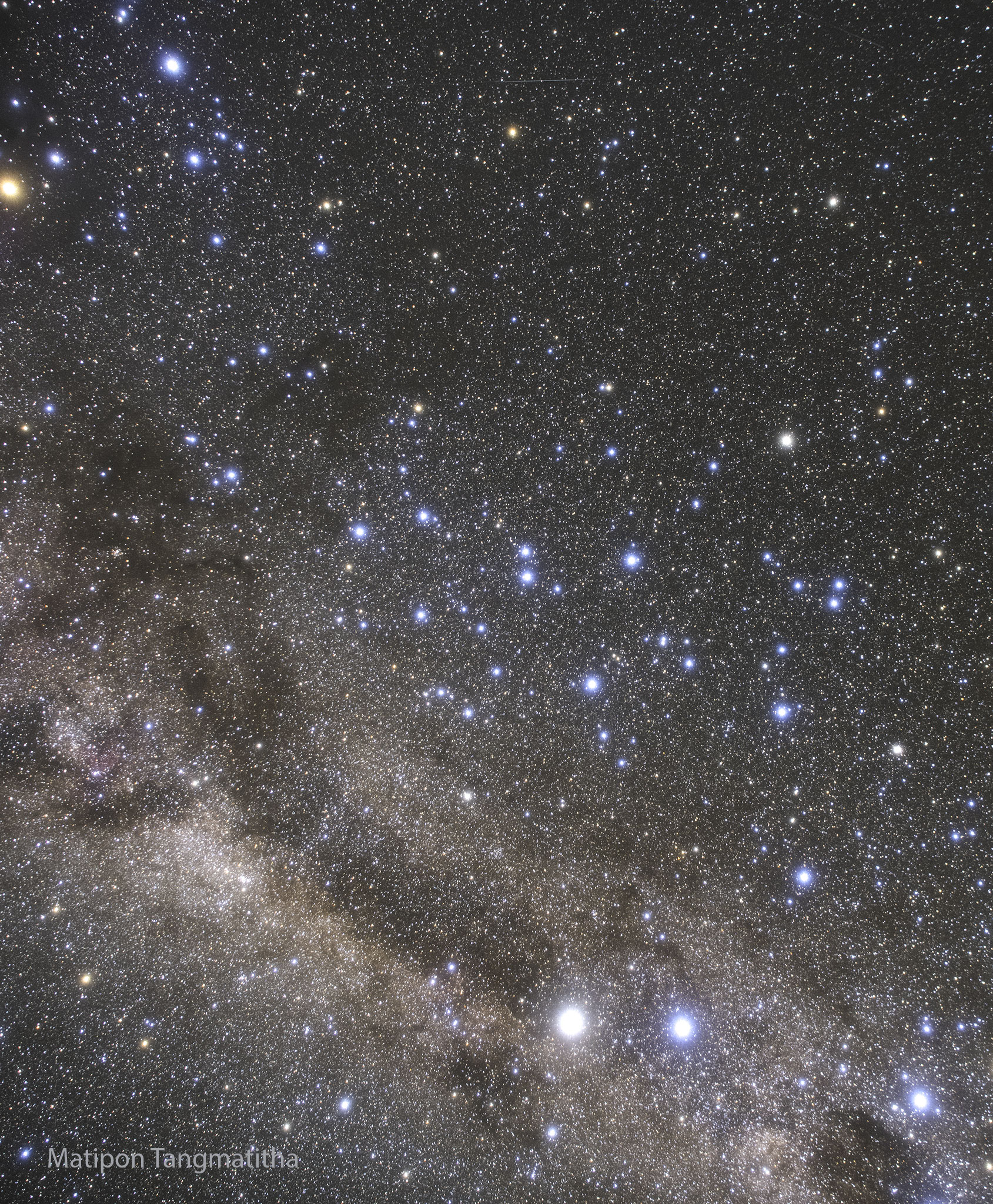
どこを見ればいいかを知っていれば、白色矮星の熱核爆発を見ることができます。おそらく2つ。このような爆発は新星として知られており、現在、地球の南半球では肉眼でかすかに見えますが、双眼鏡を使えばもっと簡単に見ることができます。写真に写っているのは、先週、天の川銀河の中心面近くの南天のオオカミ座(オオカミ座)の方向で捉えられた新星ルピ2025(V462ルピ)です。新星ルピ2025は6月12日に最初に発見され、約1週間後に明るさがピークに達しました。同様に、南天のほ座(船の帆)の方向にある新星ヴェロラム2025は6月25日に発見され、数日後に明るさがピークに達しました。銀河のどこかで新星が肉眼で短時間見えるようになるのは1年か2年に1度だけなので、2つの新星が同時に見えるのは非常に珍しいことです。一方、人類はまた別の新星、Tコロナエ・ボレアリスの出現を待ち望んでいる。これは北の空で観測可能となり、さらに明るくなると予想されている。
原文(English)
If you know where to look, you can see a thermonuclear explosion from a white dwarf star. Possibly two. Such explosions are known as novas and the detonations are currently faintly visible with the unaided eye in Earth's southern hemisphere -- but are more easily seen with binoculars. Pictured, Nova Lupi 2025 (V462 Lupi) was captured toward the southern constellation of the Wolf (Lupus) last week near the central plane of our Milky Way galaxy. Nova Lupi 2025 was originally discovered on June 12 and peaked in brightness about a week later. Similarly, Nova Velorum 2025, toward the southern constellation of the Ship Sails (Vela), was discovered on June 25 and peaked a few days later. A nova somewhere in our Galaxy becomes briefly visible to the unaided eye only every year or two, so it is quite unusual to have two novas visible simultaneously. Meanwhile, humanity awaits even a different nova: T Coronae Borealis, which should become visible in northern skies and is expected to become even brighter.
\ この感動を宇宙仲間にシェア /
宇宙をXでシェア
© Matipon Tangmatitham
(NARIT) / APOD