
🚀 宇宙の記憶・カレンダー検索
🚀 象徴的な写真:
APOD第1回
🚀 創造の柱
🚀 スピリット火星着陸
🚀 ハッブル超深宇宙
🚀 地球へようこそ|ブルー・マーブル
🚀 エンケラドス
🚀 ベテルギウス
🚀 火星着陸
🚀 青い夕焼け
🚀 冥王星のハート
🚀 皆既日食
🚀 アースライズ再構築
🚀 ブラックホール
🚀 ウェッブ初画像
🚀 アポロ11着陸
APOD30周年(2025年6月16日)
月の表側
Lunar Nearside
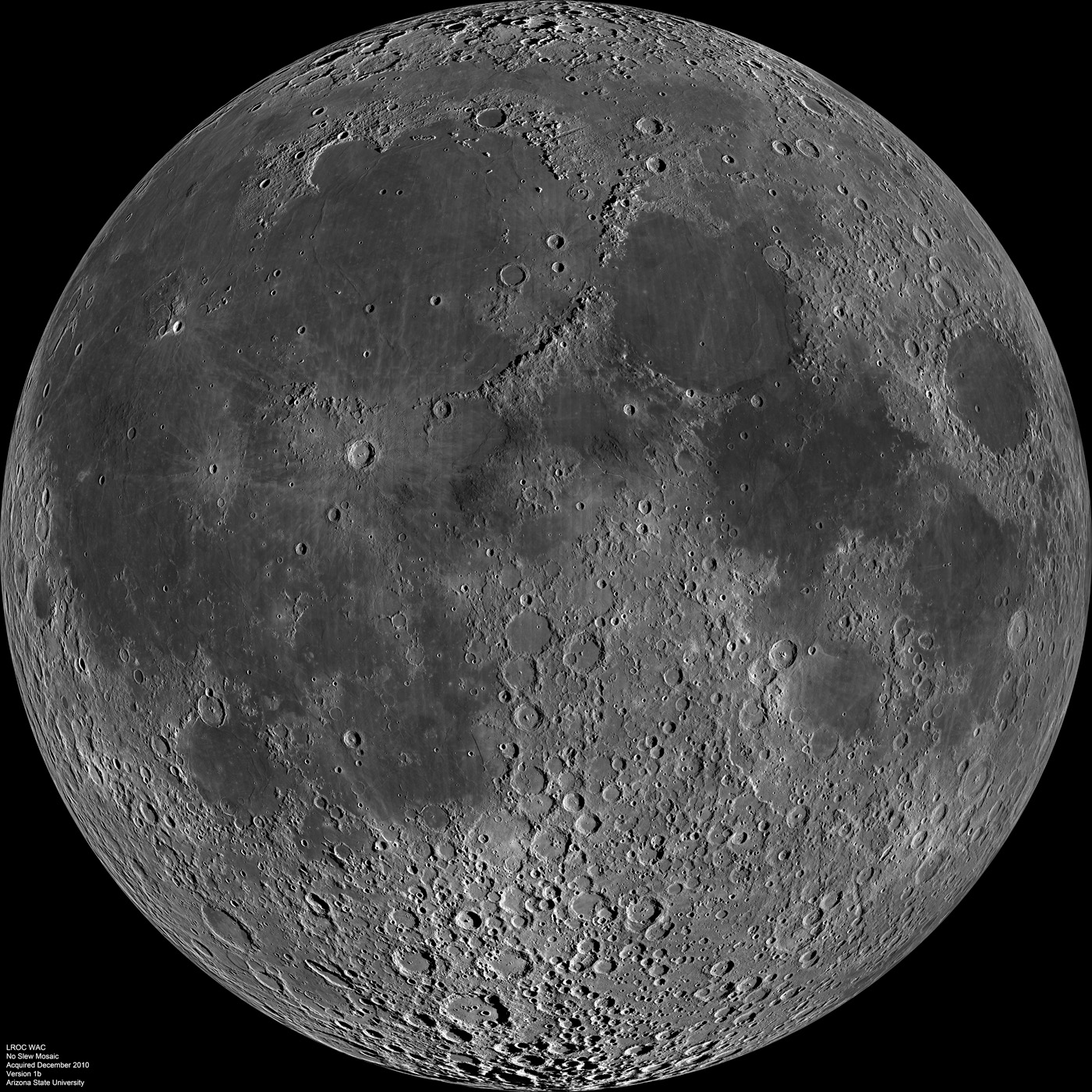
About 1,300 images from the Lunar Reconnaissance Orbiter spacecraft's wide angle camera were used to compose this spectacular view of a familiar face - the lunar nearside. But why is there a lunar nearside? The Moon rotates on its axis and orbits the Earth at the same rate, about once every 28 days. Tidally locked in this configuration, the synchronous rotation always keeps one side, the nearside, facing Earth. As a result, featured in remarkable detail in the full resolution mosaic, the smooth, dark, lunar maria (actually lava-flooded impact basins), and rugged highlands, are well-known to earthbound skygazers. To find your favorite mare or large crater, just follow this link or slide your cursor over the picture. The LRO images used to construct the mosaic were recorded over a two week period in December 2010.
原文(English)
About 1,300 images from the Lunar Reconnaissance Orbiter spacecraft's wide angle camera were used to compose this spectacular view of a familiar face - the lunar nearside. But why is there a lunar nearside? The Moon rotates on its axis and orbits the Earth at the same rate, about once every 28 days. Tidally locked in this configuration, the synchronous rotation always keeps one side, the nearside, facing Earth. As a result, featured in remarkable detail in the full resolution mosaic, the smooth, dark, lunar maria (actually lava-flooded impact basins), and rugged highlands, are well-known to earthbound skygazers. To find your favorite mare or large crater, just follow this link or slide your cursor over the picture. The LRO images used to construct the mosaic were recorded over a two week period in December 2010.
\ この感動を宇宙仲間にシェア /
宇宙をXでシェア
© NASA / APOD