
🚀 宇宙の記憶・カレンダー検索
🚀 象徴的な写真:
APOD第1回
🚀 創造の柱
🚀 スピリット火星着陸
🚀 ハッブル超深宇宙
🚀 地球へようこそ|ブルー・マーブル
🚀 エンケラドス
🚀 ベテルギウス
🚀 火星着陸
🚀 青い夕焼け
🚀 冥王星のハート
🚀 皆既日食
🚀 アースライズ再構築
🚀 ブラックホール
🚀 ウェッブ初画像
🚀 アポロ11着陸
APOD30周年(2025年6月16日)
IC 1805:ハート星雲
IC 1805: The Heart Nebula
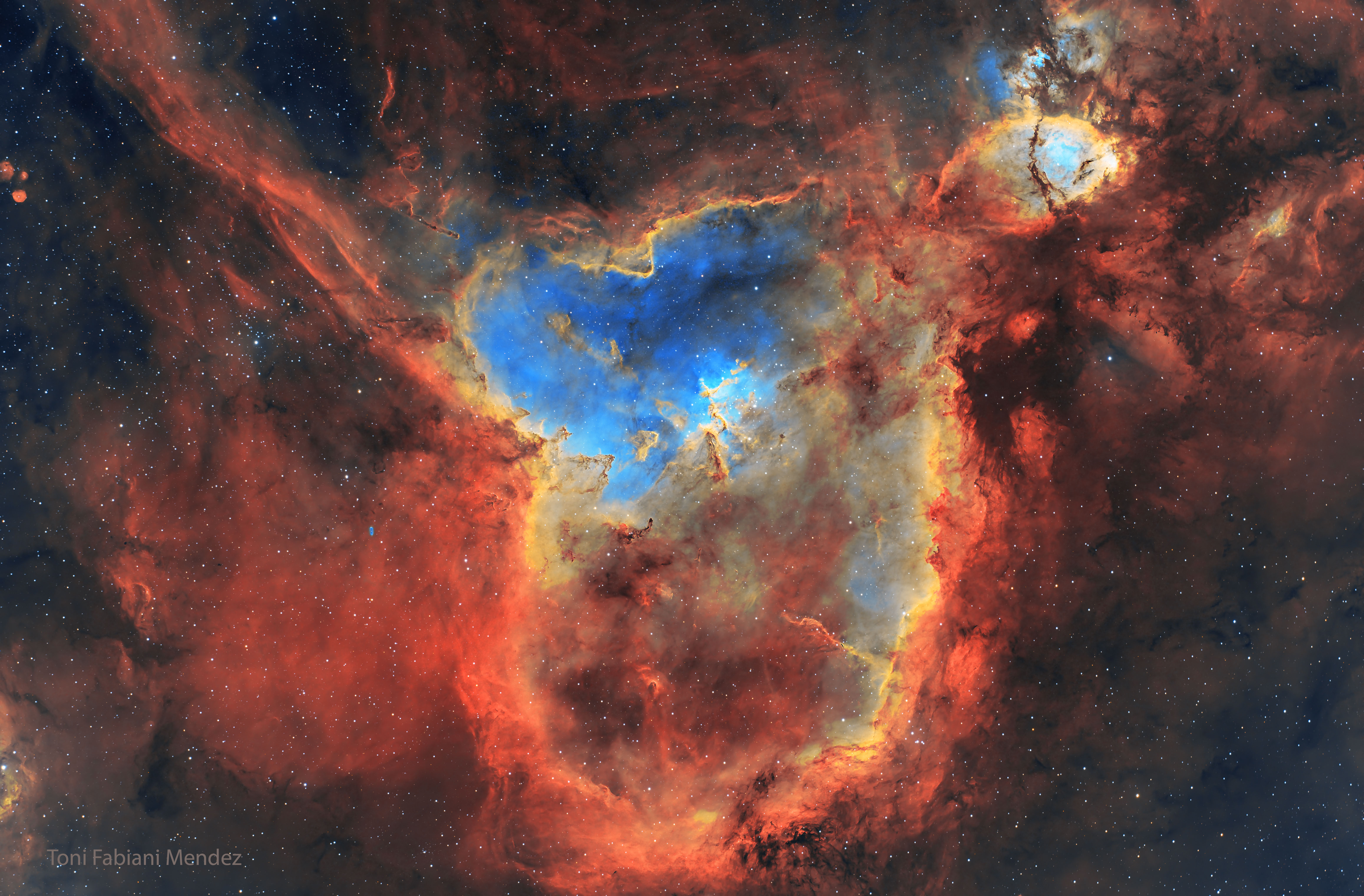
ハート星雲を電化しているものは何でしょうか?まず、左側にある大きな輝線星雲は、IC 1805 とカタログ化されており、人間の心臓にいくらか似ています。この星雲は、最も主要な元素である水素から放出される赤い光で明るく輝いていますが、この長時間露光画像には、硫黄(黄色)と酸素(青)から放出される光も合成されています。ハート星雲の中心には、散開星団メロット 15 の若い星々があり、原子を励起する高エネルギーの光と風によって、いくつかの絵のように美しい塵の柱を侵食しています。ハート星雲は、カシオペヤ座の方向に約 7,500 光年離れたところにあります。ハート星雲の右上には、伴星である魚頭星雲があります。この広くて深い画像は、輝くガスがハート星雲をあらゆる方向に取り囲んでいることをはっきりと示しています。
原文(English)
What electrifies the Heart Nebula? First, the large emission nebula on the left, catalogued as IC 1805, looks somewhat like a human heart. The nebula glows brightly in red light emitted by its most prominent element, hydrogen, but this long-exposure image was also blended with light emitted by sulfur (yellow) and oxygen (blue). In the center of the Heart Nebula are young stars from the open star cluster Melotte 15 that are eroding away several picturesque dust pillars with their atom-exciting energetic light and winds. The Heart Nebula is located about 7,500 light years away toward the constellation of Cassiopeia. At the top right of the Heart Nebula is the companion Fishhead Nebula. This wide and deep image clearly shows that glowing gas surrounds the Heart Nebula in all directions.
\ この感動を宇宙仲間にシェア /
宇宙をXでシェア
© Toni Fabiani / APOD