
🚀 宇宙の記憶・カレンダー検索
🚀 象徴的な写真:
APOD第1回
🚀 創造の柱
🚀 スピリット火星着陸
🚀 ハッブル超深宇宙
🚀 地球へようこそ|ブルー・マーブル
🚀 エンケラドス
🚀 ベテルギウス
🚀 火星着陸
🚀 青い夕焼け
🚀 冥王星のハート
🚀 皆既日食
🚀 アースライズ再構築
🚀 ブラックホール
🚀 ウェッブ初画像
🚀 アポロ11着陸
APOD30周年(2025年6月16日)
カシオペア座の幽霊
Ghosts in Cassiopeia
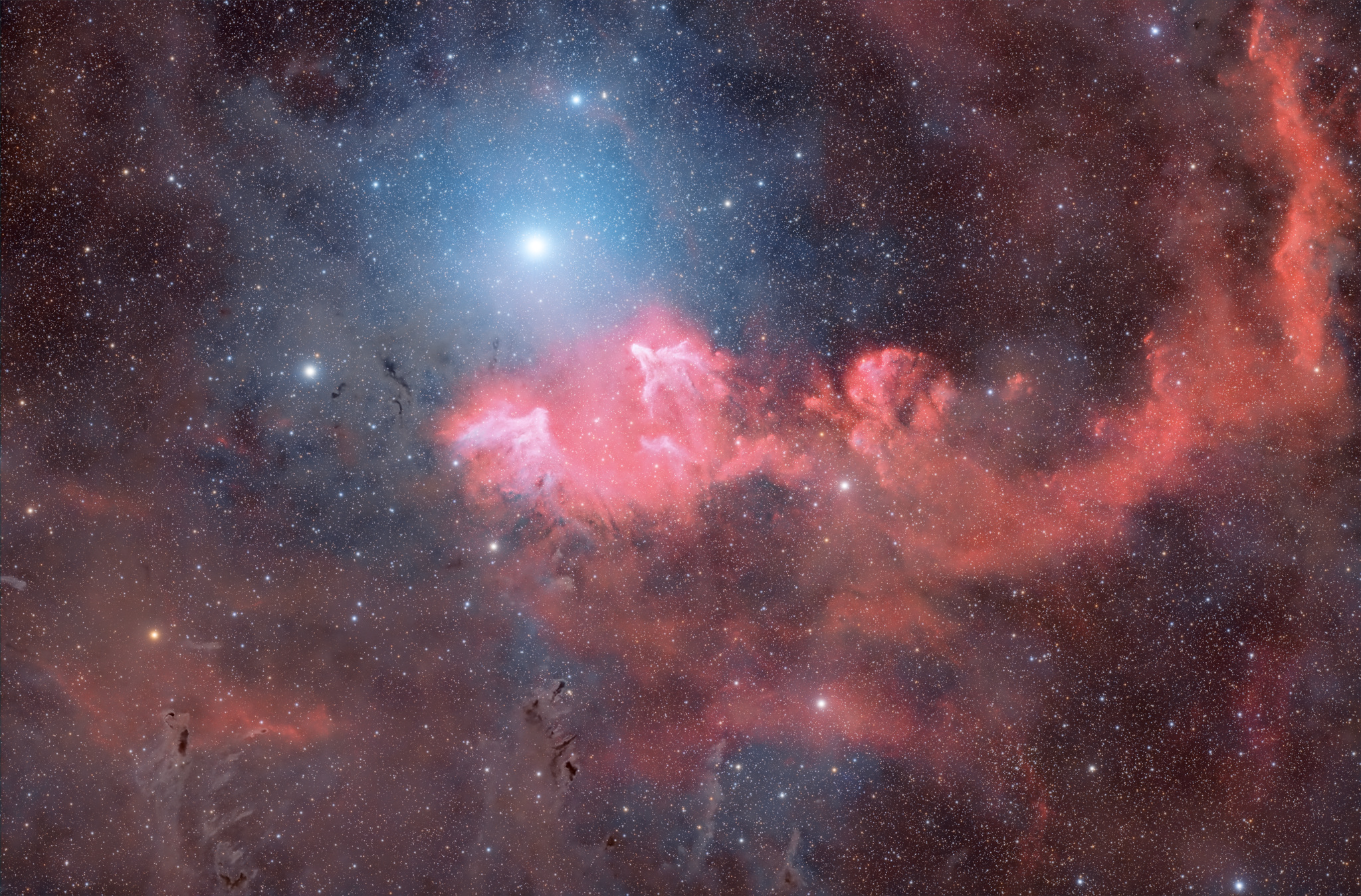
ハロウィンは天文学の祝日であり、地球の夜空には不気味な形が常に潜んでいるように見える。実際、カシオペヤ座の方向を望遠鏡で見たこの画像の中心付近にある、後退した星間雲IC 59(左)とIC 63は、宇宙規模で見ると幽霊のように見える。約600光年離れたこれらの雲は、実際には幽霊ではない。しかし、高温で明るい星ガンマ・カシオペヤ座からの高エネルギー放射の影響で、ゆっくりと消えつつある。フレーム内で最も明るい青みがかった星であるガンマ・カシオペヤ座は、物理的には星雲からわずか3~4光年の距離にある。ガンマ・カシオペヤ座にやや近いIC 63は、高温の星の紫外線放射によって電離された水素原子が電子と再結合する際に放出される赤いHα線が支配的である。星からさらに離れたIC 59もHα線を放出しており、どちらの星雲も、星の光を反射した塵の特徴的な青みがかった色で輝いている。視野は、星間天体の推定距離で約2度、すなわち約20光年に及ぶ。
原文(English)
Halloween is an astronomy holiday and spooky shapes always seem to lurk in planet Earth's night skies. In fact, near the center of this telescopic view toward the constellation Cassiopeia these swept-back interstellar clouds IC 59 (left) and IC 63 look ghostly on a cosmic scale. About 600 light-years distant, the clouds aren't actually ghosts. They are slowly disappearing though, under the influence of energetic radiation from hot, luminous star gamma Cas. The brightest bluish star in the frame, Gamma Cas is physically located only 3 to 4 light-years from the nebulae. Slightly closer to gamma Cas, IC 63 is dominated by red H-alpha light emitted as hydrogen atoms ionized by the hot star's ultraviolet radiation recombine with electrons. Farther from the star IC 59 also shows H-alpha emission, and both nebulae shine with the characteristic blue tint of dust reflected star light. The field of view spans about 2 degrees or 20 light-years at the estimated distance of the interstellar apparitions.
\ この感動を宇宙仲間にシェア /
宇宙をXでシェア
© Alex Rodriguez / APOD