
🚀 宇宙の記憶・カレンダー検索
🚀 象徴的な写真:
APOD第1回
🚀 創造の柱
🚀 スピリット火星着陸
🚀 ハッブル超深宇宙
🚀 地球へようこそ|ブルー・マーブル
🚀 エンケラドス
🚀 ベテルギウス
🚀 火星着陸
🚀 青い夕焼け
🚀 冥王星のハート
🚀 皆既日食
🚀 アースライズ再構築
🚀 ブラックホール
🚀 ウェッブ初画像
🚀 アポロ11着陸
APOD30周年(2025年6月16日)
CTB 1:髄質星雲
CTB 1: The Medulla Nebula
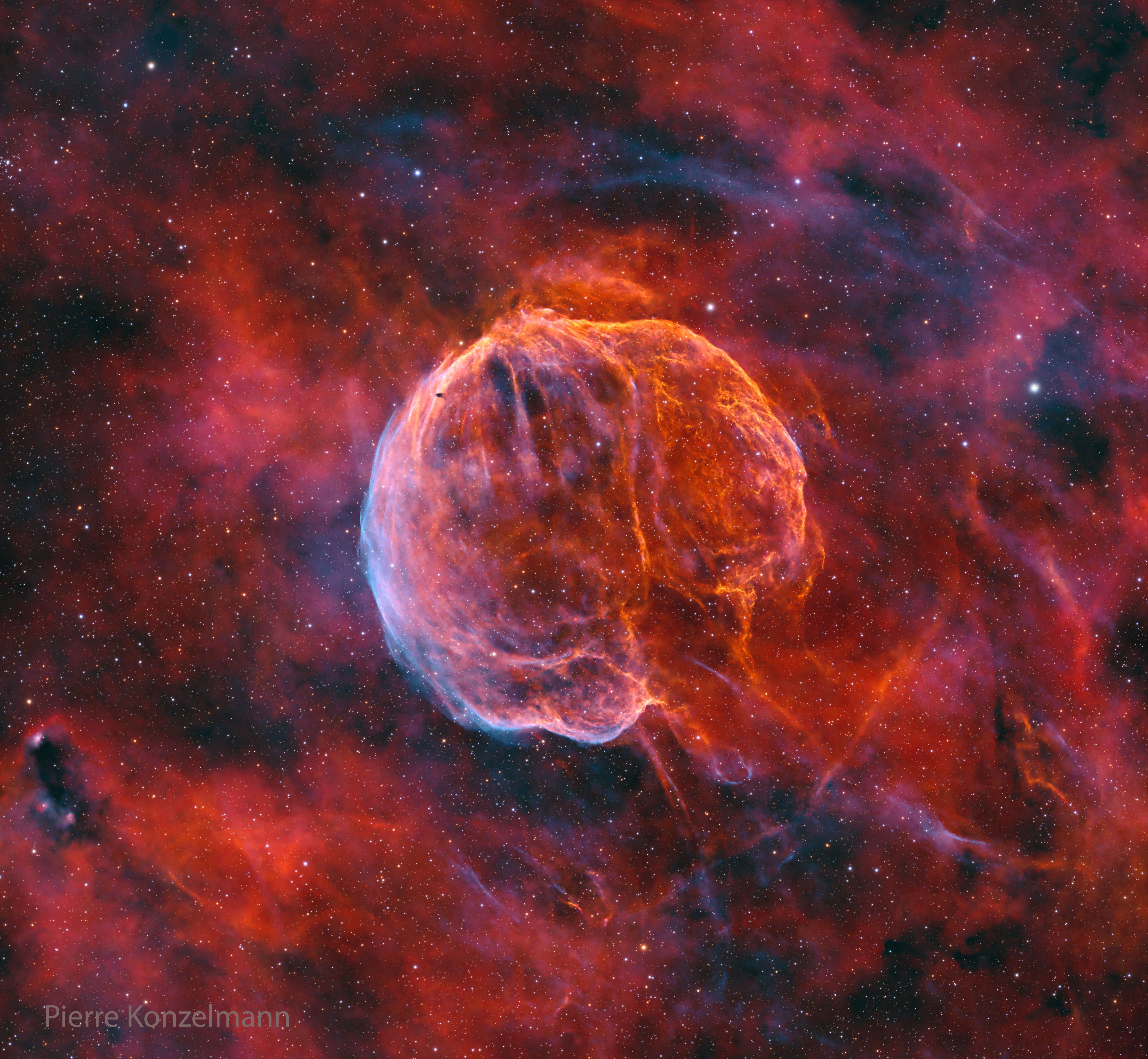
この珍しい星雲のエネルギー源は何でしょうか?CTB 1は、約1万年前にカシオペヤ座の方向にある巨大な星が爆発した際に残された、膨張するガス殻です。この星は、核融合によって安定した圧力を生み出すことができる元素が中心部付近で枯渇したために爆発したと考えられています。脳のような形をしていることからメデュラ星雲と名付けられたこの超新星残骸は、閉じ込められた星間ガスとの衝突によって発生した熱のため、可視光で今も輝いています。しかし、この星雲がX線でも輝く理由は、依然として研究の対象となっています。ある仮説では、高エネルギーのパルサーが生成され、高速で外向きに移動する風によって星雲のエネルギー源となっているとされています。この説を追って、超新星爆発によって秒速1000キロメートル以上で放出されたと思われるパルサーが電波で発見されました。メデュラ星雲は満月ほどの大きさに見えるが、非常に淡いため、掲載されている画像を作成するには、アメリカ合衆国テキサス州にある小型望遠鏡で84時間もの長時間露光が必要だった。
原文(English)
What powers this unusual nebula? CTB 1 is the expanding gas shell that was left when a massive star toward the constellation of Cassiopeia exploded about 10,000 years ago. The star likely detonated when it ran out of elements, near its core, that could create stabilizing pressure with nuclear fusion. The resulting supernova remnant, nicknamed the Medulla Nebula for its brain-like shape, still glows in visible light because of the heat generated by its collision with confining interstellar gas. Why the nebula also glows in X-ray light, though, remains a topic of research. One hypothesis holds that an energetic pulsar was created and powers the nebula with a fast outwardly moving wind. Following this lead, a pulsar was found in radio waves that appears to have been expelled by the supernova explosion at over 1000 kilometers per second. Although the Medulla Nebula appears as large as a full moon, it is so faint that it took 84-hours of exposure with a small telescope in Texas, USA, to create the featured image.
\ この感動を宇宙仲間にシェア /
宇宙をXでシェア
© NASA / APOD