
🚀 宇宙の記憶・カレンダー検索
🚀 象徴的な写真:
APOD第1回
🚀 創造の柱
🚀 スピリット火星着陸
🚀 ハッブル超深宇宙
🚀 地球へようこそ|ブルー・マーブル
🚀 エンケラドス
🚀 ベテルギウス
🚀 火星着陸
🚀 青い夕焼け
🚀 冥王星のハート
🚀 皆既日食
🚀 アースライズ再構築
🚀 ブラックホール
🚀 ウェッブ初画像
🚀 アポロ11着陸
APOD30周年(2025年6月16日)
パラナル天文台の上空が輝く
Sky Glows over Paranal Observatory
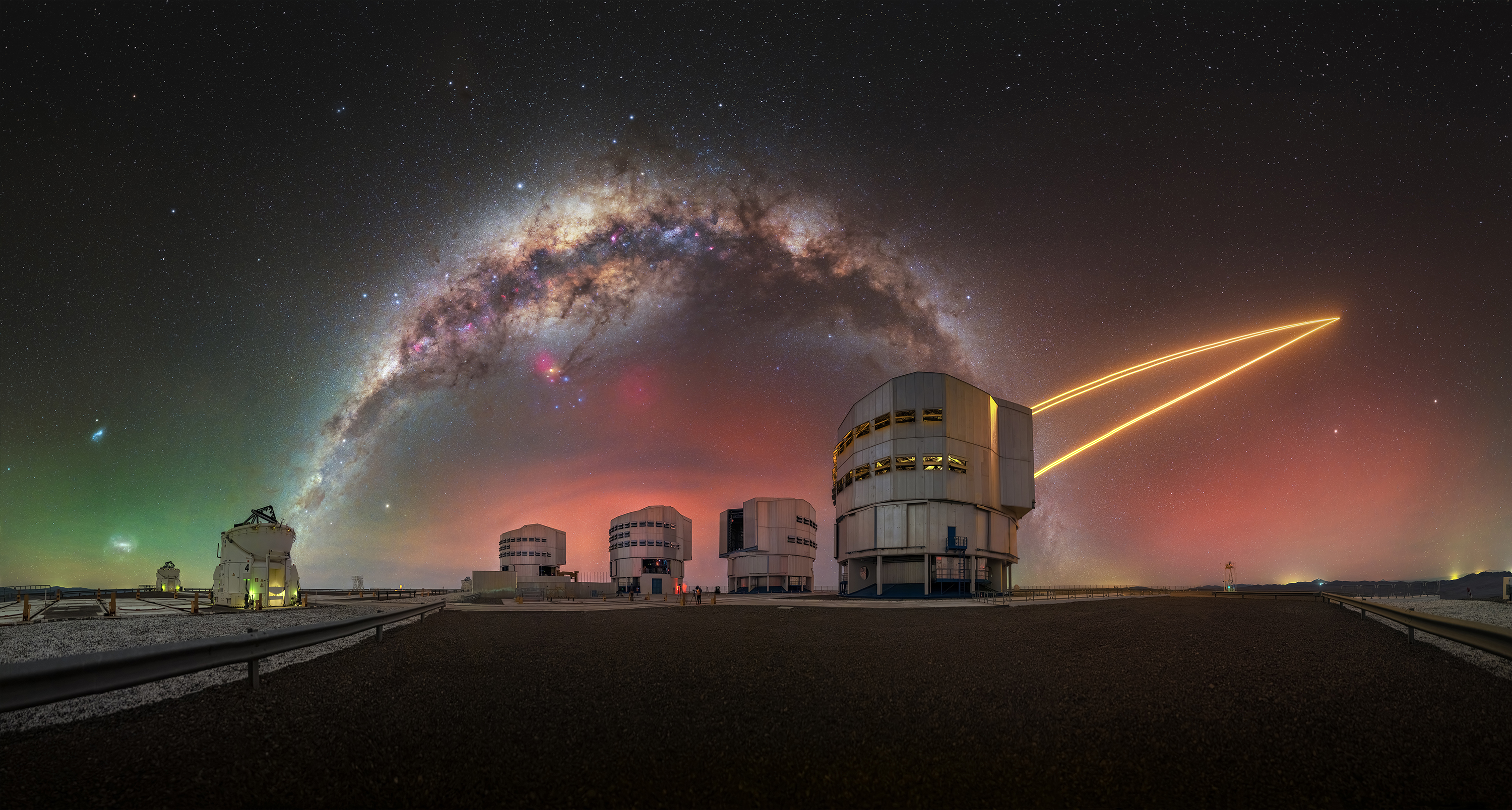
巨大望遠鏡からのレーザーは地球防衛に使われているのでしょうか?いいえ。望遠鏡から発射されるレーザーは、現在では天体観測の精度を高めるために広く使われています。ある方向では、地球の大気によって引き起こされる星の光の変動が、望遠鏡上の大気塊がどのように変化しているかを示す指標となりますが、別の方向には明るい星が存在しません。このような方向では、天文学者はレーザーを使って人工の星を作り出すことができます。その後、人工レーザーガイド星を観測することで、地球の大気によるぼやけ効果の変化に関する詳細な情報が得られ、望遠鏡の鏡を素早く曲げることで、その大部分を取り除くことができます。このような適応光学技術により、地上から高解像度で実際の星、惑星、星雲を観測することが可能になります。ここに掲載されているのは、チリのパラナル天文台の望遠鏡で、左側に緑色の大気光とマゼラン雲、右側に赤色の大気光、中央に壮大な天の川銀河の中心帯が広がる色鮮やかな空を観測している様子です。
原文(English)
Are lasers from giant telescopes being used to defend the Earth? No. Lasers shot from telescopes are now commonly used to help increase the accuracy of astronomical observations. In some directions, Earth atmosphere-induced fluctuations in starlight can indicate how the air mass over a telescope is changing, but in other directions, no bright star exists. In these directions, astronomers can create an artificial star with a laser. Subsequent observations of the artificial laser guide star can reveal information so detailed about the changing blurring effects of the Earth's atmosphere that much of it can be removed by rapidly flexing a telescope's mirror. Such adaptive optics techniques allow high-resolution ground-based observations of real stars, planets, and nebulas. Pictured here, telescopes at Paranal Observatory in Chile study a colorful sky filled with green airglow and the Magellanic Clouds on the left, red airglow on the right, and the majestic central band of our Milky Way Galaxy arching across the center.
\ この感動を宇宙仲間にシェア /
宇宙をXでシェア
© Julien Looten / APOD