
🚀 宇宙の記憶・カレンダー検索
🚀 象徴的な写真:
APOD第1回
🚀 創造の柱
🚀 スピリット火星着陸
🚀 ハッブル超深宇宙
🚀 地球へようこそ|ブルー・マーブル
🚀 エンケラドス
🚀 ベテルギウス
🚀 火星着陸
🚀 青い夕焼け
🚀 冥王星のハート
🚀 皆既日食
🚀 アースライズ再構築
🚀 ブラックホール
🚀 ウェッブ初画像
🚀 アポロ11着陸
APOD30周年(2025年6月16日)
モヘ上空の光の柱とオリオン座
Light Pillars and Orion over Mohe
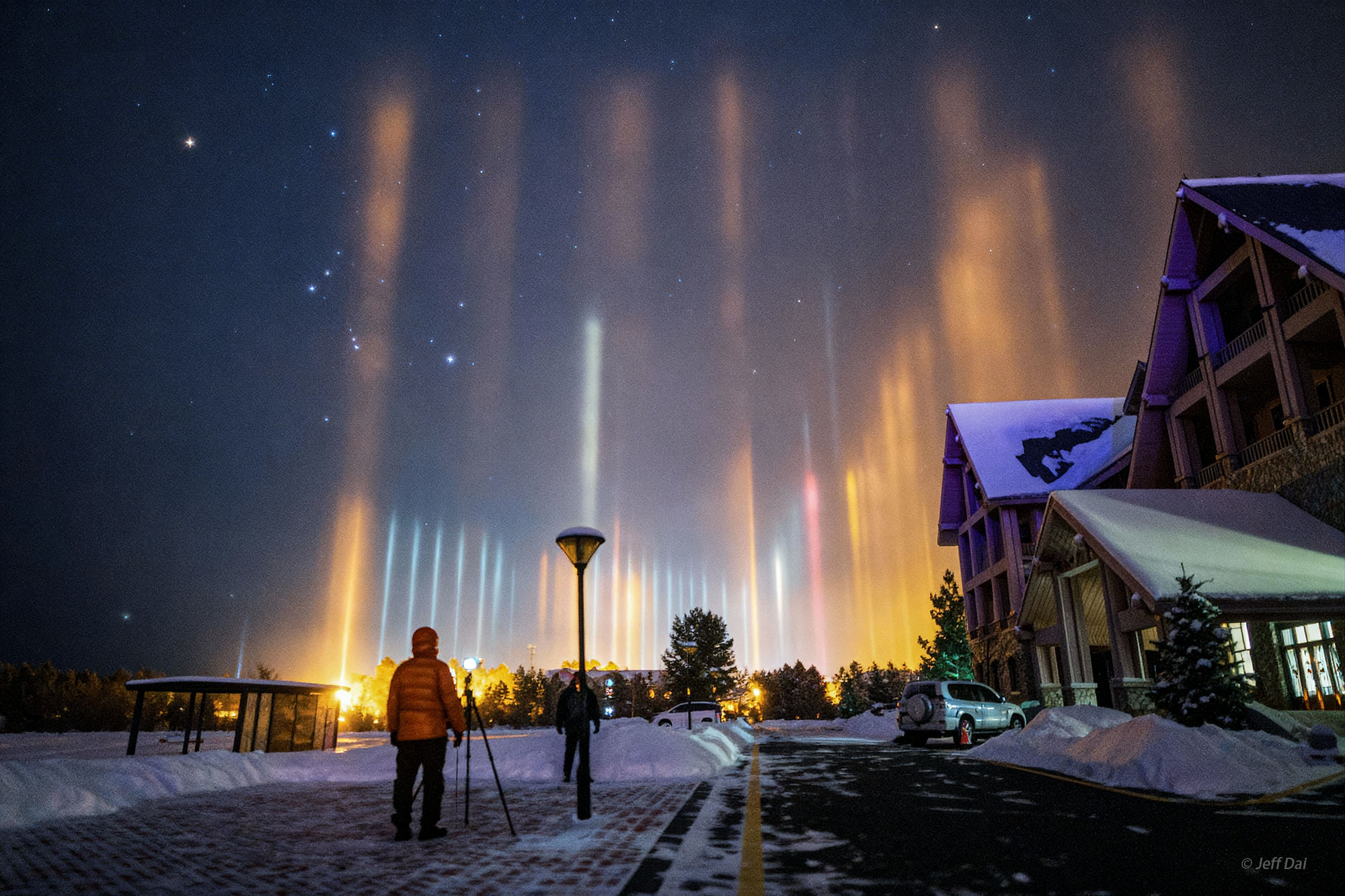
あの通りの突き当たりで何が起こっているのでしょうか?ここに写っているのはオーロラではなく、光柱です。光柱は通常、もっと身近な場所で見られる現象です。地球上のほとんどの場所で、運が良ければ太陽柱を見ることができます。太陽柱とは、上層大気から太陽光を反射する平らな氷の結晶が揺らめくことで、太陽から伸びているように見える光の柱です。通常、これらの氷の結晶は地面に到達する前に蒸発します。しかし、氷点下の気温では、平らな氷の結晶が地面近くに形成されることがあり、これは結晶霧と呼ばれることもあります。これらの小さな氷の結晶は、太陽ではなく、地面の光を反射することがあります。この特集画像は、数多くの光柱だけでなく、象徴的なオリオン座も捉えており、中国最北の都市、漠河で撮影されました。
原文(English)
What's happening at the end of that street? Pictured here are not auroras but light pillars, a phenomenon typically much closer. In most places on Earth, a lucky viewer can see a Sun pillar, a column of light appearing to extend up from the Sun caused by flat fluttering ice-crystals reflecting sunlight from the upper atmosphere. Usually, these ice crystals evaporate before reaching the ground. During freezing temperatures, however, flat fluttering ice crystals may form near the ground and are sometimes known as a crystal fog. These small ice crystals may then reflect not the Sun but ground lights. The featured image captured not only numerous light pillars but also the iconic constellation of Orion, and was taken in Mohe, the northernmost city in China.
\ この感動を宇宙仲間にシェア /
宇宙をXでシェア
© Jeff Dai
(TWAN) / APOD