
🚀 宇宙の記憶・カレンダー検索
🚀 象徴的な写真:
APOD第1回
🚀 創造の柱
🚀 スピリット火星着陸
🚀 ハッブル超深宇宙
🚀 地球へようこそ|ブルー・マーブル
🚀 エンケラドス
🚀 ベテルギウス
🚀 火星着陸
🚀 青い夕焼け
🚀 冥王星のハート
🚀 皆既日食
🚀 アースライズ再構築
🚀 ブラックホール
🚀 ウェッブ初画像
🚀 アポロ11着陸
APOD30周年(2025年6月16日)
天の川の下のラパ・ヌイの守護者たち
The Guardians of Rapa Nui beneath the Milky Way
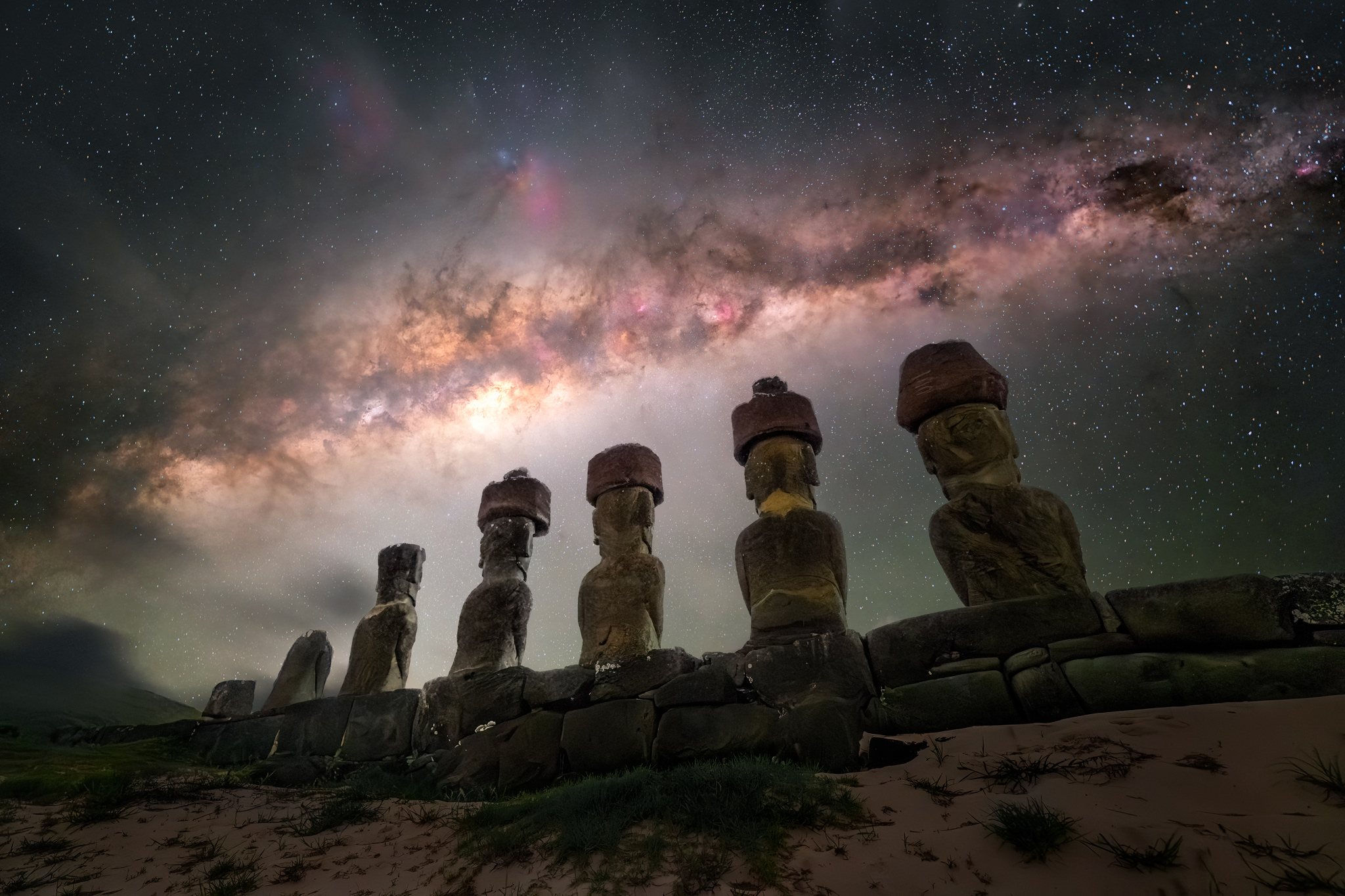
今日の天体写真家、ロシツァ・ディミトロワの言葉を借りれば、「これらの静かな番人は、空を横切るものを見守ってきたのだろうか?」アナケナの火山モアイ(像という意味)は、南米の海岸から数千キロメートル離れた太平洋に位置するポリネシアの島、ラパ・ヌイ(イスラ・デ・パスクア、イースター島、1888年にチリに併合)を守るように立っている。島の隔絶性のため、暗い海に背を向けたモアイは、澄み切った鮮やかな夜空を見上げることができる。写真に写っているこれらの実物大よりも大きな像は、星間塵によって部分的に隠され、地球の雲によってぼやけた天の川の明るい帯を見つめている。このような澄み切った夜空の下で、ラパ・ヌイの人々は天文台を作り、航海、暦の調整、祝祭などに天体観測を利用した。このような写真は、暗い夜空の重要性、その下の土地を守ること、そして夜空が育む文化を保存することの大切さを私たちに思い出させてくれる。
原文(English)
In the words of today's astrophotographer, Rositsa Dimitrova, "What have these silent sentinels watched pass across the sky?" The volcanic mo'ai (meaning statue) of Anakena stand guard over Rapa Nui (Isla de Pascua, Easter Island), a Polynesian island (annexed by Chile in 1888) located thousands of kilometers off the coast of South America in the Pacific Ocean. Due to the island's remoteness, the mo'ai, with their backs to the dark ocean, are able to gaze upon a clear and vibrant night sky. Pictured, these larger-than-life statues stare at the bright band of the Milky Way, partly obscured by interstellar dust and blurred by Earth's clouds. Under such clear night skies, the Rapa Nui created observatories and used astronomical observations for navigation, calendar calibration, celebrations, and more. Images like this one remind us of the importance of dark skies, protecting the land underneath them, and preserving the culture that they inspire.
\ この感動を宇宙仲間にシェア /
宇宙をXでシェア
© Rositsa Dimitrova
Text:
Keighley Rockcliffe
(NASA
GSFC,
UMBC CSST,
CRESST II) / APOD