
🚀 宇宙の記憶・カレンダー検索
🚀 象徴的な写真:
APOD第1回
🚀 創造の柱
🚀 スピリット火星着陸
🚀 ハッブル超深宇宙
🚀 地球へようこそ|ブルー・マーブル
🚀 エンケラドス
🚀 ベテルギウス
🚀 火星着陸
🚀 青い夕焼け
🚀 冥王星のハート
🚀 皆既日食
🚀 アースライズ再構築
🚀 ブラックホール
🚀 ウェッブ初画像
🚀 アポロ11着陸
APOD30周年(2025年6月16日)
天王星最大の衛星:ティタニア
Uranus's Largest Moon: Titania
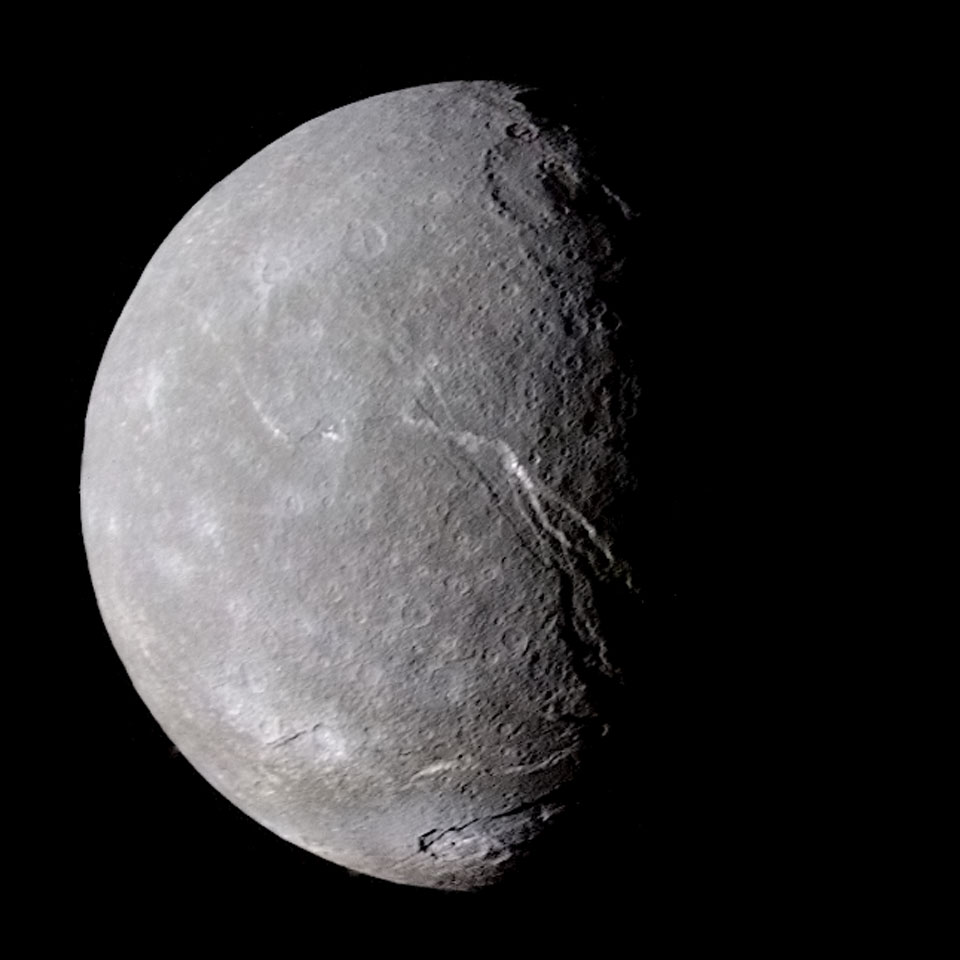
ティタニアの荒々しい地形は、峡谷、崖、クレーターが混在している。NASAの惑星間探査ロボット宇宙船ボイジャー2号は1986年に天王星最大の衛星ティタニアを通過し、この特徴的な写真を撮影した。ティタニアの溝が天王星の別の衛星アリエルの溝に似ていることから、ティタニアは遠い昔に水が凍結して膨張したことに関連した激しい表面現象を経験したと考えられる。ティタニアは天王星最大の衛星だが、半径は天王星の姉妹惑星である海王星最大の衛星トリトンの約半分に過ぎず、海王星自体も地球の月よりわずかに小さい。1787年にウィリアム・ハーシェルによって発見されたティタニアは、基本的に約半分が水氷、半分が岩石で構成された大きな汚れた氷の球である。放射性加熱によって地下の氷が溶けて海になっているという最近の推測がある。
原文(English)
Titania's tortured terrain is a mix of canyons, cliffs, and craters. NASA's interplanetary robot spacecraft Voyager 2 passed the largest moon of Uranus in 1986 and took the feature picture. That the trenches of Titania resemble those on another moon of Uranus, Ariel, indicate that Titania underwent some violent surface event possibly related to water freezing and expanding in its distant past. Although Titania is Uranus's largest moon, it is only about half the radius of Triton - the largest moon of Uranus's sister planet Neptune, which itself is slightly smaller than Earth's Moon. Titania, discovered by William Herschel in 1787, is essentially a large dirty iceball that is composed of about half water-ice and half rock. There is recent speculation that radioactive heating melts some underground ice into oceans.
\ この感動を宇宙仲間にシェア /
宇宙をXでシェア
© NASA / APOD