
🚀 宇宙の記憶・カレンダー検索
🚀 象徴的な写真:
APOD第1回
🚀 創造の柱
🚀 スピリット火星着陸
🚀 ハッブル超深宇宙
🚀 地球へようこそ|ブルー・マーブル
🚀 エンケラドス
🚀 ベテルギウス
🚀 火星着陸
🚀 青い夕焼け
🚀 冥王星のハート
🚀 皆既日食
🚀 アースライズ再構築
🚀 ブラックホール
🚀 ウェッブ初画像
🚀 アポロ11着陸
APOD30周年(2025年6月16日)
ヒマラヤの谷の上空を飛ぶR3 PanSTARRS彗星
Comet R3 PanSTARRS over a Himalayan Valley
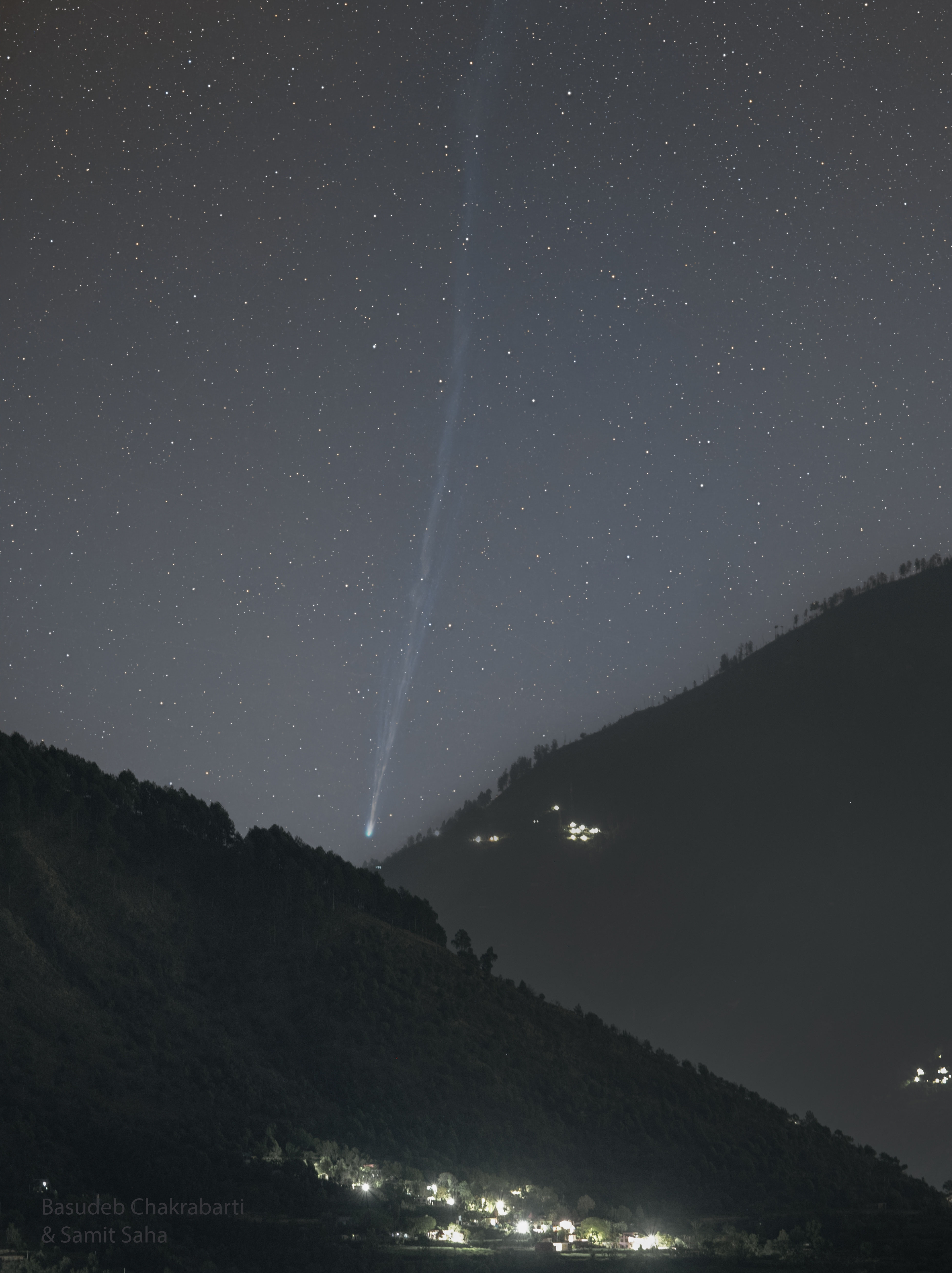
R3 PanSTARRS彗星の長い尾を見る最良の方法はカメラを使うことです。今週、最近明るくなったこの彗星は、夜明け直前の北の空、東の空に現れますが、肉眼ではほとんど見えません。長時間露光で撮影された多度のイオン尾は、彗星としては珍しいものではありません。これは主に、尾が太陽から遠ざかる方向を向いているため、地球からほぼ横向きに見えることが原因です。先週撮影された特集画像では、C/2025 R3 (PanSTARRS)彗星が、インドのヒマラヤ山脈の2つの峰の間の谷を流れるような尾を見せています。彗星は昨日、太陽に最も接近しました。来週、地球に最も接近するにつれて、茂み状の塵の尾が見えるようになるかもしれません。彗星はゆっくりと北の空から移動しており、月末には太陽系を離れるにつれて暗くなり、日没後に南の空に見えるようになります。成長中のギャラリー:2026年のR3 PanSTARRS彗星
原文(English)
The best way to see comet R3 PanSTARRS’s long tail is with a camera. This week, the recently brightened comet appears in northern skies to the east just before dawn, but is only barely visible to the unaided eye. The many-degree ion tail captured on long duration camera exposures is not unusual for a comet - it is primarily due to the Earth's nearly sideways view of the tail as it points away from the Sun. In the featured image taken last week, Comet C/2025 R3 (PanSTARRS) showed off its flowing tail through a valley between two peaks in the Himalayan mountains of India. The comet passed its closest to the Sun yesterday. As it nears its closest approach to Earth next week, a bushy dust tail may become visible. The comet is slowly moving out of northern skies and by the end of the month will be visible after sunset in southern skies as it fades and leaves our Solar System. Growing Gallery: Comet R3 PanSTARRS in 2026
\ この感動を宇宙仲間にシェア /
宇宙をXでシェア
© Basudeb Chakrabarti &
Samit Saha / APOD