
🚀 宇宙の記憶・カレンダー検索
🚀 象徴的な写真:
APOD第1回
🚀 創造の柱
🚀 スピリット火星着陸
🚀 ハッブル超深宇宙
🚀 地球へようこそ|ブルー・マーブル
🚀 エンケラドス
🚀 ベテルギウス
🚀 火星着陸
🚀 青い夕焼け
🚀 冥王星のハート
🚀 皆既日食
🚀 アースライズ再構築
🚀 ブラックホール
🚀 ウェッブ初画像
🚀 アポロ11着陸
APOD30周年(2025年6月16日)
R3 PanSTARRS彗星とオリオン星雲の接近
The Conjunction of Comet R3 PanSTARRS and the Orion Nebula
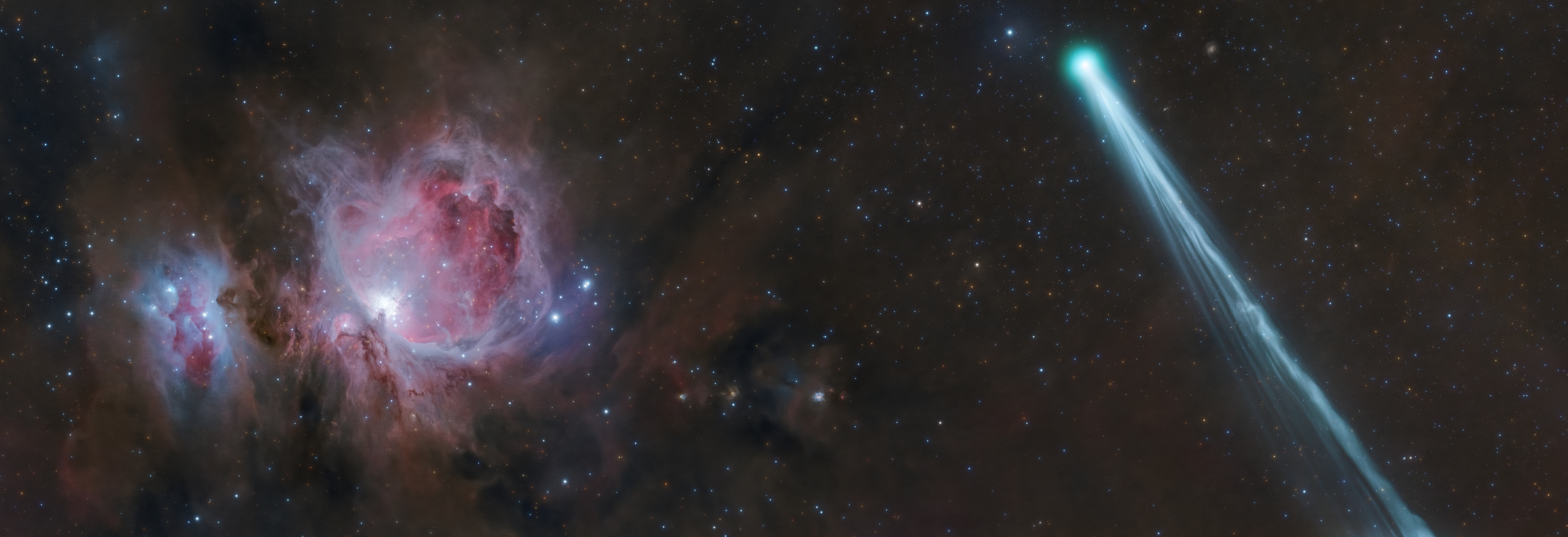
今日の合成画像には、古いもの、新しいもの、借りてきたもの、そして青いものが含まれています。画像の右側を横切る彗星R3 PanSTARRSは、おそらくオールトの雲から来たもので、数十億年前の古い太陽系の遺物です。彗星の核から放出されたガスが太陽光によって電離されるため、明るく伸びたイオンの尾が青く光ります。天文学者はさまざまな理由で彗星に魅了されています。彗星の組成は、太陽系の惑星の構成要素を含む、手つかずのタイムカプセルです。彗星は若い地球に水を運んだ可能性があります。彗星の尾の挙動は、太陽風と放射線の相互作用を解明します。オリオン星雲(M42)を特徴とする背景のモザイクは、2晩の観測で撮影され、彗星は3日目の夜に捉えられました。オリオン星雲は、私たちの最も近い星形成領域であり、約200万年前のもので、私たちにとって(比較的)新しいものです。現在、地球から約1億2750万キロメートル離れたところに位置する、借り物の彗星R3 PanSTARRSが太陽系を去っていくのを見送ります。ギャラリー:2026年の彗星R3
原文(English)
Today’s composite image features something old, something new, something borrowed, and something blue! Comet R3 PanSTARRS, streaking across the right of the image, likely originated from the Oort Cloud, meaning it is an old Solar System relic from billions of years ago. It’s bright extended ion tail glows blue as the gas escaping the comet’s core is ionized by sunlight. Astronomers are fascinated by comets for all sorts of reasons: comet compositions are untouched time capsules containing the building blocks of Solar System planets; comets may have delivered water to the young Earth; the behavior of cometary tails shed light on solar wind and radiation interactions. The background mosaic, featuring the Orion Nebula (M42), was taken over two nights of observation with the comet captured on the third night. The Orion Nebula is our nearest stellar nursery and, at about 2 million years old, is our something (relatively) new! Now at around 127.5 million kilometers from Earth, we wave goodbye to the borrowed Comet R3 PanSTARRS as it leaves the Solar System. Growing Gallery: Comet R3 in 2026
\ この感動を宇宙仲間にシェア /
宇宙をXでシェア
© Julien De Winter,
Sascha Ebeler
Text:
Keighley Rockcliffe
(NASA
GSFC,
UMBC CSST,
CRESST II) / APOD