
🚀 宇宙の記憶・カレンダー検索
🚀 象徴的な写真:
APOD第1回
🚀 創造の柱
🚀 スピリット火星着陸
🚀 ハッブル超深宇宙
🚀 地球へようこそ|ブルー・マーブル
🚀 エンケラドス
🚀 ベテルギウス
🚀 火星着陸
🚀 青い夕焼け
🚀 冥王星のハート
🚀 皆既日食
🚀 アースライズ再構築
🚀 ブラックホール
🚀 ウェッブ初画像
🚀 アポロ11着陸
APOD30周年(2025年6月16日)
小惑星イトカワの異常に滑らかな部分
Unusually Smooth Sections of Asteroid Itokawa
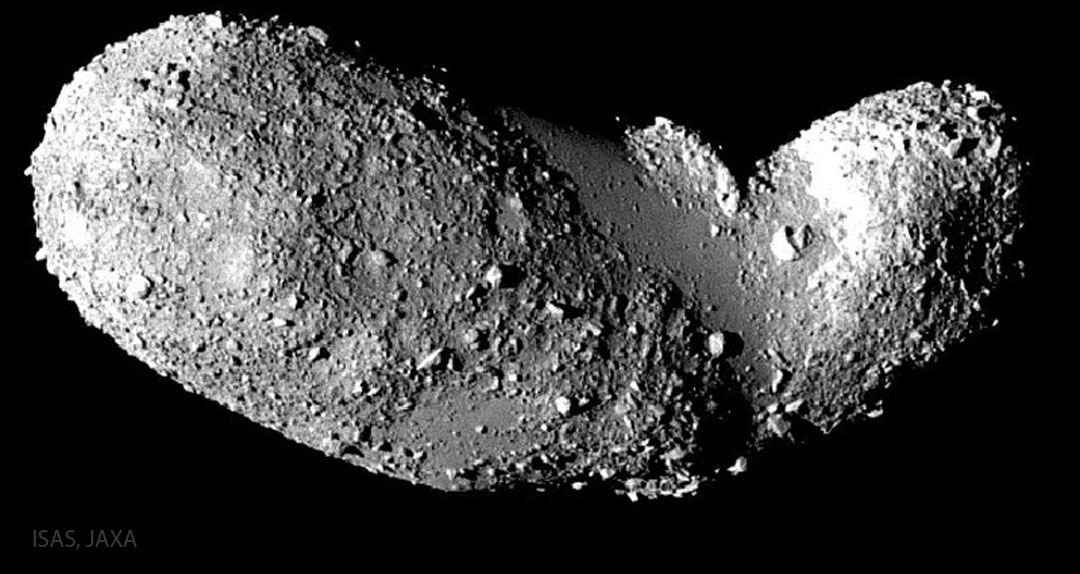
なぜこの小惑星の表面の一部はこんなに滑らかなのでしょうか?その答えは、固い岩石ではなく、崩れやすい岩石の塊である小惑星の力学に関係しているようです。珍しい小惑星イトカワは、2005年に日本の宇宙探査機「はやぶさ」によって訪れられ、その特異な構造と謎めいたクレーターの欠如が画像化され、記録されました。滑らかな部分と凹凸のある部分の境界領域の分析によると、小惑星の揺れが、ブラジルナッツ効果のように、表面近くの大小の岩石の分離を引き起こしている可能性があります。ロボット探査機「はやぶさ」は実際に、MUSES海と呼ばれる滑らかな部分の一つに着陸し、土壌サンプルを採取しました。これらのサンプルは地球に持ち帰られ、この珍しい小惑星の古代の歴史だけでなく、太陽系全体の初期の時代についても手がかりを与えています。コンピューターシミュレーションによると、直径500メートルの小惑星イトカワは、今後数百万年以内に地球に衝突する可能性があります。宇宙を揺るがす:今日は小惑星の日
原文(English)
Why are parts of this asteroid's surface so smooth? The answer seems likely to do with the dynamics of an asteroid that is a loose pile of rubble rather than a solid rock. The unusual asteroid Itokawa was visited by the Japanese spacecraft Hayabusa in 2005 which imaged and documented its unusual structure and mysterious lack of craters. Analyses of the border regions between smooth and rugged sections indicate that jostling of the asteroid might be creating segregation between large and small rocks near the surface, like the Brazil nut effect. The robotic Hayabusa actually touched down on one of the smooth patches, dubbed the MUSES Sea, and collected soil samples. These samples were returned to Earth and are not only giving clues to the ancient history of this unusual asteroid, but also about the early years of our entire Solar System. Computer simulations show that 500-meter asteroid Itokawa may impact the Earth within the next few million years. Rocking Space: Today is Asteroid Day
\ この感動を宇宙仲間にシェア /
宇宙をXでシェア
© NASA / APOD