
🚀 宇宙の記憶・カレンダー検索
🚀 象徴的な写真:
APOD第1回
🚀 創造の柱
🚀 スピリット火星着陸
🚀 ハッブル超深宇宙
🚀 地球へようこそ|ブルー・マーブル
🚀 エンケラドス
🚀 ベテルギウス
🚀 火星着陸
🚀 青い夕焼け
🚀 冥王星のハート
🚀 皆既日食
🚀 アースライズ再構築
🚀 ブラックホール
🚀 ウェッブ初画像
🚀 アポロ11着陸
APOD30周年(2025年6月16日)
RCW 86:歴史的な超新星残骸
RCW 86: Historical Supernova Remnant
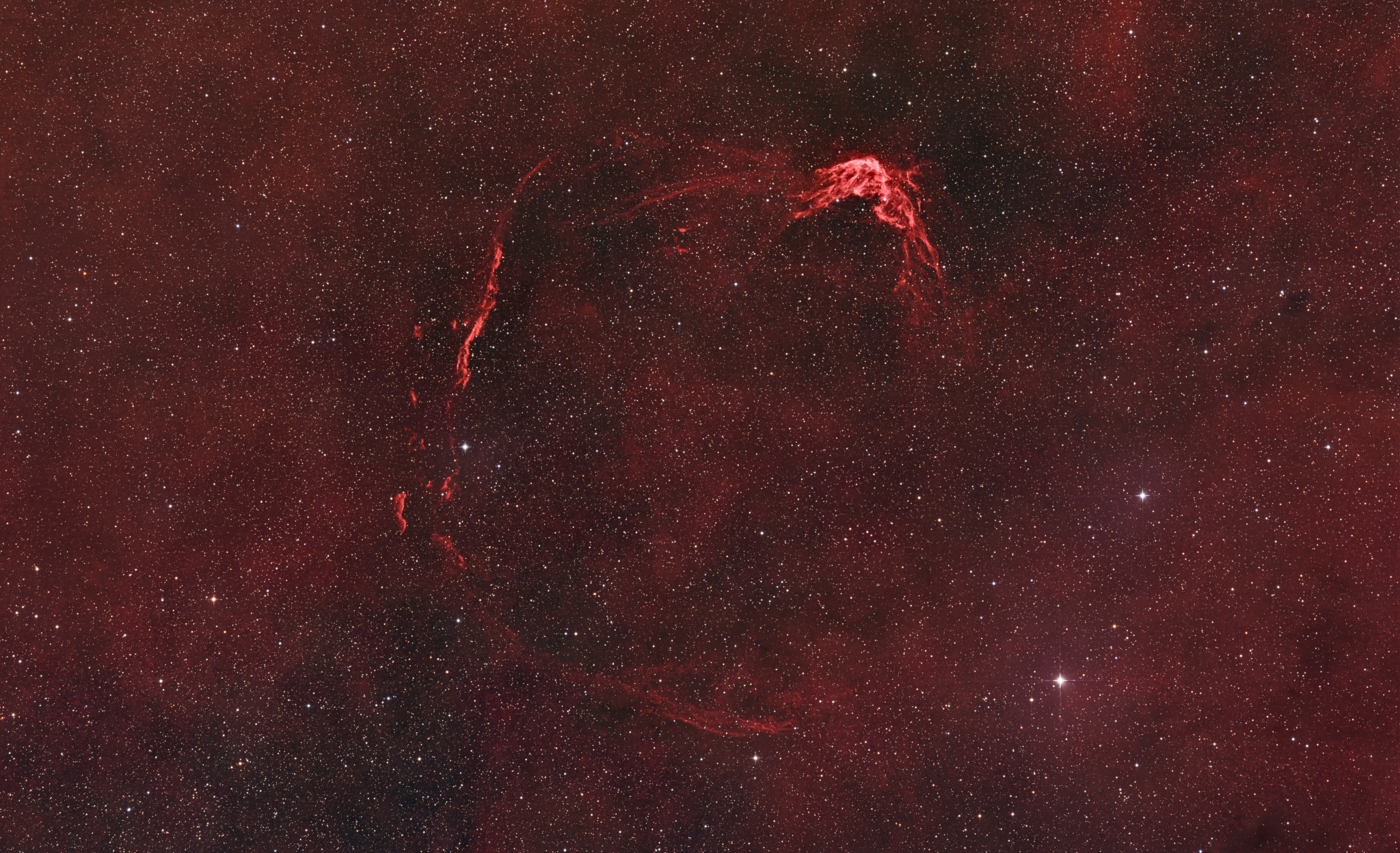
西暦185年、中国の天文学者たちは南門星群に新しい星が現れたことを記録した。この空域は、現代の星図では南天のケンタウルス座の一部に相当する。実際、この新しい星は数ヶ月間肉眼で見えた後、消えていったと報告されており、現在では記録に残る最古の超新星と考えられている。21世紀の望遠鏡画像では、この歴史的な星の爆発の残骸として認識されているかすかな輝線星雲のぼんやりとした輪郭が、星空を背景に描かれている。RCW 86としてカタログ化されたこの星雲は、ギザギザしているがほぼ円形をしており、超新星のまだ膨張している衝撃波によって電離された星間ガスを表している。宇宙からの画像は、RCW 86に鉄が豊富に存在し、残骸内に中性子星やパルサーが存在しないことを示しており、元の超新星はIa型であったことを示唆している。大質量星の核崩壊型超新星爆発とは異なり、Ia型超新星は連星系において伴星から物質を取り込んだ白色矮星で起こる熱核爆発です。天の川銀河の平面付近に位置し、満月よりも大きいこの超新星残骸は、肉眼では見えないほど暗いものです。RCW 86は地球から約8,000光年離れており、直径は約100光年です。
原文(English)
In 185 AD, Chinese astronomers recorded the appearance of a new star in the Nanmen asterism. That part of the sky is identified with part of the southern constellation Centaurus on modern star charts. In fact, the new star was reported to be visible to the naked eye for months before it faded from view, and is now thought to be the earliest recorded supernova. In this 21st century telescopic image, the wispy outlines of a faint emission nebula recognized as the remnant of that historical stellar explosion can be traced against a starry background. The ragged but roughly circular extent of the nebula, cataloged as RCW 86, represents interstellar gas ionized by the supernova's still expanding shock wave. Space-based images indicate an abundance of the element iron in RCW 86 and the absence of a neutron star or pulsar within the remnant, suggesting that the original supernova was Type Ia. Unlike the core collapse supernova explosion of a massive star, a Type Ia supernova is a thermonuclear detonation on a white dwarf star that has accreted material from its companion in a binary star system. Near the plane of our Milky Way galaxy and larger than the full moon on the sky this supernova remnant is too faint to be seen by eye though. RCW 86 is some 8,000 light-years distant and around 100 light-years across.
\ この感動を宇宙仲間にシェア /
宇宙をXでシェア
© Chinese astronomers / APOD