
🚀 宇宙の記憶・カレンダー検索
🚀 象徴的な写真:
APOD第1回
🚀 創造の柱
🚀 スピリット火星着陸
🚀 ハッブル超深宇宙
🚀 地球へようこそ|ブルー・マーブル
🚀 エンケラドス
🚀 ベテルギウス
🚀 火星着陸
🚀 青い夕焼け
🚀 冥王星のハート
🚀 皆既日食
🚀 アースライズ再構築
🚀 ブラックホール
🚀 ウェッブ初画像
🚀 アポロ11着陸
APOD30周年(2025年6月16日)
クエーサーと銀河の衝突?
A Quasar - Galaxy Collision?
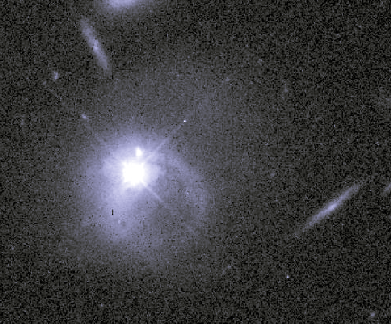
1963年、天文学者たちは、ある種の暗い星のような天体が非常に大きな赤方偏移を示すことを発見し、驚愕した。この大きな赤方偏移は、現在クエーサー(QUASi-stellAR objects)として知られるこれらの天体が、観測可能な宇宙の端付近に存在することを示唆している。数十億光年という極めて遠い距離から見えるためには、膨大な量のエネルギーを放出しているに違いない。では、そのエネルギーはどこから来るのだろうか?最も広く受け入れられているモデルでは、クエーサーは中心にある超大質量ブラックホールによってエネルギー供給されている活動銀河の明るい核であるとされている。
原文(English)
In 1963 astronomers were astounded to discover that certain faint, star-like objects have very large redshifts. The large redshifts imply that these objects, now known as quasars (QUASi-stellAR objects), lie near the edge of the observable Universe. To be visible at such extreme distances of billions of light years, they must emit tremendous amounts of energy. Where does the energy come from? In the most widely accepted model, a quasar is the bright nucleus of an active galaxy powered by a central, supermassive black hole.
\ この感動を宇宙仲間にシェア /
宇宙をXでシェア
© NASA / APOD