
🚀 宇宙の記憶・カレンダー検索
🚀 象徴的な写真:
APOD第1回
🚀 創造の柱
🚀 スピリット火星着陸
🚀 ハッブル超深宇宙
🚀 地球へようこそ|ブルー・マーブル
🚀 エンケラドス
🚀 ベテルギウス
🚀 火星着陸
🚀 青い夕焼け
🚀 冥王星のハート
🚀 皆既日食
🚀 アースライズ再構築
🚀 ブラックホール
🚀 ウェッブ初画像
🚀 アポロ11着陸
APOD30周年(2025年6月16日)
M1:蟹座の極性化
M1: Polarization of the Crab
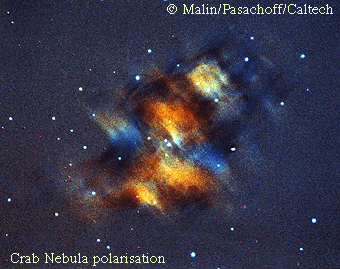
かに星雲は、超新星爆発を起こした恒星によって形成されました。かに星雲の原因となった恒星爆発は900年以上前に観測されましたが、星雲自体は今もなお膨張し、輝き続けています。放出された光の多くは偏光していることがわかっています。同じ偏光を持つ光波は同じ平面で振動します。光波は表面からの反射によって偏光することがあり、これはサングラスをかけた漁師やスキーヤーには馴染みのある現象です。偏光は、強い磁場を持つ領域からも放出されることがあります。上の図では、偏光の異なる領域が異なる色で強調表示されています。偏光をマッピングすることで、天文学者は観測された光がどのような物理的プロセスによって生成されたかを解明することができます。
原文(English)
The Crab Nebula resulted from a star that exploded - a supernova. Although the stellar explosion that caused the Crab Nebula was seen over 900 years ago, the nebula itself still expands and shines. Much of the emitted light has been found to be polarized. Light waves with the same polarization vibrate in the same plane. Light waves can be polarized by reflection from a surface, an effect familiar to sunglass wearing fishermen and skiers. Polarized light can also be emitted by regions that contain strong magnetic fields. Areas of different polarization above are highlighted by different colors. Mapping the polarization helps astronomers decipher which physical processes create the observed light.
\ この感動を宇宙仲間にシェア /
宇宙をXでシェア
© AATB,
Caltech, David Malin, Jay
Pasachoff / APOD