
🚀 宇宙の記憶・カレンダー検索
🚀 象徴的な写真:
APOD第1回
🚀 創造の柱
🚀 スピリット火星着陸
🚀 ハッブル超深宇宙
🚀 地球へようこそ|ブルー・マーブル
🚀 エンケラドス
🚀 ベテルギウス
🚀 火星着陸
🚀 青い夕焼け
🚀 冥王星のハート
🚀 皆既日食
🚀 アースライズ再構築
🚀 ブラックホール
🚀 ウェッブ初画像
🚀 アポロ11着陸
APOD30周年(2025年6月16日)
水星のカロリス盆地
Mercury's Caloris Basin
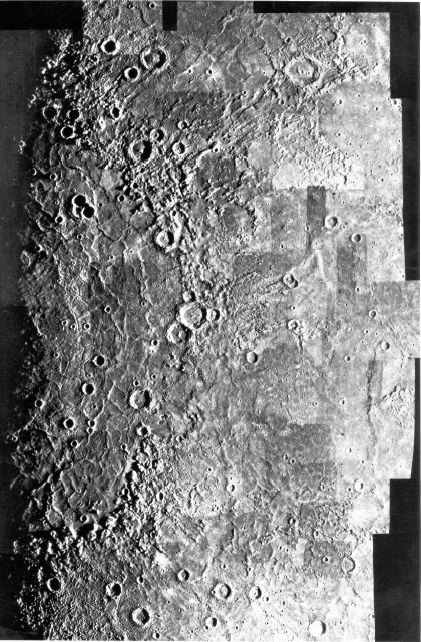
太陽に最も近い惑星である水星の表面には、地球の月のように無数のクレーターが存在します。水星の表面で最大の地形は、小惑星との衝突によって形成されたカロリス盆地です。直径1000キロメートルを超えるこの盆地は、上の写真の下部にある大きな円形の地形として見ることができます。同様の地形は、月の東部海(Mare Orientale)などにも見られます。カロリス盆地は「太陽直下点」に近いため、非常に高温になります。太陽直下点とは、水星が太陽に最も接近した際に、太陽の真下に位置する点のことです。
原文(English)
Mercury, the closest planet to the Sun, has a surface with so many craters it resembles the Earth's Moon. The largest surface feature on Mercury is the Caloris Basin, which resulted from a collision with an asteroid. The basin, which is more that 1000 kilometers across, is visible as the large circular feature at the bottom of the above photograph. Similar features, such as the Mare Orientale, are seen on the Moon. The Caloris Basin gets very hot because it is near the "sub-solar point" - the point on Mercury's surface that is directly under the Sun when Mercury is closest to the Sun.
\ この感動を宇宙仲間にシェア /
宇宙をXでシェア
© NASA / APOD