
🚀 宇宙の記憶・カレンダー検索
🚀 象徴的な写真:
APOD第1回
🚀 創造の柱
🚀 スピリット火星着陸
🚀 ハッブル超深宇宙
🚀 地球へようこそ|ブルー・マーブル
🚀 エンケラドス
🚀 ベテルギウス
🚀 火星着陸
🚀 青い夕焼け
🚀 冥王星のハート
🚀 皆既日食
🚀 アースライズ再構築
🚀 ブラックホール
🚀 ウェッブ初画像
🚀 アポロ11着陸
APOD30周年(2025年6月16日)
流れ星屑をキャッチする
Catching Falling Stardust
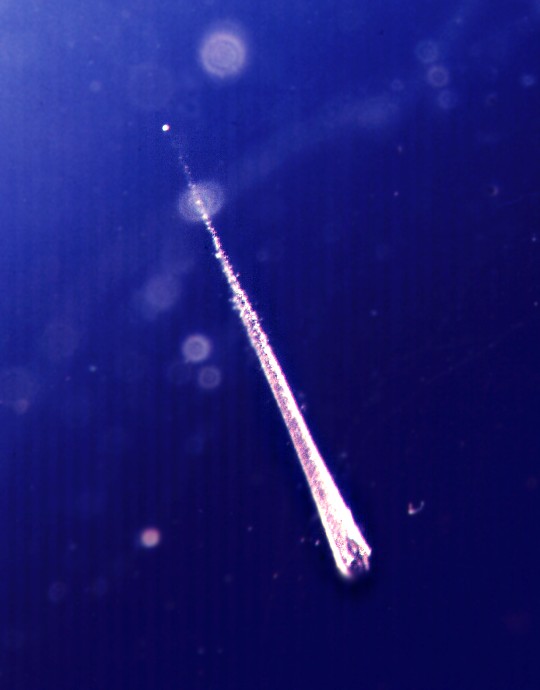
このニンジン型の軌跡は、実際には長さがわずか500分の1インチ強です。これは、スペースシャトルが打ち上げたEURECA(欧州回収キャリア)宇宙船によって低軌道で宇宙に露出されたゲルの中を流星体が通過した軌跡です。直径約1000分の1インチの流星体自体は、ニンジンの先端(右端)のすぐ向こう側で停止した場所が見えます。これに似た惑星間塵粒子の化学分析によると、それらのいくつかは彗星の破片であり、太陽系形成の初期段階の物質のサンプルである可能性があります。1999年に打ち上げが計画されているNASAのスターダスト計画は、彗星の尾から直接塵を採取して地球に持ち帰ることを試みます。
原文(English)
This carrot shaped track is actually little more than 5 hundredths of an inch long. It is the trail of a meteroid through a gel exposed to space in low earth orbit by the shuttle launched EURECA (European Recoverable Carrier) spacecraft. The meteoroid itself, about a thousandth of an inch in diameter, is visible where it came to rest, just beyond the tip of the carrot (far right). Chemical analyses of interplanetary dust particles similar to this one suggest that some of them may be bits of comets and represent samples of material from the early stages of the formation of the Solar System. NASA's Stardust mission, planned for launch in 1999, will attempt to directly collect dust from the tail of a comet and return it to Earth.
\ この感動を宇宙仲間にシェア /
宇宙をXでシェア
© NASA / APOD