
🚀 宇宙の記憶・カレンダー検索
🚀 象徴的な写真:
APOD第1回
🚀 創造の柱
🚀 スピリット火星着陸
🚀 ハッブル超深宇宙
🚀 地球へようこそ|ブルー・マーブル
🚀 エンケラドス
🚀 ベテルギウス
🚀 火星着陸
🚀 青い夕焼け
🚀 冥王星のハート
🚀 皆既日食
🚀 アースライズ再構築
🚀 ブラックホール
🚀 ウェッブ初画像
🚀 アポロ11着陸
APOD30周年(2025年6月16日)
しぶんぎ座流星群:流星を俯瞰的に見る
Quadrantids: Meteors in Perspective
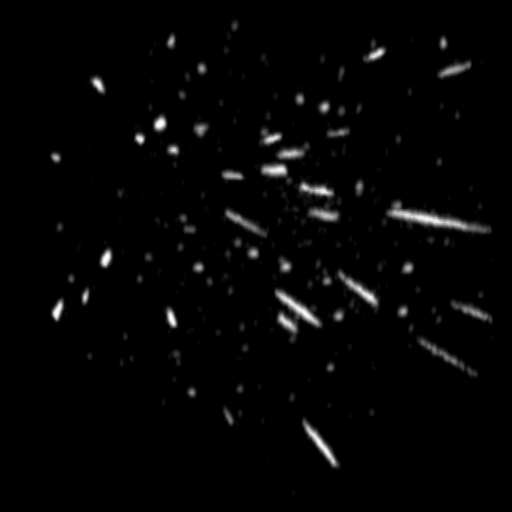
流星群は、塵ほどの大きさかそれ以上の大きさの固体粒子が集団で宇宙空間を移動することによって発生します。多くの場合、これらの流星群の軌道は彗星の塵の尾と一致します。地球がこれらの流星群を通過すると、粒子は大気圏で燃え尽きる際に、夜空に輝く軌跡を残します。上の画像は、しぶんぎ座流星群として知られる流星群の画像です。これは、ビデオ流星観測用の新しいシステムであるMOVIEを使用して1995年1月に撮影されました。この画像を作成するために、ビデオテープのフレームがコンピューターで処理され、重ね合わされて、流星群の多くの流星の相対的な経路が示されました。流星の経路はすべて互いに平行ですが、遠近法の効果により、軌跡は空の遠くの放射点から始まっているように見えます。細長く伸びた流星の軌跡とは対照的に、おなじみの星座であるおおぐま座(北斗七星)の明るい星々が、画像の下半分に点として見えます。
原文(English)
Meteor showers are caused by streams of solid particles, dust size and larger, moving as a group through space. In many cases, the orbits of these meteor streams can be identified with the dust tails of comets. When the Earth passes through the streams, the particles leave brilliant trails through the night sky as they burn up in the atmosphere. Above is an image of a meteor shower known as the Quadrantids. It was made in January 1995 using MOVIE, a new system for making video meteor observations. To make the image, frames from a video tape were computer processed and superposed to show the relative paths of many meteors in the shower. The meteor paths are all parallel to each other, but the effect of perspective causes the trails to appear to originate from a distant radiant point in the sky. In contrast to the elongated meteor trails, the brighter stars of the familiar constellation Ursa Major (the Big Dipper) are visible as points in the lower half of the image.
\ この感動を宇宙仲間にシェア /
宇宙をXでシェア
© NASA / APOD