
🚀 宇宙の記憶・カレンダー検索
🚀 象徴的な写真:
APOD第1回
🚀 創造の柱
🚀 スピリット火星着陸
🚀 ハッブル超深宇宙
🚀 地球へようこそ|ブルー・マーブル
🚀 エンケラドス
🚀 ベテルギウス
🚀 火星着陸
🚀 青い夕焼け
🚀 冥王星のハート
🚀 皆既日食
🚀 アースライズ再構築
🚀 ブラックホール
🚀 ウェッブ初画像
🚀 アポロ11着陸
APOD30周年(2025年6月16日)
スプートニク:旅のお供
Sputnik: The Traveling Companion
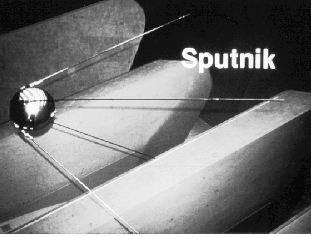
スプートニクとは「旅の仲間」という意味です。この無邪気な響きの名前とは正反対に、1957年10月4日にソ連が打ち上げた地球初の「人工月」スプートニク1号は自由世界に衝撃を与え、NASAの設立や月面着陸競争につながる一連の出来事を引き起こしました。スプートニク1号は、重さ184ポンド、直径22インチの球体で、電池式の送信機に接続された4本のホイップアンテナが付いていました。送信機は23日間、驚愕する地上の観衆に向けて連続的な「ビープ音」信号を送信しました。そのわずか1か月後の11月3日、ソ連はこの成功に続き、スプートニク2号に犬を乗せて軌道に乗せました。
原文(English)
Sputnik means "traveling companion". In stark contrast to this innocent sounding name, the launch of the Earth's first "artificial moon", Sputnik 1, by the Soviets on October 4, 1957 shocked the free world, setting in motion events which resulted in the creation of NASA and the race to the Moon. Sputnik I was a 184 pound, 22 inch diameter sphere with four whip antennas connected to battery powered transmitters. The transmitters broadcast a continuous "beeping" signal to an astounded earthbound audience for 23 days. A short month later, on November 3, the Soviets followed this success by launching a dog into orbit aboard Sputnik 2.
\ この感動を宇宙仲間にシェア /
宇宙をXでシェア
© NASA / APOD