
🚀 宇宙の記憶・カレンダー検索
🚀 象徴的な写真:
APOD第1回
🚀 創造の柱
🚀 スピリット火星着陸
🚀 ハッブル超深宇宙
🚀 地球へようこそ|ブルー・マーブル
🚀 エンケラドス
🚀 ベテルギウス
🚀 火星着陸
🚀 青い夕焼け
🚀 冥王星のハート
🚀 皆既日食
🚀 アースライズ再構築
🚀 ブラックホール
🚀 ウェッブ初画像
🚀 アポロ11着陸
APOD30周年(2025年6月16日)
ジュリアス・シーザーと閏日
Julius Caesar and Leap Days
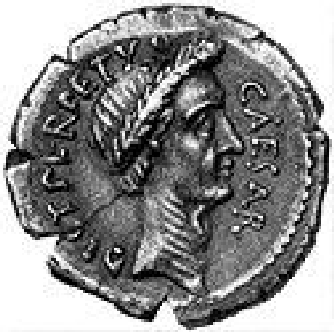
本日2月29日は閏日です。閏日は比較的まれな出来事です。アレクサンドリアの天文学者ソシゲネスの助言を受け、ローマの独裁者ユリウス・カエサル(上図は自ら鋳造した硬貨に描かれている)は紀元前46年に、4年に1回閏日を設ける暦体系を制定しました。閏日を追加した理由は、地球が太陽の周りを一周する時間で定義される1年が、地球が1回転する時間で定義される正確な整数日数ではないためです。実際、これらの天文学的な定義では、1年は約365.24219日です。もしすべての暦年が365日であれば、実際の1年と4年に1回程度ずれが生じます。そうなると、7月(ユリウス・カエサルの死後に名付けられた)は北半球の冬に重なってしまうでしょう。ほとんどの年を365日とし、4年に1回を366日にすることで、暦年と実際の1年はより一致した状態を保つことができました。この「ユリウス暦」は1582年まで使用されていましたが、グレゴリウス13世が、閏日は400で割り切れる場合を除き、末尾が「00」の年には設けてはならないと規定し、さらに微調整を加えました。現在最も一般的に使用されているのは、この「グレゴリオ暦」です。
原文(English)
Today, February 29th, is a leap day - a relatively rare occurrence. Advised by Alexandrian astronomer Sosigenes, Roman dictator Julius Caesar, pictured above in a self-decreed minted coin, created a calender system in 46 BC that contained one leap day every four years. The reason for adding leap days was that a year - defined by the time it takes the Earth to circle the Sun - does not actually take an exact integer number of days - defined by the time it takes for the Earth to rotate once. In fact, one year by these astronomical definitions is about 365.24219 days. If all calendar years contained 365 days, they would drift from the actual year by about 1 day every 4 years. Eventually July (named posthumously for Julius Caesar himself) would occur during the northern hemisphere winter! By making most years 365 days but every fourth year 366 days, the calendar year and the actual year remained more nearly in step. This "Julian" calender system was used until the year 1582 when Pope Gregory XIII added that leap days should not occur in years ending in "00" except if divisible by 400, providing a further fine tuning. This "Gregorian" calender system is the one in most common use today.
\ この感動を宇宙仲間にシェア /
宇宙をXでシェア
© NASA / APOD