
🚀 宇宙の記憶・カレンダー検索
🚀 象徴的な写真:
APOD第1回
🚀 創造の柱
🚀 スピリット火星着陸
🚀 ハッブル超深宇宙
🚀 地球へようこそ|ブルー・マーブル
🚀 エンケラドス
🚀 ベテルギウス
🚀 火星着陸
🚀 青い夕焼け
🚀 冥王星のハート
🚀 皆既日食
🚀 アースライズ再構築
🚀 ブラックホール
🚀 ウェッブ初画像
🚀 アポロ11着陸
APOD30周年(2025年6月16日)
百武彗星の軌道
Comet Hyakutake's Orbit
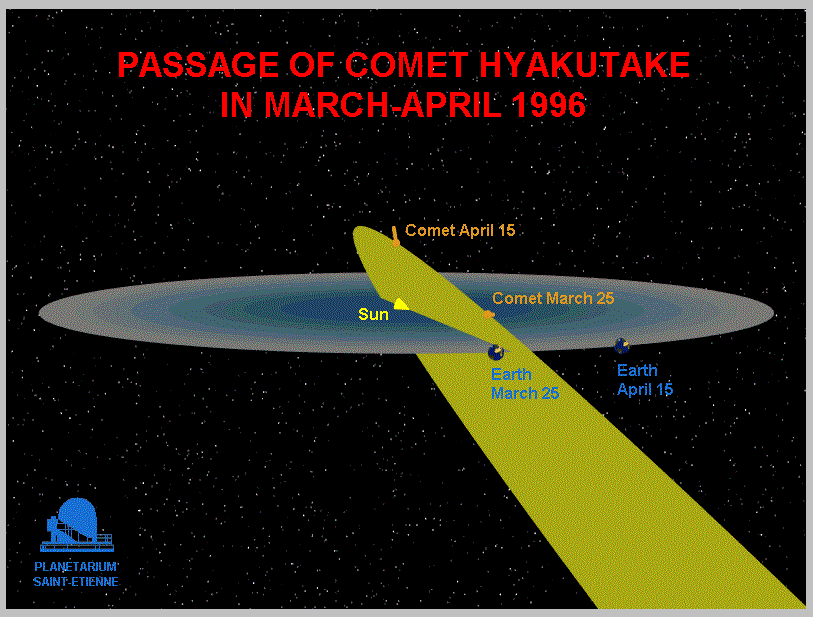
百武彗星はどこから来たのでしょうか? 上の図は、地球とこの明るく輝く彗星の軌道を示しています。青い円盤は、中心の太陽の周りを回る地球の円軌道によって囲まれています。緑色の部分は彗星の軌道です。彗星の軌道は放物線に近い形をしています。この彗星は太陽系の外縁部からやってきて、3月下旬に地球に接近し、4月下旬には太陽に接近します。百武彗星は、地球に非常に接近するため3月下旬に明るく見え、太陽に非常に接近するため4月下旬にも再び明るく見えます。3月下旬には、彗星は地球の「北」に位置するため、北半球でのみ観測可能です。百武彗星の観測方法については、多くの大学の天文学科やプラネタリウムで情報が得られます。参考資料:1996年4月の「宇宙のスケールに関する議論」
原文(English)
Where did Comet Hyakutake come from? The orbits of the Earth and this brightening comet are shown in the above diagram. The blue disk is bounded by the circular orbit of the Earth about the central Sun. The comet's path outlines the green shape. The shape of the comet's orbit is close to a parabola. The comet has come in from the outer Solar System, will pass near the Earth in late March, and pass near the Sun in late April. Comet Hyakutake will appear bright in late March because it is so close to the Earth, and will again appear bright in late April because it is so close to the Sun. In late March, the comet will be "north" of the Earth and so only visible in the Northern hemisphere. Information about how to see Comet Hyakutake is available from many University astronomy departments and planetaria. Information: The Scale of the Universe Debate in April 1996
\ この感動を宇宙仲間にシェア /
宇宙をXでシェア
© NASA / APOD