
🚀 宇宙の記憶・カレンダー検索
🚀 象徴的な写真:
APOD第1回
🚀 創造の柱
🚀 スピリット火星着陸
🚀 ハッブル超深宇宙
🚀 地球へようこそ|ブルー・マーブル
🚀 エンケラドス
🚀 ベテルギウス
🚀 火星着陸
🚀 青い夕焼け
🚀 冥王星のハート
🚀 皆既日食
🚀 アースライズ再構築
🚀 ブラックホール
🚀 ウェッブ初画像
🚀 アポロ11着陸
APOD30周年(2025年6月16日)
彗星の尾は何でできているのか?
What are Comet Tails Made Of?
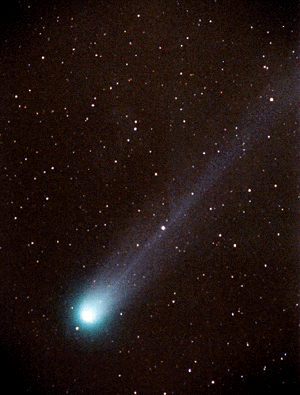
この最新のカラー画像に写っている百武彗星の尾は、太陽の熱によって氷の彗星核から吹き飛ばされ、太陽風によって運ばれた塵とガスで構成されています。太陽の紫外線にさらされたガス分子は分解して励起され、特徴的な光を放ちます。この光が尾からの可視光の原因であり、天文学者は分光器を用いてその構成物質を特定することができます。百武彗星の接近は、この技術を用いて尾の構成物質を調査する絶好の機会となります。典型的な彗星の尾を構成するガスは、水素、炭素、窒素、酸素の単純な組み合わせです。例えば、H2O(水)、CO(一酸化炭素)、CN(シアン)などが一般的です。実際、有毒なCOとCN化合物は、1910年のハレー彗星の出現時にそのスペクトルで観測されました。当時、地球がハレー彗星の尾を通過すると予想されていたため、これは人々の間で懸念を引き起こしました。しかし、数百万マイルにも及ぶ彗星の尾は非常に細く脆いため、地球の大気に危険を及ぼすことはありません。最新の百武彗星の画像:JPL、スロベニアのツルニ・ヴルフ天文台、フェイエットビル・オブザーバー・タイムズ、NASAの「彗星の夜」
原文(English)
The tail of comet Hyakutake, visible in this recent color image, is composed of dust and gas driven off the icy comet nucleus by the Sun's heat and blown away by the solar wind. Bathed in solar ultraviolet light, the gas molecules break down and are excited, producing a characteristic glow. This glow is responsible for visible light from the tail and astronomers using spectroscopes can identify the compounds involved. The close passage of Hyakutake presents an excellent chance to use this technique to explore the composition of its tail. Typical comet gas tail constituents are simple combinations of hydrogen, carbon, nitrogen, and oxygen - for example, H20 (water), CO (carbon monoxide), and CN (cyanogen) are common. In fact, the poisonous CO and CN compounds were seen in the spectrum of Halley's comet during its 1910 apparition. This caused some public concern at the time as the Earth was expected to pass through Halley's tail! However, stretching for millions of miles, comet tails are extremely thin and tenuous and don't pose a danger to the Earth's atmosphere. Latest Comet Hyakutake images: JPL, Crni Vrh Observatory, Slovenia, Fayetteville Observer-Times, NASA's Night of the Comet
\ この感動を宇宙仲間にシェア /
宇宙をXでシェア
© NASA / APOD