
🚀 宇宙の記憶・カレンダー検索
🚀 象徴的な写真:
APOD第1回
🚀 創造の柱
🚀 スピリット火星着陸
🚀 ハッブル超深宇宙
🚀 地球へようこそ|ブルー・マーブル
🚀 エンケラドス
🚀 ベテルギウス
🚀 火星着陸
🚀 青い夕焼け
🚀 冥王星のハート
🚀 皆既日食
🚀 アースライズ再構築
🚀 ブラックホール
🚀 ウェッブ初画像
🚀 アポロ11着陸
APOD30周年(2025年6月16日)
翻訳エラー: Exception: 1 日にサービス translate を実行した回数が多すぎます。
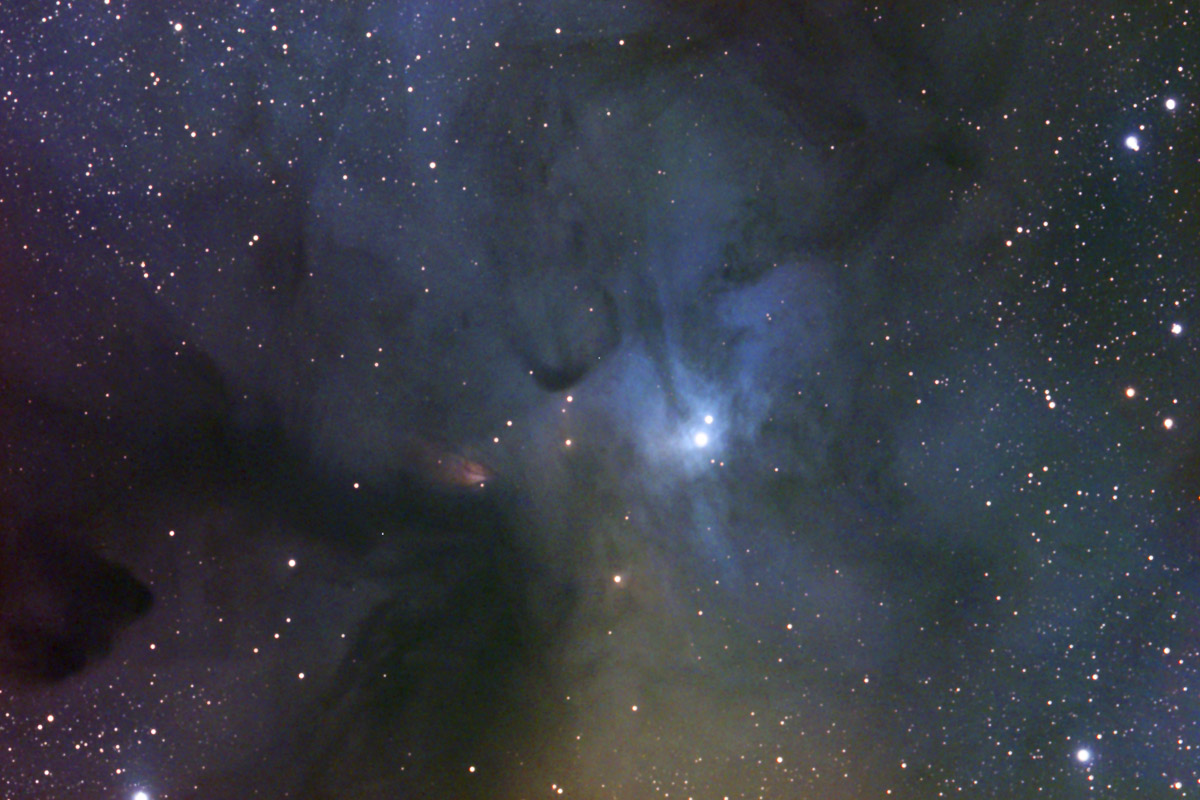
IC 4603: Reflection Nebula in Ophiuchius
翻訳エラー: Exception: 1 日にサービス translate を実行した回数が多すぎます。
原文(English)
Why does this starfield photograph resemble an impressionistic painting? The effect is created not by digital trickery but by large amounts of interstellar dust. Dust, minute globs rich in carbon and similar in size to cigarette smoke, frequently starts in the outer atmospheres of large, cool, young stars. The dust is dispersed as the star dies and grows as things stick to it in the interstellar medium. Dense dust clouds are opaque to visible light and can completely hide background stars. For less dense clouds, the capacity of dust to preferentially reflect blue starlight becomes important, effectively blooming the stars blue light out and marking the surrounding dust. Nebular gas emissions, typically brightest in red light, can combine to form areas seemingly created on an artist's canvas. Photographed above is roughly one square degree of the nebula IC 4603 near the bright star Antares toward the constellation of Ophiuchus.
\ この感動を宇宙仲間にシェア /
宇宙をXでシェア
©
Gary Stevens
/ APOD