
🚀 宇宙の記憶・カレンダー検索
🚀 象徴的な写真:
APOD第1回
🚀 創造の柱
🚀 スピリット火星着陸
🚀 ハッブル超深宇宙
🚀 地球へようこそ|ブルー・マーブル
🚀 エンケラドス
🚀 ベテルギウス
🚀 火星着陸
🚀 青い夕焼け
🚀 冥王星のハート
🚀 皆既日食
🚀 アースライズ再構築
🚀 ブラックホール
🚀 ウェッブ初画像
🚀 アポロ11着陸
APOD30周年(2025年6月16日)
翻訳エラー: Exception: 1 日にサービス translate を実行した回数が多すぎます。
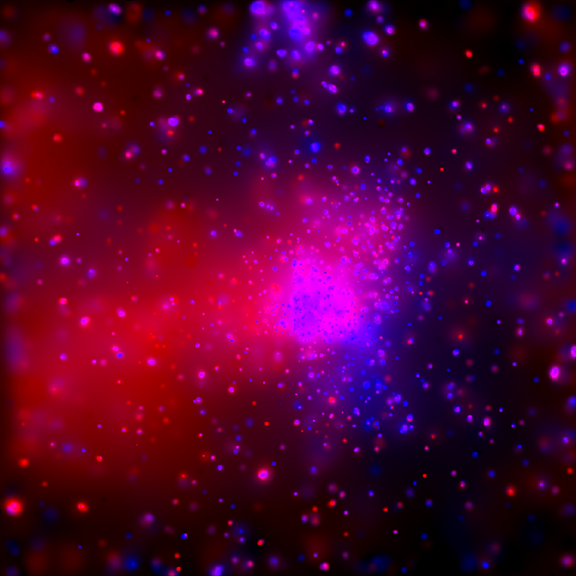
X-Rays from M17
翻訳エラー: Exception: 1 日にサービス translate を実行した回数が多すぎます。
原文(English)
About 5,000 light-years away, toward the constellation Sagittarius and the center of our galaxy, lies the bright star forming region cataloged as M17. In visible light, M17's bowed and hollowed-out appearance has resulted in many popular names like the Horseshoe, Swan, Omega, and Lobster nebula. But what has sculpted this glowing gas cloud? This Chandra Observatory image of x-rays from M17 provides a clue. Many massive young stars are responsible for the pink central region of the false-color x-ray picture, their colliding stellar winds producing the multimillion degree gas cloud which extends ten or so light-years to the left. When compared with visible light images, this x-ray hot cloud is partly surrounded by the nebula's cooler gas. In fact, having carved out a central cavity the hot gas seems to be flowing out of the horseshoe shape like champagne from an uncorked bottle ... suggesting yet another name for star forming region M17.
\ この感動を宇宙仲間にシェア /
宇宙をXでシェア
© NASA / APOD