
🚀 宇宙の記憶・カレンダー検索
🚀 象徴的な写真:
APOD第1回
🚀 創造の柱
🚀 スピリット火星着陸
🚀 ハッブル超深宇宙
🚀 地球へようこそ|ブルー・マーブル
🚀 エンケラドス
🚀 ベテルギウス
🚀 火星着陸
🚀 青い夕焼け
🚀 冥王星のハート
🚀 皆既日食
🚀 アースライズ再構築
🚀 ブラックホール
🚀 ウェッブ初画像
🚀 アポロ11着陸
APOD30周年(2025年6月16日)
翻訳エラー: Exception: 1 日にサービス translate を実行した回数が多すぎます。
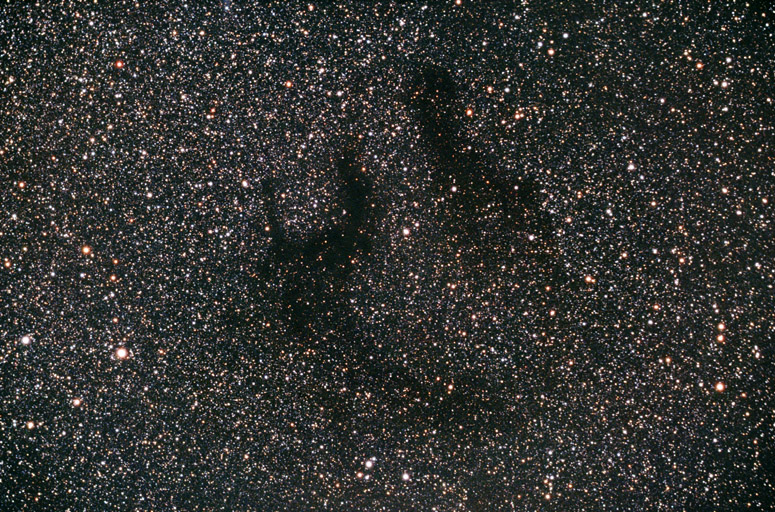
The E Nebula in Aquila
翻訳エラー: Exception: 1 日にサービス translate を実行した回数が多すぎます。
原文(English)
Several unusual strands of darkness are prominent toward the constellation of Aquila. This particular dark nebula is known as the E Nebula, for its evocative shape, or B142 and B143, for its position(s) on a list of such nebula compiled by Barnard. The E Nebula spans roughly the angle of a full Moon and lies about 2000 light years distant. The nebula can be seen with binoculars and is particularly visible during the summer months in Earth's northern hemisphere. Other names for dark nebula include absorption nebula, as they efficiently absorb visible light emitted behind them, and molecular clouds, as they frequently attain temperatures low enough so that several different types of stable molecules can exist. The low temperatures of these interstellar clouds facilitate the formation of dense knots of gas that may then collapse into bright stars.
\ この感動を宇宙仲間にシェア /
宇宙をXでシェア
©
Chris Cook
/ APOD