
🚀 宇宙の記憶・カレンダー検索
🚀 象徴的な写真:
APOD第1回
🚀 創造の柱
🚀 スピリット火星着陸
🚀 ハッブル超深宇宙
🚀 地球へようこそ|ブルー・マーブル
🚀 エンケラドス
🚀 ベテルギウス
🚀 火星着陸
🚀 青い夕焼け
🚀 冥王星のハート
🚀 皆既日食
🚀 アースライズ再構築
🚀 ブラックホール
🚀 ウェッブ初画像
🚀 アポロ11着陸
APOD30周年(2025年6月16日)
コロンビア記念駅
Columbia Memorial Station
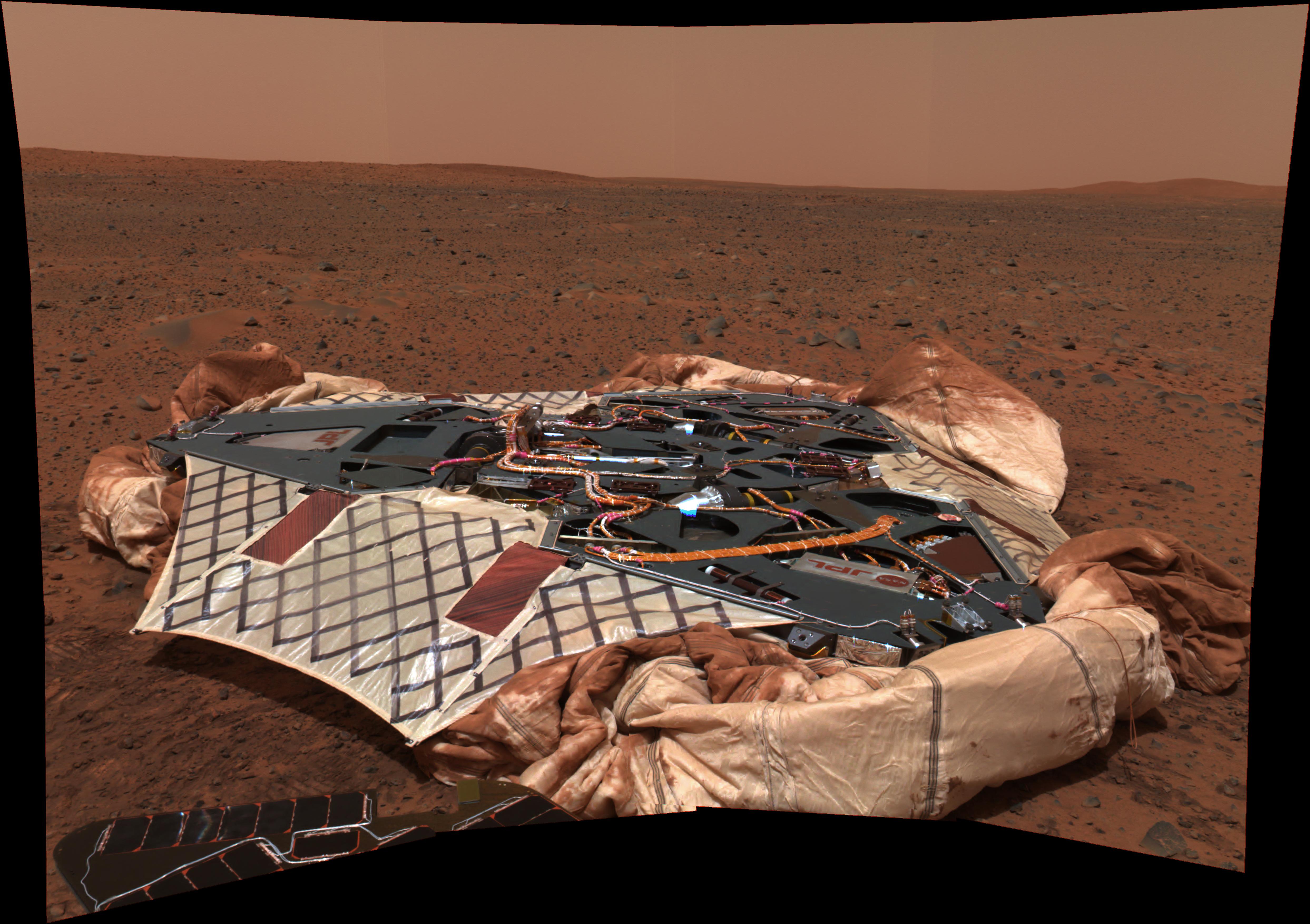
火星探査車スピリットは、着陸地点を離れた後、火星滞在16日目にコロンビア記念基地とグセフ・クレーターの底を見下ろすこの壮大な景色を撮影するために向きを変えました。鮮明な写真は北東方向を向いています。手前には、幅2メートルを超える、空気が抜けたエアバッグに囲まれた着陸プラットフォームと、探査車が火星表面への旅を完了するために使用した脱出ランプがあります。背景には、スピリットの将来のウェイポイントと目的地と思われる場所があります。最初は、直径約200メートルの衝突クレーターに隣接する左側の尾根に向かい、最終的には右側の地平線に見える丘陵地帯に向かいます。クレーターは約250メートル、丘陵地帯は約3キロメートル離れています。古代の水環境の証拠を探すため、スピリットの科学機器は着陸機周辺の地表の組成に関するデータを送信し始めており、鉄を含む火山性鉱物が存在することを示唆しています。
原文(English)
After leaving its nest, the Spirit rover turned to capture this spectacular view over the Columbia Memorial Station and the floor of Gusev crater on the 16th sol of its visit to Mars. The sharp picture looks toward the northeast. Over 2 meters wide, the lander platform surrounded by deflated airbags, and the egress ramp used by the rover to complete its journey to the martian surface, are in the foreground. In the background lie Spirit's likely future waypoints and destination - initially toward a ridge on the left bordering an impact crater about 200 meters across and finally toward the hills visible on the horizon at the right. The crater is about 250 meters away while the hills are about 3 kilometers distant. Searching for evidence of ancient watery environments, Spirit's scientific instruments have begun to return data on the composition of the surface in the lander's vicinity, suggesting that iron-bearing volcanic minerals are present.
\ この感動を宇宙仲間にシェア /
宇宙をXでシェア
© NASA / APOD