
🚀 宇宙の記憶・カレンダー検索
🚀 象徴的な写真:
APOD第1回
🚀 創造の柱
🚀 スピリット火星着陸
🚀 ハッブル超深宇宙
🚀 地球へようこそ|ブルー・マーブル
🚀 エンケラドス
🚀 ベテルギウス
🚀 火星着陸
🚀 青い夕焼け
🚀 冥王星のハート
🚀 皆既日食
🚀 アースライズ再構築
🚀 ブラックホール
🚀 ウェッブ初画像
🚀 アポロ11着陸
APOD30周年(2025年6月16日)
彗星NEATの軌跡(第4四半期)
The Tails of Comet NEAT (Q4)
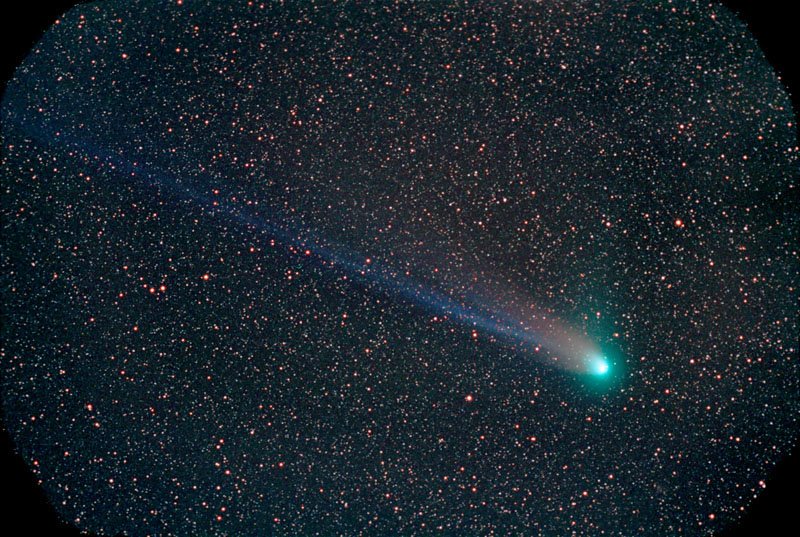
彗星NEAT(Q4)が尾を放っています。正式には彗星C/2001 Q4(NEAT)と名付けられたこの巨大な雪玉は、太陽系の内側に向かって落下しており、すでに地球を通過し、今週土曜日に太陽に最接近します。報告によると、この彗星は3等級で、日没直後の暗い場所から観測する北の空を見上げる人には肉眼で容易に見えるとのことです。上の画像は先週土曜日にアメリカ合衆国アリゾナ州ハッピージャックで撮影されました。長い青いイオンの尾、彗星の核を取り囲む青いコマ、そして短くても明るい太陽光を反射する塵の尾が見えます。Q4は地球と太陽の両方から遠ざかるため、来月には肉眼で容易に見える範囲から遠ざかるでしょう。肉眼で見える別の彗星、彗星リニア(T7)も3等級の明るさで、6月まで明るさを保つと予想されます。
原文(English)
Comet NEAT (Q4) is showing its tails. As the large snowball officially dubbed Comet C/2001 Q4 (NEAT) falls toward the inner Solar System, it has already passed the Earth and will reach its closest approach to the Sun this coming Saturday. Reports place the comet at third magnitude, making it easily visible to the unaided eye to northern sky gazers observing from a dark location just after sunset. The above image was captured last Saturday from Happy Jack, Arizona, USA. Visible is a long blue ion tail, a blue coma surrounding the comet's nucleus, and a shorter but brighter sunlight reflecting dust tail. Q4 will likely drop from easy visibility during the next month as it recedes from both the Earth and the Sun. Another separate naked-eye comet, Comet Linear (T7), is also as bright as third magnitude and should remain bright into June.
\ この感動を宇宙仲間にシェア /
宇宙をXでシェア
© Chris Schur / APOD