
🚀 宇宙の記憶・カレンダー検索
🚀 象徴的な写真:
APOD第1回
🚀 創造の柱
🚀 スピリット火星着陸
🚀 ハッブル超深宇宙
🚀 地球へようこそ|ブルー・マーブル
🚀 エンケラドス
🚀 ベテルギウス
🚀 火星着陸
🚀 青い夕焼け
🚀 冥王星のハート
🚀 皆既日食
🚀 アースライズ再構築
🚀 ブラックホール
🚀 ウェッブ初画像
🚀 アポロ11着陸
APOD30周年(2025年6月16日)
赤い長方形の段
Rungs of the Red Rectangle
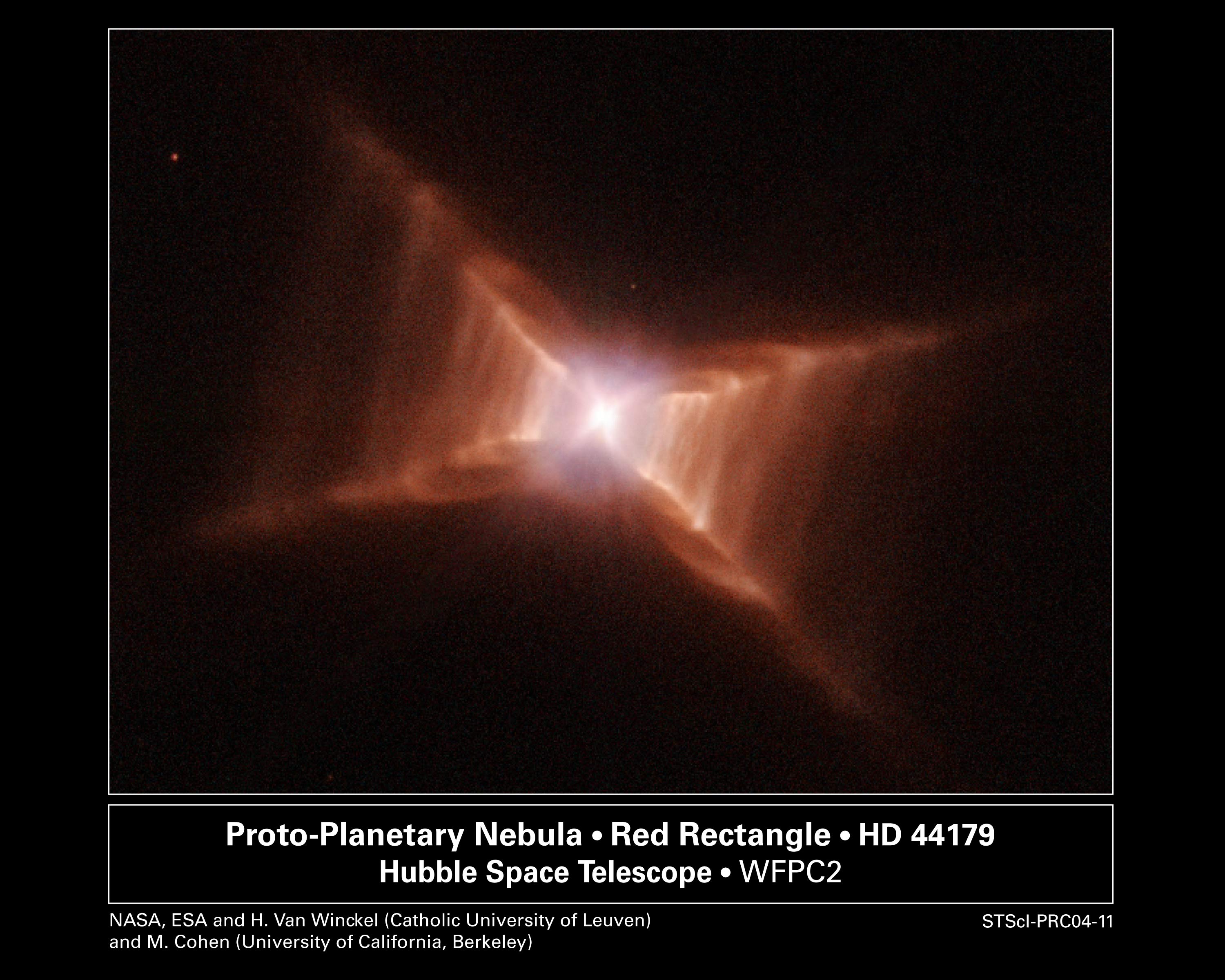
ハッブル宇宙望遠鏡が捉えたこの興味深い赤色長方形星雲の画像には、特徴的なX字型と梯子のような段が見られます。この塵に覆われた宇宙雲は、当初は強い赤外線放射源として特定され、現在では、老齢の中心星からの冷たい流出物で形成された氷の塵粒子と炭化水素分子を含んでいると考えられています。では、なぜ大きなX字型に見えるのでしょうか?考えられる説明としては、中心星(実際には近接した連星)が厚い塵のトーラスに囲まれており、本来球状である流出物が先端が接する円錐形に絞り込まれているためです。トーラスを横から見ているため、円錐形の境界の端がX字型に見えるのです。特徴的な段は、流出が断続的に起こっていることを示唆しています。空想的な一角獣座の方向、約2300光年離れたところにある赤色長方形星雲は、今後数千年の間に冷たい中心星が高温の白色矮星に変化するにつれて、壮大な惑星状星雲へと変貌するはずです。このハッブル宇宙望遠鏡による鮮明な画像は、赤い四角形領域までの距離で、わずか約3分の1光年の範囲しか捉えていない。
原文(English)
A distinctive X-shape and ladder-like rungs appear in this Hubble Space Telescope image of the intriguing Red Rectangle Nebula. The dusty cosmic cloud was originally identified as a strong source of infrared radiation and is now believed to contain icy dust grains and hydrocarbon molecules formed in the cool outflow from an aging central star. So why does it look like a big X? A likely explanation is that the central star - actually a close pair of stars - is surrounded by a thick dust torus which pinches the otherwise spherical outflow into tip-touching cone shapes. Because we view the torus edge-on, the boundary edges of the cone shapes seem to form an X. The distinct rungs suggest the outflow occurs in fits and starts. About 2,300 light-years away toward the fanciful constellation Monoceros, the Red Rectangle nebula should be transformed into a glorious planetary nebula as its cool central star becomes a hot white dwarf over the next few thousand years. This sharp Hubble picture spans only about one third of a light-year at the distance of the Red Rectangle.
\ この感動を宇宙仲間にシェア /
宇宙をXでシェア
© NASA / APOD