
🚀 宇宙の記憶・カレンダー検索
🚀 象徴的な写真:
APOD第1回
🚀 創造の柱
🚀 スピリット火星着陸
🚀 ハッブル超深宇宙
🚀 地球へようこそ|ブルー・マーブル
🚀 エンケラドス
🚀 ベテルギウス
🚀 火星着陸
🚀 青い夕焼け
🚀 冥王星のハート
🚀 皆既日食
🚀 アースライズ再構築
🚀 ブラックホール
🚀 ウェッブ初画像
🚀 アポロ11着陸
APOD30周年(2025年6月16日)
ケンタウルス座Aの銀河
The Galaxy Within Centaurus A
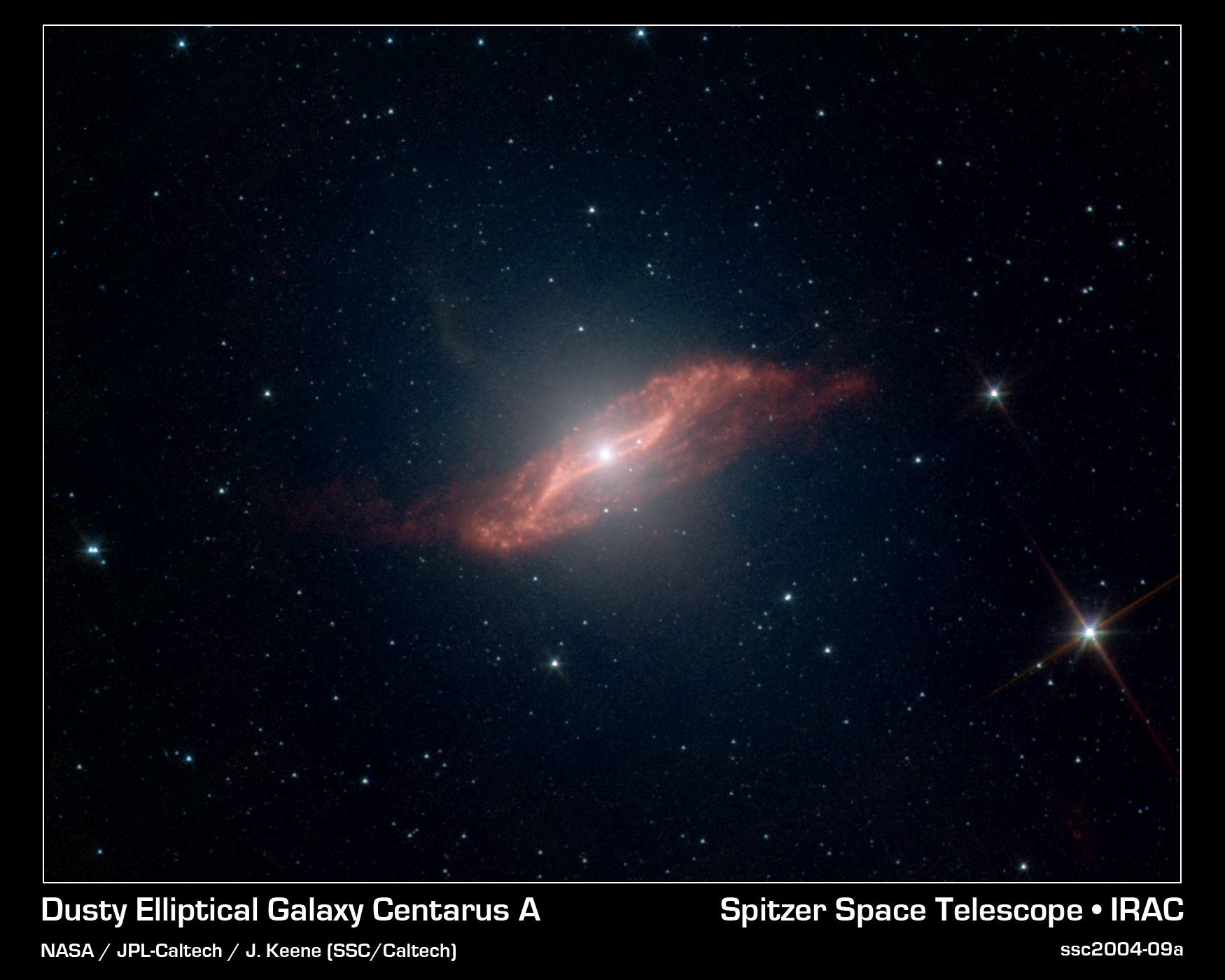
地球に最も近い活動銀河であるケンタウルス座Aの内部を覗き込んだスピッツァー宇宙望遠鏡の高分解能赤外線カメラは、この驚くべき光景を記録した。直径約1000光年の、平行四辺形のような形をしたねじれた宇宙塵の雲は、おそらく小さな渦巻銀河が巨大なケンタウルス座Aに落下した結果生じたものと考えられる。この平行四辺形は、より一般的な光学画像で見られる活動銀河の中心にある塵と星の帯に沿って位置している。天文学者たちは、この印象的な幾何学的形状は、落下する渦巻銀河の円盤が相互作用によってねじれ、歪められている様子をほぼ真横から見たものだと考えている。最終的に、この不運な渦巻銀河の残骸は、ケンタウルス座Aの中心に潜む超大質量ブラックホールの燃料となるはずである。
原文(English)
Peering deep inside Centaurus A, the closest active galaxy to Earth, the Spitzer Space Telescope's penetrating infrared cameras recorded this startling vista. About 1,000 light-years across, the twisted cosmic dust cloud apparently shaped like a parallelogram is likely the result of a smaller spiral galaxy falling into the giant Centaurus A. The parallelogram lies along the active galaxy's central band of dust and stars visible in more familiar optical images. Astronomers believe that the striking geometric shape represents an approximately edge-on view of the infalling spiral galaxy's disk in the process of being twisted and warped by the interaction. Ultimately, debris from the ill-fated spiral galaxy should provide fuel for the supermassive black hole lurking at the center of Centaurus A.
\ この感動を宇宙仲間にシェア /
宇宙をXでシェア
© NASA / APOD