
🚀 宇宙の記憶・カレンダー検索
🚀 象徴的な写真:
APOD第1回
🚀 創造の柱
🚀 スピリット火星着陸
🚀 ハッブル超深宇宙
🚀 地球へようこそ|ブルー・マーブル
🚀 エンケラドス
🚀 ベテルギウス
🚀 火星着陸
🚀 青い夕焼け
🚀 冥王星のハート
🚀 皆既日食
🚀 アースライズ再構築
🚀 ブラックホール
🚀 ウェッブ初画像
🚀 アポロ11着陸
APOD30周年(2025年6月16日)
日本上空のペルセウス座流星群
Perseid Fireball Over Japan
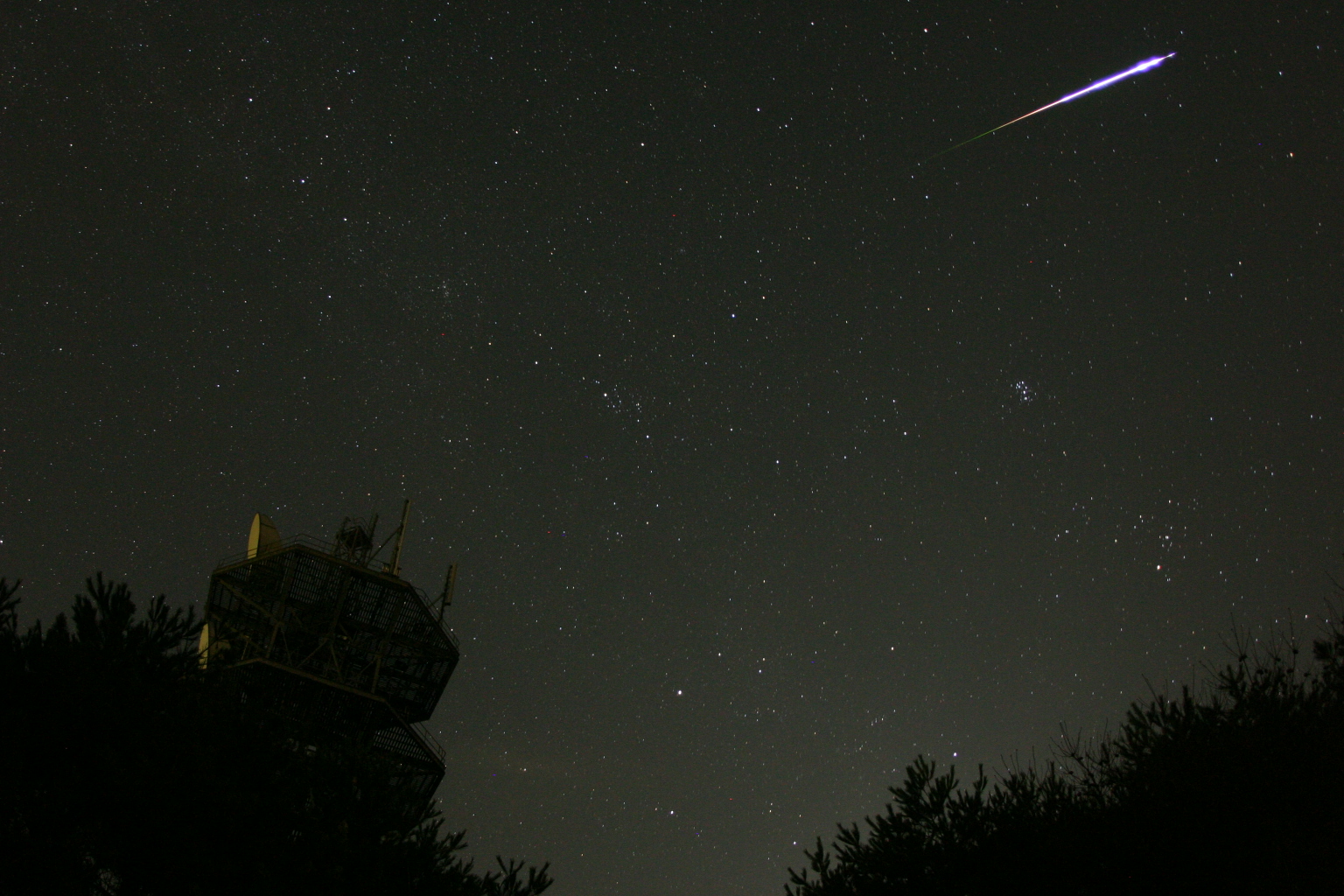
明るい月が早朝の空に現れないことを喜んだ世界中の観測者たちは、今年のペルセウス座流星群で美しい光景を報告した。予想通り、ピーク時の出現率は1分間に約1個だった。ほとんどのペルセウス座流星は暗かったが、この明るく色鮮やかな火球流星は8月12日午前3時17分(日本標準時)に日本の空を駆け抜けた。右上で終わる流星の軌跡は、左下に向かって伸び、ペルセウス座とカシオペヤ座の間にある流星群の放射点へと戻っていく。放射点は、手前の塔の構造物のすぐ上に見えている。プレアデス星団も流星の軌跡のはるか下に見える。ペルセウス座流星群は、スウィフト・タットル彗星の尾から放出された塵の粒子に由来する。彗星の塵は、秒速約60キロメートルの速度で大気圏に突入する。この流星群のピークはすでに過ぎましたが、ペルセウス座流星群は今後数晩は観測できるはずです。ただし、出現頻度は大幅に減少するでしょう。
原文(English)
joying the bright Moon's absence from early morning skies, observers around the world reported lovely displays during this year's Perseid meteor shower. As anticipated, peak rates were about one meteor per minute. Though most Perseids were faint, this bright and colorful fireball meteor flashed through skies over Japan on August 12 at 0317 JST. Ending at the upper right, the meteor's trail points down and to the left, back to the shower's radiant point between the constellations of Perseus and Cassiopeia, seen here just above the tower structure in the foreground. The Pleiades star cluster is also visible well below the meteor's trail. Perseid shower meteors can be traced to particles of dust from the tail of comet Swift-Tuttle. The comet dust impacts the atmosphere at speeds of around 60 kilometers per second. While this annual shower's peak has come and gone, Perseid meteors should still be visible over the next few nights, but at a greatly reduced rate.
\ この感動を宇宙仲間にシェア /
宇宙をXでシェア
© Katsuhiro Mouri &
Shuji Kobayashi
(Nagoya City
Science Museum /
Planetarium) / APOD