
🚀 宇宙の記憶・カレンダー検索
🚀 象徴的な写真:
APOD第1回
🚀 創造の柱
🚀 スピリット火星着陸
🚀 ハッブル超深宇宙
🚀 地球へようこそ|ブルー・マーブル
🚀 エンケラドス
🚀 ベテルギウス
🚀 火星着陸
🚀 青い夕焼け
🚀 冥王星のハート
🚀 皆既日食
🚀 アースライズ再構築
🚀 ブラックホール
🚀 ウェッブ初画像
🚀 アポロ11着陸
APOD30周年(2025年6月16日)
IC 1805:心からの光
IC 1805: Light from the Heart
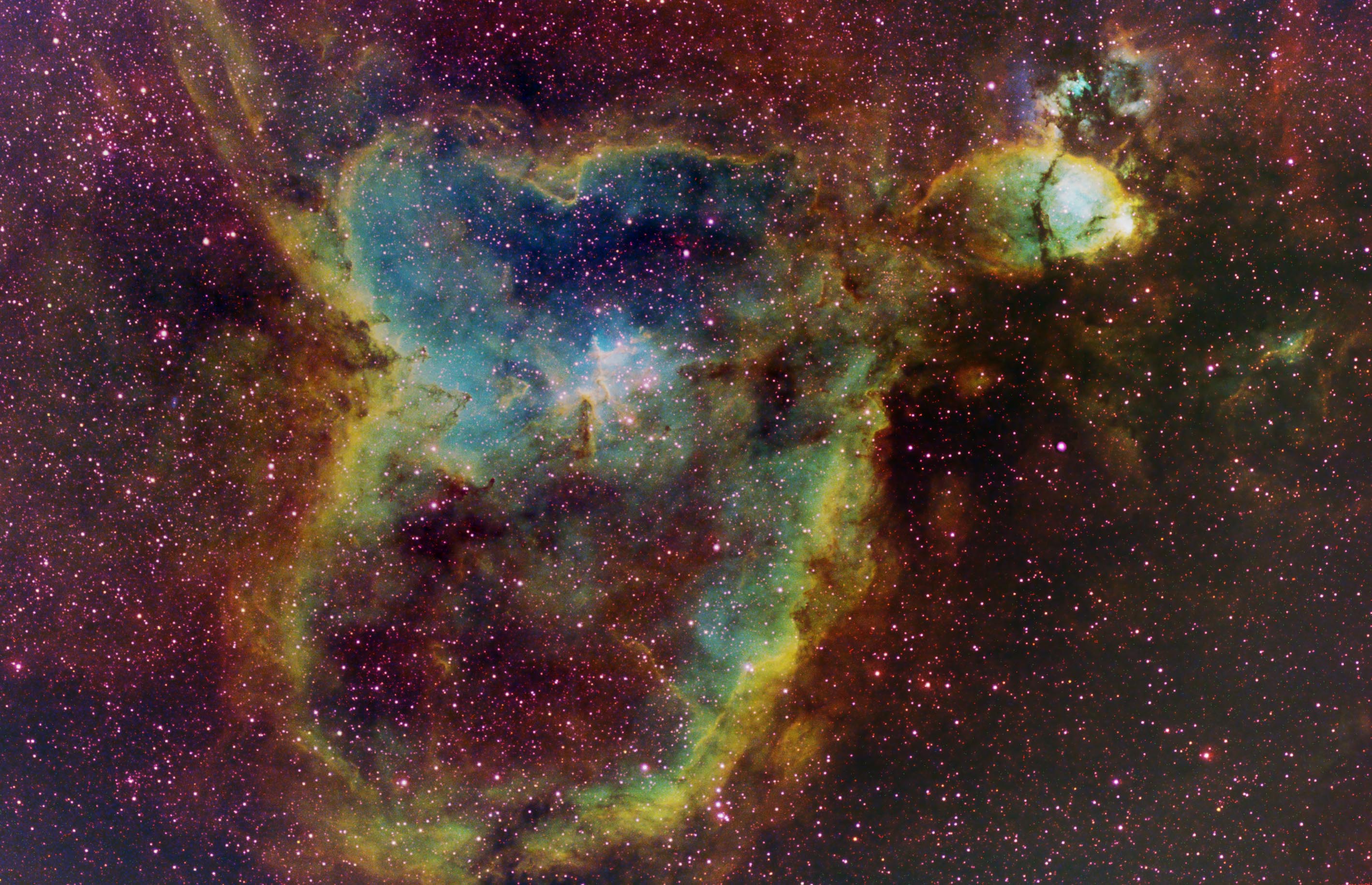
数百光年にわたって広がる輝線星雲IC 1805は、輝く星間ガスと暗い塵の雲が混ざり合ったものです。わずか約7,500光年離れたこの領域では星が誕生しました。この星雲の愛称「ハート星雲」は、その印象的な形(ここでは横から見た図)に由来しています。この星雲の美しく深遠な望遠鏡画像は非常にカラフルですが、もしあなたがそこへ旅をして、これらの宇宙の雲を自分の目で眺めることができたとしたら、実際に見える色はこれと同じでしょうか?簡潔に言えば、いいえです。この画像は人間の目に見える光で撮影されたものですが。この星雲や他の高温の若い星を取り巻く輝くガス雲からの光は、雲の中のエネルギーを帯びた原子に特徴的な非常に狭い帯状の放射です。実際、星雲の輝きは、私たちが赤色として認識するスペクトルの広い領域のごく一部でしか光を発しない水素原子によって支配されていることが多いのです。発光星雲の狭帯域画像で一般的に用いられる人工的な配色を採用したこの美しく詳細な画像は、硫黄原子からの光が赤みを帯び、水素が緑、酸素原子が青で示されている。
原文(English)
Sprawling across hundreds of light-years, emission nebula IC 1805 is a mix of glowing interstellar gas and dark dust clouds. Only about 7,500 light-years away, stars were born in this region whose nickname - the Heart Nebula - derives from its suggestive shape (seen here sideways). This gorgeous, deep telescopic image of the nebula is very colorful, but if you could travel there and gaze across these cosmic clouds with your own eyes, are those the colors you would really see? The short answer is no, even though the image was made with light visible to the human eye. Light from this and other glowing gas clouds surrounding hot, young stars comes in very narrow bands of emission characteristic of energized atoms within the clouds. In fact, the nebular glow is often dominated by hydrogen atoms emitting light in only a small fraction of that broad region of the spectrum that we see as the color red. Adopting an artificial color scheme commonly used for narrow band images of emission nebulae, this beautifully detailed view shows the light from sulfur atoms in red hues, with hydrogen in green, and oxygen atoms in blue.
\ この感動を宇宙仲間にシェア /
宇宙をXでシェア
© Richard Crisp / APOD