
🚀 宇宙の記憶・カレンダー検索
🚀 象徴的な写真:
APOD第1回
🚀 創造の柱
🚀 スピリット火星着陸
🚀 ハッブル超深宇宙
🚀 地球へようこそ|ブルー・マーブル
🚀 エンケラドス
🚀 ベテルギウス
🚀 火星着陸
🚀 青い夕焼け
🚀 冥王星のハート
🚀 皆既日食
🚀 アースライズ再構築
🚀 ブラックホール
🚀 ウェッブ初画像
🚀 アポロ11着陸
APOD30周年(2025年6月16日)
オリオン座の大星雲
The Great Nebula in Orion
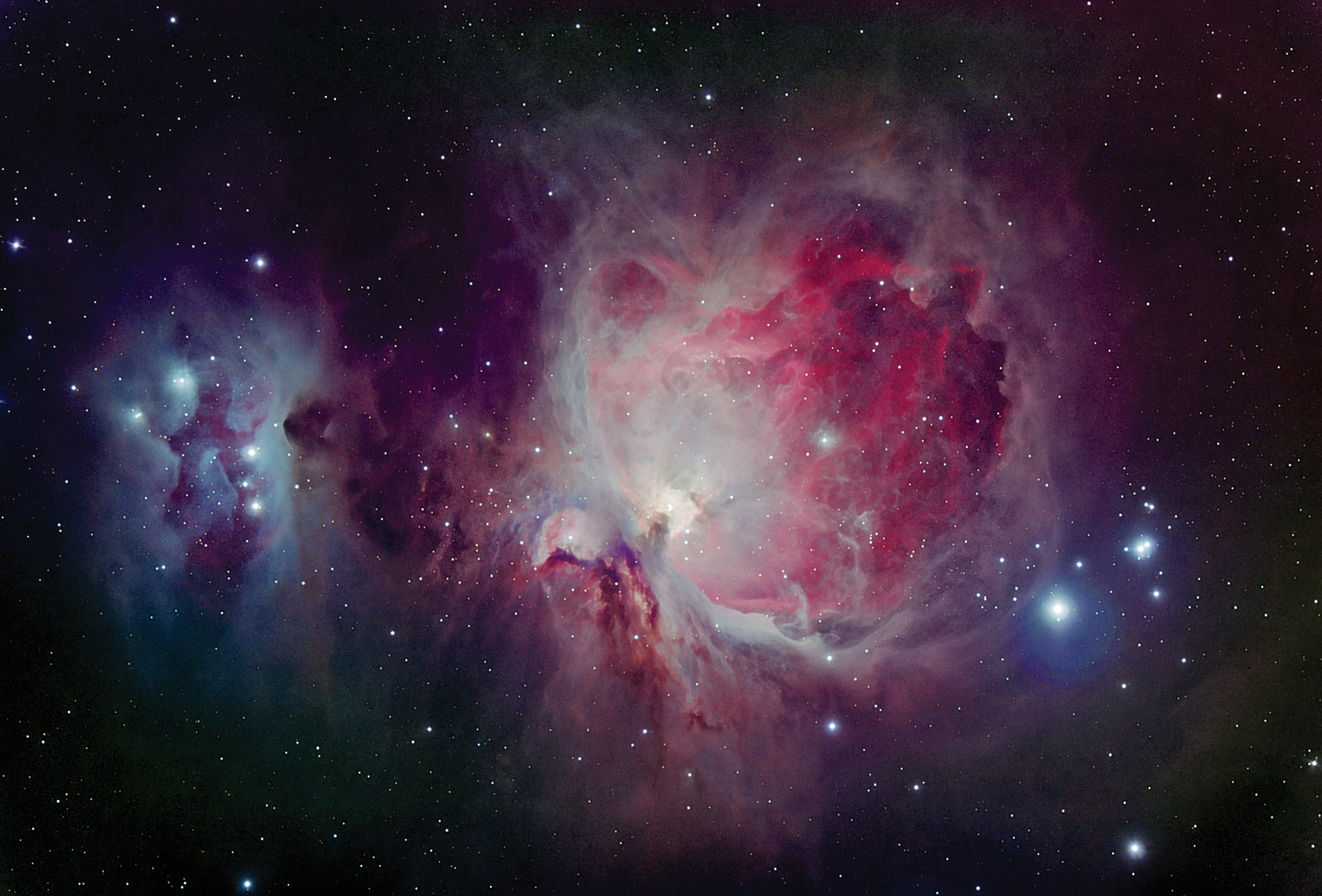
オリオン大星雲は色彩豊かな場所です。肉眼ではオリオン座の小さなぼんやりとした斑点として見えますが、長時間露光でデジタル処理されたこのような画像を見ると、オリオン大星雲は若い星、高温ガス、暗黒塵が活発に活動していることがわかります。オリオン大星雲(M42)の大部分を支えているのは、星雲の中で最も明るい4つの星からなるトラペジウムです。目に見えるフィラメント状の構造の多くは、実際には衝撃波、つまり高速で移動する物質が低速で移動するガスに遭遇した際の波面です。オリオン大星雲は直径約40光年で、太陽と同じ銀河の渦状腕に位置し、地球から約1500光年離れています。
原文(English)
The Great Nebula in Orion is a colorful place. Visible to the unaided eye, it appears as a small fuzzy patch in the constellation of Orion. Long exposure, digitally sharpened images like this, however, show the Orion Nebula to be a busy neighborhood of young stars, hot gas, and dark dust. The power behind much of the Orion Nebula (M42) is the Trapezium - four of the brightest stars in the nebula. Many of the filamentary structures visible are actually shock waves - fronts where fast moving material encounters slow moving gas. The Orion Nebula spans about 40 light years and is located about 1500 light years away in the same spiral arm of our Galaxy as the Sun.
\ この感動を宇宙仲間にシェア /
宇宙をXでシェア
© Stefan Seip / APOD