
🚀 宇宙の記憶・カレンダー検索
🚀 象徴的な写真:
APOD第1回
🚀 創造の柱
🚀 スピリット火星着陸
🚀 ハッブル超深宇宙
🚀 地球へようこそ|ブルー・マーブル
🚀 エンケラドス
🚀 ベテルギウス
🚀 火星着陸
🚀 青い夕焼け
🚀 冥王星のハート
🚀 皆既日食
🚀 アースライズ再構築
🚀 ブラックホール
🚀 ウェッブ初画像
🚀 アポロ11着陸
APOD30周年(2025年6月16日)
遠地点の月、近地点の月
Apogee Moon, Perigee Moon
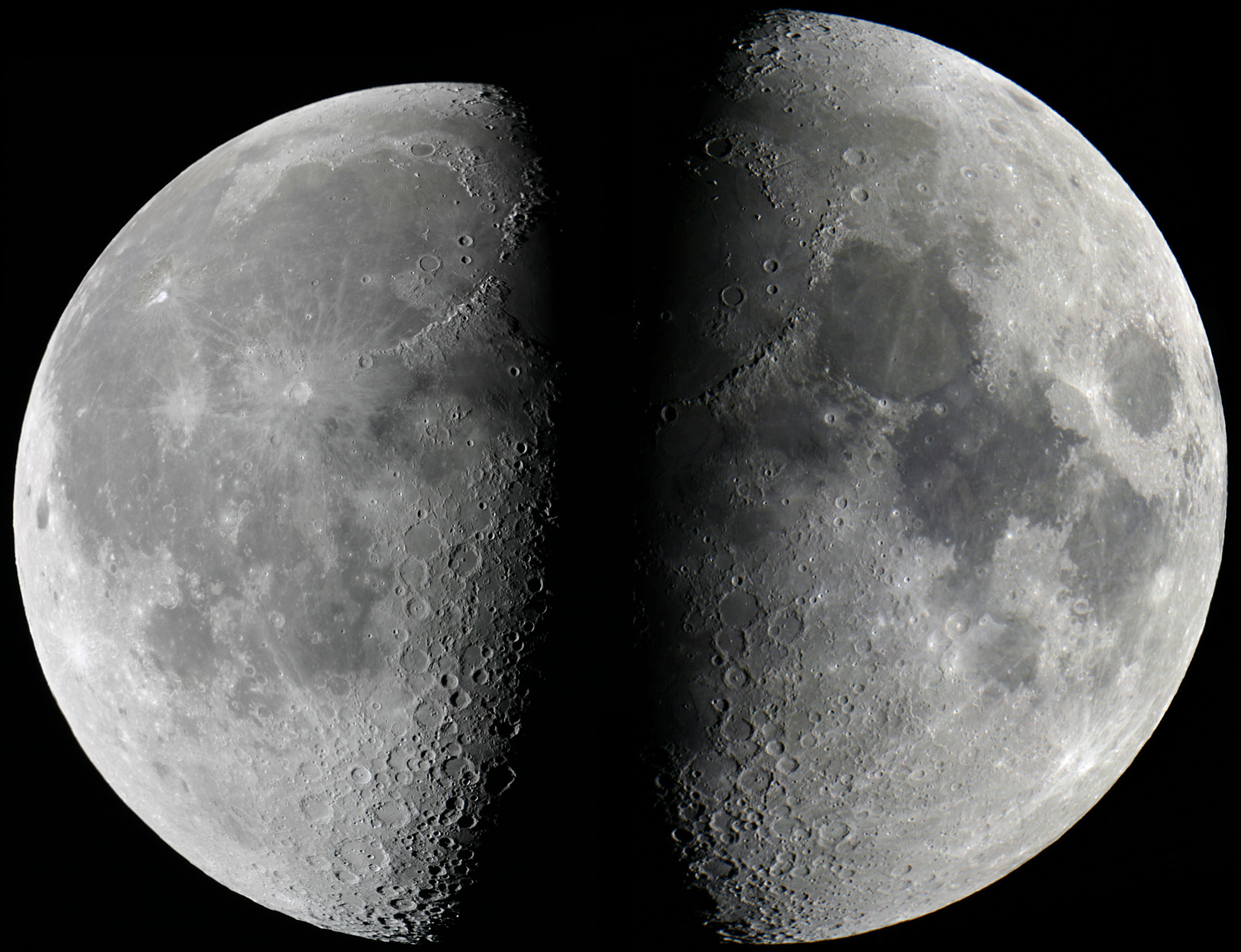
なぜこれらの画像はうまく合わないのでしょうか?この下弦の月(左)と上弦の月は、どちらも前回の月の周期(朔望遠鏡とカメラ)で撮影されたものです。しかし、これらの画像を単純に合成して鮮明な全表面画像にするのは明らかに問題があります。実際、10月6日の月の下弦の月は、月の軌道上で最も遠い地点である遠地点付近で発生しました。9月21日の上弦の月は、地球に最も接近する地点である近地点付近で発生しました。2週間間隔で観測すると、見かけの大きさの違いは一般の天文観測者には気づかれませんが、同時に並べて比較すると、無視することは困難です。しかし、10月27日の皆既月食で月が地球の影を通過するため、来週には天文観測者は月の違いに気づくでしょう。
原文(English)
Why don't these pieces fit? This third quarter Moon (left) and first quarter Moon were both photographed during the last lunar cycle or lunation with the same telescope and camera. But, simply combining the pictures into one sharp, full surface view would clearly be a problem. In fact, on October 6th the Moon's third quarter phase happened to occur near lunar apogee, the farthest point in the Moon's orbit. On September 21st, the first quarter phase fell close to lunar perigee, the Moon's closest approach to planet Earth. Viewed two weeks apart, the resulting difference in apparent sizes would not be noticed by casual skygazers, but the simultaneous side by side comparison makes it hard to ignore. Skygazers will likely notice the Moon next week though, as it slides through Earth's shadow during October 27th's total lunar eclipse.
\ この感動を宇宙仲間にシェア /
宇宙をXでシェア
© António Cidadão / APOD