
🚀 宇宙の記憶・カレンダー検索
🚀 象徴的な写真:
APOD第1回
🚀 創造の柱
🚀 スピリット火星着陸
🚀 ハッブル超深宇宙
🚀 地球へようこそ|ブルー・マーブル
🚀 エンケラドス
🚀 ベテルギウス
🚀 火星着陸
🚀 青い夕焼け
🚀 冥王星のハート
🚀 皆既日食
🚀 アースライズ再構築
🚀 ブラックホール
🚀 ウェッブ初画像
🚀 アポロ11着陸
APOD30周年(2025年6月16日)
ペルセウス座銀河団
The Perseus Cluster of Galaxies
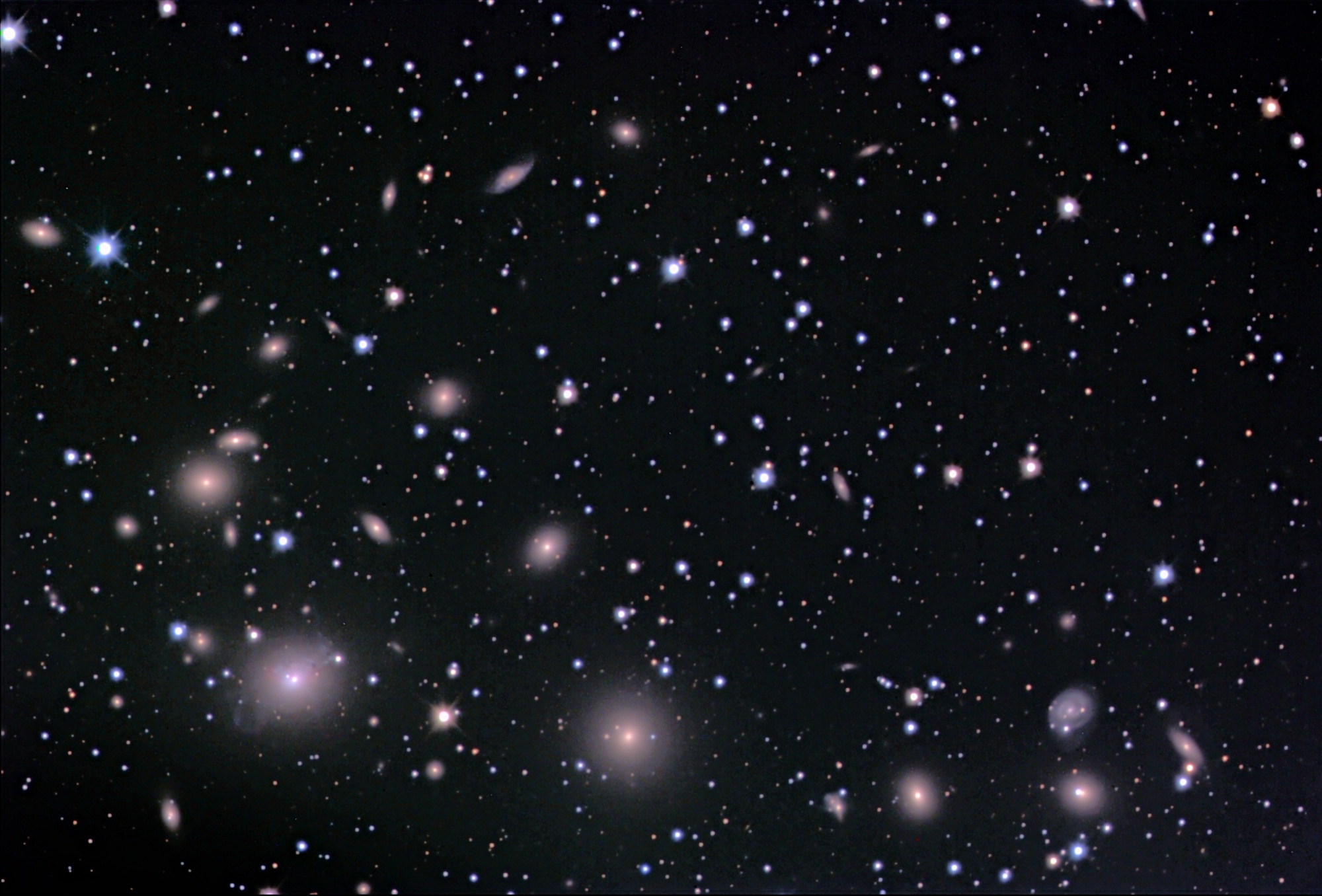
これは、空で人が目にすることのできる最も大きな天体の1つです。上の写真のぼやけた塊はそれぞれ銀河であり、それらが集まってペルセウス座銀河団を構成しています。ペルセウス座銀河団は、最も近い銀河団の1つです。この銀河団は、私たちの天の川銀河の淡い星々の前景を通して見ることができます。宇宙のこの領域から光がここに届くには約3億年かかるため、私たちは恐竜の時代以前のこの銀河団の姿を見ることになります。アベル426としても知られるペルセウス座銀河団の中心は、膨大なX線放射源であり、天文学者が銀河団がどのように形成されたか、ガスと暗黒物質がどのように相互作用するかを研究するのに役立っています。ペルセウス座銀河団は、15度以上にわたって広がり、1000個以上の銀河を含むうお座-ペルセウス座超銀河団の一部です。
原文(English)
Here is one of the largest objects that anyone will ever see on the sky. Each of the fuzzy blobs in the above picture is a galaxy, together making up the Perseus Cluster, one of the closest clusters of galaxies. The cluster is seen through the foreground of faint stars in our own Milky Way Galaxy. It takes light roughly 300 million years to get here from this region of the Universe, so we see this cluster as it existed before the age of the dinosaurs. Also known as Abell 426, the center of the Perseus Cluster is a prodigious source of X-ray radiation, and so helps astronomers explore how clusters formed and how gas and dark matter interact. The Perseus Cluster of Galaxies is part of the Pisces-Perseus supercluster of galaxies, which spans over 15 degrees and contains over 1000 galaxies.
\ この感動を宇宙仲間にシェア /
宇宙をXでシェア
© NASA / APOD