
🚀 宇宙の記憶・カレンダー検索
🚀 象徴的な写真:
APOD第1回
🚀 創造の柱
🚀 スピリット火星着陸
🚀 ハッブル超深宇宙
🚀 地球へようこそ|ブルー・マーブル
🚀 エンケラドス
🚀 ベテルギウス
🚀 火星着陸
🚀 青い夕焼け
🚀 冥王星のハート
🚀 皆既日食
🚀 アースライズ再構築
🚀 ブラックホール
🚀 ウェッブ初画像
🚀 アポロ11着陸
APOD30周年(2025年6月16日)
マッハホルツ彗星が見える
Comet Machholz in View
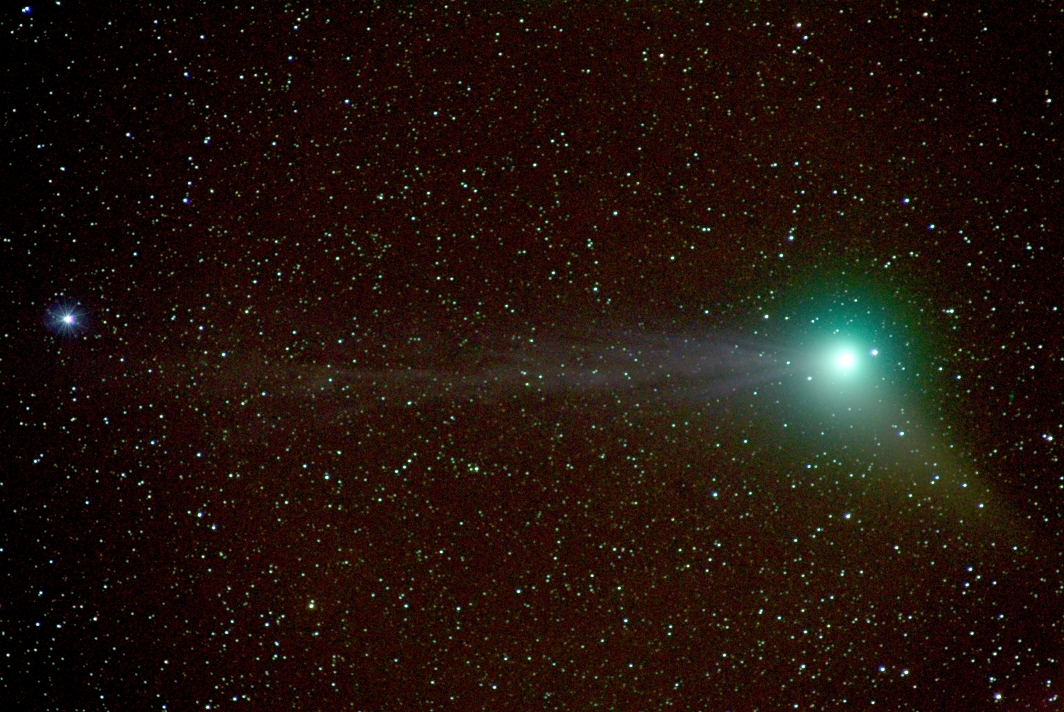
北半球の彗星観測者にとって、1月はマッハホルツ彗星の絶好の観測機会となるでしょう。現在地球に最接近中のこの彗星は、夕方の空を比較的速い速度で移動しながら、1月7日には美しいプレアデス星団の近くを、1月27日にはペルセウス座の二重星団の近くを通過します。現在、暗い場所から肉眼でかろうじて見えるこの彗星は、双眼鏡や小型望遠鏡を使えば容易に観測できるはずです。実際、1月1日に撮影されたこの望遠鏡による長時間露光写真には、米国コロラド州上空に2本の美しい尾をたたえたマッハホルツ彗星が写っています。左に伸びる彗星のイオンまたはガスの尾は、太陽風の影響を受けやすく、太陽とは反対の方向を向いています。彗星の軌道に沿って伸びる傾向のある塵は、右下方向に突き出た尾を形成しています。
原文(English)
Good views of Comet Machholz are in store for northern hemisphere comet watchers in January. Now making its closest approach to planet Earth, the comet will pass near the lovely Pleiades star cluster on January 7th and the double star cluster in Perseus on January 27th as Machholz moves relatively quickly through the evening sky. Currently just visible to the unaided eye from dark locations, the comet should be an easy target in binoculars or a small telescope. In fact, this telephoto time exposure from January 1 shows Comet Machholz sporting two lovely tails in skies over Colorado, USA. Extending to the left, strands of the comet's ion or gas tail are readily affected by the solar breeze and point away from the Sun. Dust, which tends to trail along the comet's orbit, forms the tail jutting down and to the right.
\ この感動を宇宙仲間にシェア /
宇宙をXでシェア
© Jimmy
Westlake
(Colorado
Mountain College) / APOD