
🚀 宇宙の記憶・カレンダー検索
🚀 象徴的な写真:
APOD第1回
🚀 創造の柱
🚀 スピリット火星着陸
🚀 ハッブル超深宇宙
🚀 地球へようこそ|ブルー・マーブル
🚀 エンケラドス
🚀 ベテルギウス
🚀 火星着陸
🚀 青い夕焼け
🚀 冥王星のハート
🚀 皆既日食
🚀 アースライズ再構築
🚀 ブラックホール
🚀 ウェッブ初画像
🚀 アポロ11着陸
APOD30周年(2025年6月16日)
バラ星雲の塵の彫刻
Dust Sculptures in the Rosette Nebula
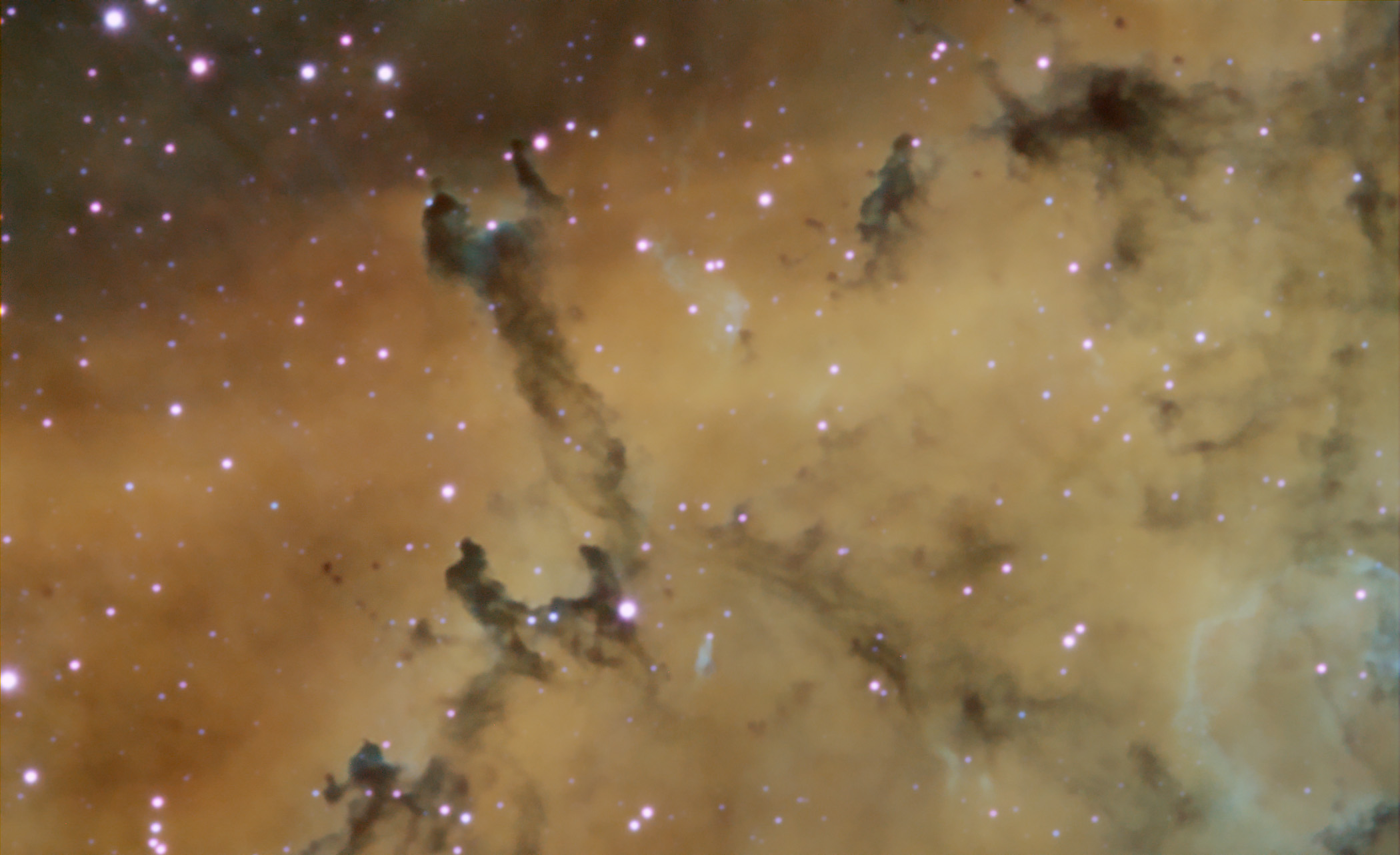
バラ星雲の宇宙塵の彫刻はどのようにして作られるのでしょうか? 全体的な形状の美しさで知られるバラ星雲(NGC 2244としても知られる)の一部は、間近で見ても美しさを放っています。上に見えるのは、近くの巨大な星からの強力な光と風によってゆっくりと侵食されている暗い塵とガスの球体です。十分に長い時間放置されると、分子雲の球体は星や惑星を形成する可能性が高いです。上の画像は、硫黄(赤)、水素(緑)、酸素(青)の非常に特定の色で撮影されました。バラ星雲は直径約50光年、地球から約4,500光年離れたところにあり、小型望遠鏡でいっかくじゅう座の方向に見ることができます。
原文(English)
What creates the cosmic dust sculptures in the Rosette Nebula? Noted for the common beauty of its overall shape, parts of the Rosette Nebula, also known as NGC 2244, show beauty even when viewed up close. Visible above are globules of dark dust and gas that are slowly being eroded away by the energetic light and winds by nearby massive stars. Left alone long enough, the molecular-cloud globules would likely form stars and planets. The above image was taken in very specific colors of Sulfur (shaded red), Hydrogen (green), and Oxygen (blue). The Rosette Nebula spans about 50 light-years across, lies about 4,500 light-years away, and can be seen with a small telescope towards the constellation of Monoceros.
\ この感動を宇宙仲間にシェア /
宇宙をXでシェア
© Ken Crawford
(Rancho Del Sol Observatory) / APOD