
🚀 宇宙の記憶・カレンダー検索
🚀 象徴的な写真:
APOD第1回
🚀 創造の柱
🚀 スピリット火星着陸
🚀 ハッブル超深宇宙
🚀 地球へようこそ|ブルー・マーブル
🚀 エンケラドス
🚀 ベテルギウス
🚀 火星着陸
🚀 青い夕焼け
🚀 冥王星のハート
🚀 皆既日食
🚀 アースライズ再構築
🚀 ブラックホール
🚀 ウェッブ初画像
🚀 アポロ11着陸
APOD30周年(2025年6月16日)
赤外線三方活字
Infrared Trifid
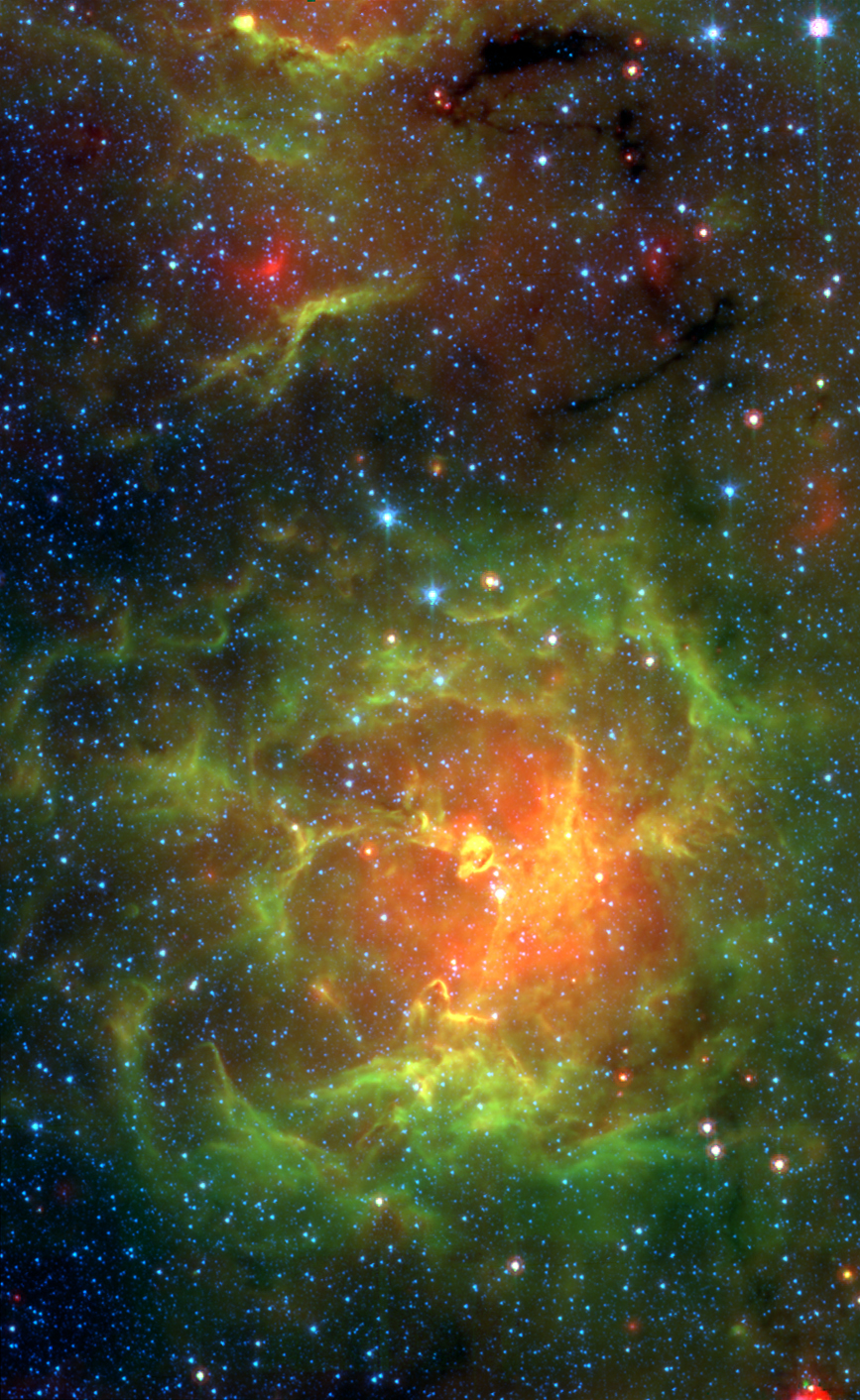
三裂星雲(M20)は、星雲が豊富ないて座にあることでよく知られており、小型望遠鏡でも簡単に見つけることができます。可視光画像では、星雲は暗く視界を遮る塵の帯によって3つの部分に分かれているように見えますが、この透過性の高い赤外線画像では、明るいガスのフィラメントと生まれたばかりの星々が明らかになります。この壮大な擬似カラー画像は、スピッツァー宇宙望遠鏡によるものです。天文学者たちは、スピッツァーの赤外線画像データを使用して、この興味深い星形成領域の誕生時の塵や輝く雲の中に隠れている可能性のある、生まれたばかりの星や胚のような星の数を数えました。ここに示されているように、三裂星雲は直径約30光年で、地球からわずか5,500光年しか離れていません。ニュース:ホイヘンス探査機が金曜日にタイタンに着陸
原文(English)
The Trifid Nebula, aka M20, is easy to find with a small telescope, a well known stop in the nebula rich constellation Sagittarius. But where visible light pictures show the nebula divided into three parts by dark, obscuring dust lanes, this penetrating infrared image reveals filaments of luminous gas and newborn stars. The spectacular false-color view is courtesy of the Spitzer Space Telescope. Astronomers have used the Spitzer infrared image data to count newborn and embryonic stars which otherwise can lie hidden in the natal dust and glowing clouds of this intriguing stellar nursery. As seen here, the Trifid is about 30 light-years across and lies only 5,500 light-years away. News: Huygens Probe Descends to Titan on Friday
\ この感動を宇宙仲間にシェア /
宇宙をXでシェア
© NASA / APOD