
🚀 宇宙の記憶・カレンダー検索
🚀 象徴的な写真:
APOD第1回
🚀 創造の柱
🚀 スピリット火星着陸
🚀 ハッブル超深宇宙
🚀 地球へようこそ|ブルー・マーブル
🚀 エンケラドス
🚀 ベテルギウス
🚀 火星着陸
🚀 青い夕焼け
🚀 冥王星のハート
🚀 皆既日食
🚀 アースライズ再構築
🚀 ブラックホール
🚀 ウェッブ初画像
🚀 アポロ11着陸
APOD30周年(2025年6月16日)
オクロ:古代アフリカの原子炉
Oklo: Ancient African Nuclear Reactors
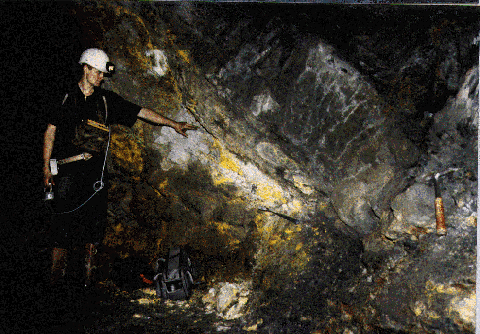
約20億年前の原子炉の残骸が、1970年代にアフリカで発見されました。これらの原子炉は自然に発生したと考えられています。現在では、核分裂性ウランの相対密度が持続的な反応に必要なレベルを下回っているため、自然の原子炉は存在しません。上の写真は、ガボンのオクロにある化石原子炉15号です。黄色っぽい岩石として見えるのは、酸化ウランの残骸です。オクロの副産物は現在、宇宙論的時間スケールにおける基本定数の安定性を調査したり、人間が製造した核廃棄物をより効果的に処分する方法を開発したりするために利用されています。
原文(English)
The remnants of nuclear reactors nearly two billion years old were found in the 1970s in Africa. These reactors are thought to have occurred naturally. No natural reactors exist today, as the relative density of fissile uranium has now decayed below that needed for a sustainable reaction. Pictured above is Fossil Reactor 15, located in Oklo, Gabon. Uranium oxide remains are visible as the yellowish rock. Oklo by-products are being used today to probe the stability of the fundamental constants over cosmological time-scales and to develop more effective means for disposing of human-manufactured nuclear waste.
\ この感動を宇宙仲間にシェア /
宇宙をXでシェア
© Robert D. Loss,
CEMS / APOD