
🚀 宇宙の記憶・カレンダー検索
🚀 象徴的な写真:
APOD第1回
🚀 創造の柱
🚀 スピリット火星着陸
🚀 ハッブル超深宇宙
🚀 地球へようこそ|ブルー・マーブル
🚀 エンケラドス
🚀 ベテルギウス
🚀 火星着陸
🚀 青い夕焼け
🚀 冥王星のハート
🚀 皆既日食
🚀 アースライズ再構築
🚀 ブラックホール
🚀 ウェッブ初画像
🚀 アポロ11着陸
APOD30周年(2025年6月16日)
遠くに見える小惑星
Asteroids in the Distance
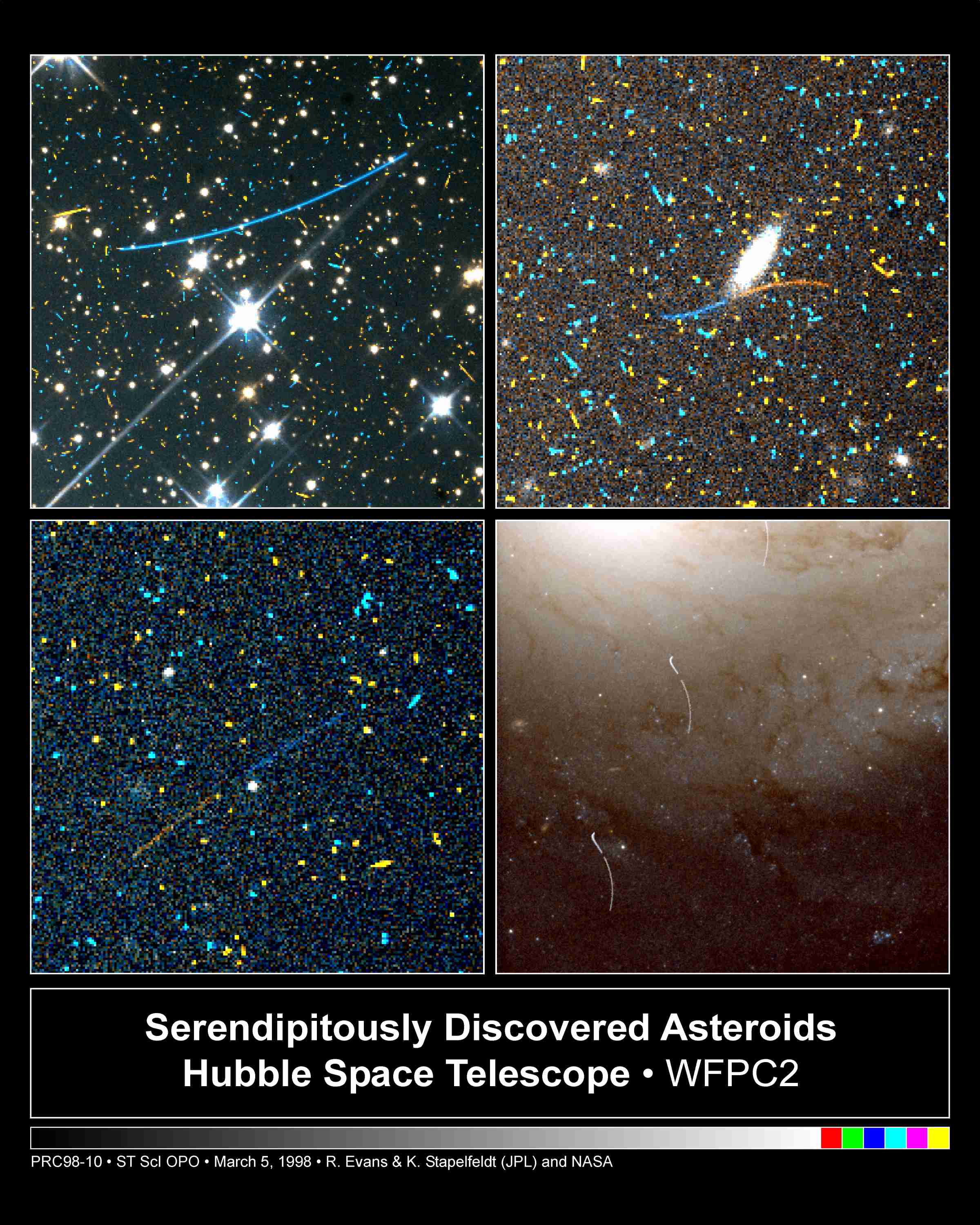
宇宙からの岩石は毎日地球に衝突しています。しかし、岩石が大きいほど、地球に衝突する頻度は低くなります。毎日何キログラムもの宇宙塵が地球に降り注いでいます。大きな破片は最初は明るい流星として現れます。野球ボールほどの大きさの岩石や氷の塊が毎日大気圏を通過し、そのほとんどはすぐに蒸発して消滅します。直径100メートル近い岩石は、約1000年に一度地球に衝突するため、重大な脅威となります。このサイズの物体が海に衝突すると、大きな津波を引き起こし、遠く離れた海岸にも壊滅的な被害を与える可能性があります。直径1キロメートルを超える巨大な小惑星との衝突はより稀で、通常は数百万年に一度しか起こりませんが、地球規模の影響を及ぼす可能性があります。多くの小惑星はまだ発見されていません。実際、ハッブル宇宙望遠鏡が撮影した上記のアーカイブ画像にある長い青い筋として、1998年に発見された小惑星があります。 2002年6月、直径100メートルの小惑星2002 MNは、地球のすぐそばを通過し、月の軌道の内側をかすめていった後に発見された。2002 MNは1994 XM1以来、地球に最も接近した小惑星だったが、2029年に接近する2004 MN4ほど接近することはない。大型小惑星との衝突は、地球の軌道そのものに影響を与えるというよりは、地球の気候に影響を与える塵を巻き上げる可能性が高い。その結果として起こりうる事態の一つは、多くの生物種の地球規模の絶滅であり、現在進行中の絶滅をはるかに凌駕する規模になるかもしれない。
原文(English)
Rocks from space hit Earth every day. The larger the rock, though, the less often Earth is struck. Many kilograms of space dust pitter to Earth daily. Larger bits appear initially as a bright meteor. Baseball-sized rocks and ice-balls streak through our atmosphere daily, most evaporating quickly to nothing. Significant threats do exist for rocks near 100 meters in diameter, which strike the Earth roughly every 1000 years. An object this size could cause significant tsunamis were it to strike an ocean, potentially devastating even distant shores. A collision with a Massive asteroid, over 1 km across, is more rare, occurring typically millions of years apart, but could have truly global consequences. Many asteroids remain undiscovered. In fact, one was discovered in 1998 as the long blue streak in the above archival image taken by the Hubble Space Telescope. In 2002 June, the small 100-meter asteroid 2002 MN was discovered only after it whizzed by the Earth, passing well within the orbit of the Moon. 2002 MN passed closer than any asteroid since 1994 XM1, but not as close as 2004 MN4 will pass in 2029. A collision with a large asteroid would not affect Earth's orbit so much as raise dust that would affect Earth's climate. One likely result is a global extinction of many species of life, possibly dwarfing the ongoing extinction occurring now.
\ この感動を宇宙仲間にシェア /
宇宙をXでシェア
© NASA / APOD