
🚀 宇宙の記憶・カレンダー検索
🚀 象徴的な写真:
APOD第1回
🚀 創造の柱
🚀 スピリット火星着陸
🚀 ハッブル超深宇宙
🚀 地球へようこそ|ブルー・マーブル
🚀 エンケラドス
🚀 ベテルギウス
🚀 火星着陸
🚀 青い夕焼け
🚀 冥王星のハート
🚀 皆既日食
🚀 アースライズ再構築
🚀 ブラックホール
🚀 ウェッブ初画像
🚀 アポロ11着陸
APOD30周年(2025年6月16日)
ハッブル宇宙望遠鏡の功績をNGC 6751と共に祝う
Celebrating Hubble With NGC 6751
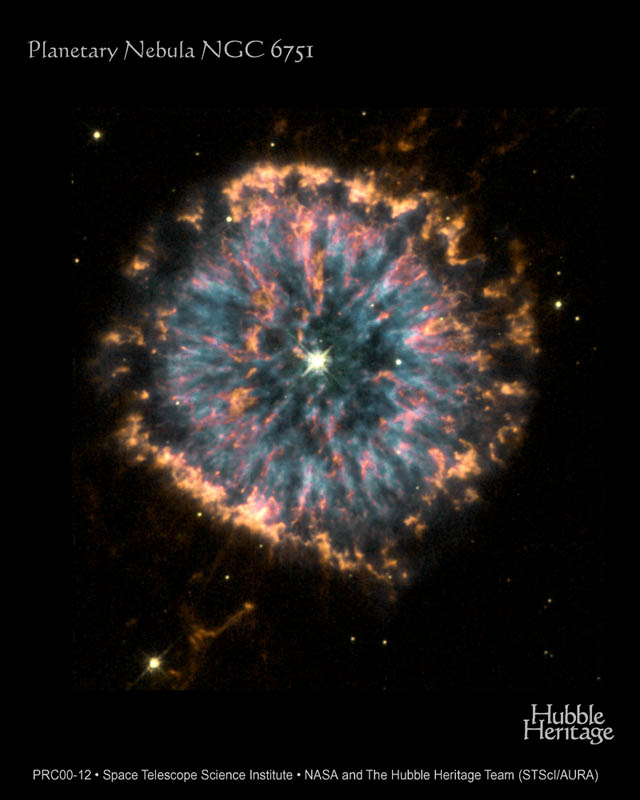
惑星状星雲は、小型望遠鏡では単純な丸い惑星のように見えることがあります。しかし、ハッブル宇宙望遠鏡が撮影した画像は、死にゆく太陽のような恒星の蛍光ガスの覆いが、驚くほど多様な詳細な対称性と形状を持っていることを示すことで広く知られるようになりました。このNGC 6751の合成カラーハッブル画像は、複雑な特徴を持つ典型的な惑星状星雲の美しい例です。これは、ハッブルの軌道投入10周年を記念して、2000年4月に選ばれました。色はガスの相対的な温度を表すために選ばれており、青、オレンジ、赤は最も高温のガスから最も低温のガスを示しています。非常に高温の中心星(摂氏14万度)からの風と放射が、星雲のストリーマーのような特徴を作り出したようです。星雲の実際の直径は約0.8光年で、太陽系の約600倍の大きさです。 NGC 6751は、高所に位置するわし座にあり、地球から6,500光年離れています。
原文(English)
Planetary nebulae can look simple, round, and planet-like in small telescopes. But images from the orbiting Hubble Space Telescope have become well known for showing these fluorescent gas shrouds of dying Sun-like stars to possess a staggering variety of detailed symmetries and shapes. This composite color Hubble image of NGC 6751 is a beautiful example of a classic planetary nebula with complex features. It was selected in April of 2000, to commemorate the tenth anniversary of Hubble in orbit. The colors were chosen to represent the relative temperature of the gas - blue, orange, and red indicating the hottest to coolest gas. Winds and radiation from the intensely hot central star (140,000 degrees Celsius) have apparently created the nebula's streamer-like features. The nebula's actual diameter is approximately 0.8 light-years or about 600 times the size of our solar system. NGC 6751 is 6,500 light-years distant in the high-flying constellation Aquila.
\ この感動を宇宙仲間にシェア /
宇宙をXでシェア
© NASA / APOD