
🚀 宇宙の記憶・カレンダー検索
🚀 象徴的な写真:
APOD第1回
🚀 創造の柱
🚀 スピリット火星着陸
🚀 ハッブル超深宇宙
🚀 地球へようこそ|ブルー・マーブル
🚀 エンケラドス
🚀 ベテルギウス
🚀 火星着陸
🚀 青い夕焼け
🚀 冥王星のハート
🚀 皆既日食
🚀 アースライズ再構築
🚀 ブラックホール
🚀 ウェッブ初画像
🚀 アポロ11着陸
APOD30周年(2025年6月16日)
ドイツ上空のミラ
Mira Over Germany
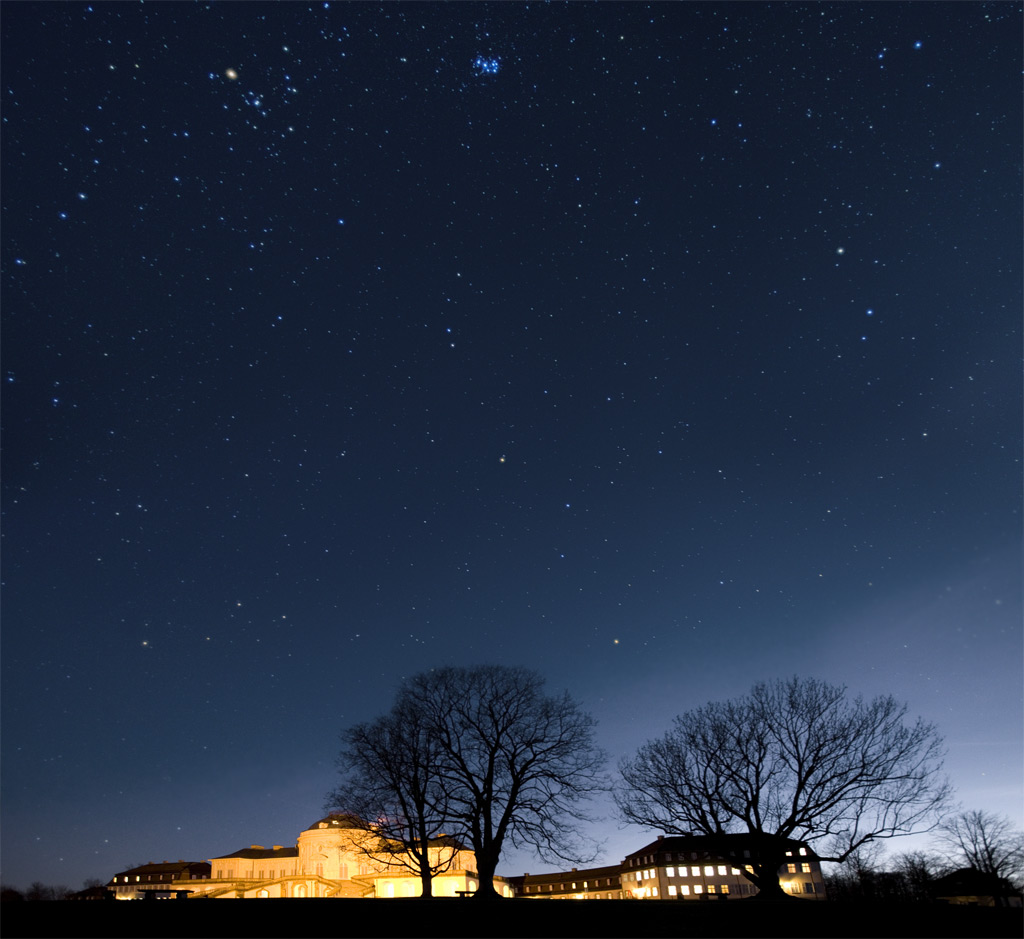
空に現れたあの新しい星は何でしょう?その星は新しい星のように見えるかもしれませんが、実はそれは最も明るい状態に近い変光星ミラです。上の縦方向に圧縮された画像にカーソルを合わせると、1年の間にほとんど見えない状態から空で最も明るい星の1つに変化する、珍しい星ミラがわかります。先週、ドイツのシュトゥットガルトにある城の上空で撮影された赤色巨星ミラは、2等級の最大光度に近い状態でした。質量は太陽と似ていますが、ミラの希薄で冷たい大気は火星の軌道を超えて広がり、太陽の1万倍以上の光度に達する可能性があります。ミラは寿命の終わりに近づいており、その変光はやや不規則です。ミラの変光の詳細はまだ研究中ですが、ミラの脈動の原因は、ミラの大気の一部の厚さの周期的な変化に関連していると考えられています。最近の高解像度画像では、ミラは球形ですらないことがわかります。ミラは、くじら座(巨大なクジラの星座)の方向に420光年離れた場所に位置しています。ミラは今後200日間かけて徐々に暗くなりますが、来年初めには肉眼で見えるようになるでしょう。
原文(English)
What's that new star in the sky? The star might appear new, but it's actually just the variable star Mira near its brightest. Rolling your cursor over the above vertically compressed image will identify the unusual star Mira, a star that can change from practical invisibility to one of the brighter stars on the sky over the course of a year. Pictured above a castle in Stuttgart, Germany, last week, red giant star Mira appeared near its maximum brightness of magnitude 2. Although similar in mass to our Sun, Mira tenuous and cool atmosphere could extend out past the orbit of Mars, and achieve a luminosity over 10,000 times greater than our Sun. Mira is near the end of its life and its variability is somewhat erratic. Details of Mira's variability are still being researched, but the reason for Mira's pulsations are thought related to periodic changes in the thickness of parts of Mira's atmosphere. Recent high resolution images show that Mira is not even round. Mira lies 420 light years distant toward the constellation of the Monster Whale (Cetus). Mira will fade over the next 200 days, but climb back to naked-eye visibility early next year.
\ この感動を宇宙仲間にシェア /
宇宙をXでシェア
© Stefan Seip (AstroMeeting.de) / APOD