
🚀 宇宙の記憶・カレンダー検索
🚀 象徴的な写真:
APOD第1回
🚀 創造の柱
🚀 スピリット火星着陸
🚀 ハッブル超深宇宙
🚀 地球へようこそ|ブルー・マーブル
🚀 エンケラドス
🚀 ベテルギウス
🚀 火星着陸
🚀 青い夕焼け
🚀 冥王星のハート
🚀 皆既日食
🚀 アースライズ再構築
🚀 ブラックホール
🚀 ウェッブ初画像
🚀 アポロ11着陸
APOD30周年(2025年6月16日)
Solar Eclipse from the Moon
Solar Eclipse from the Moon
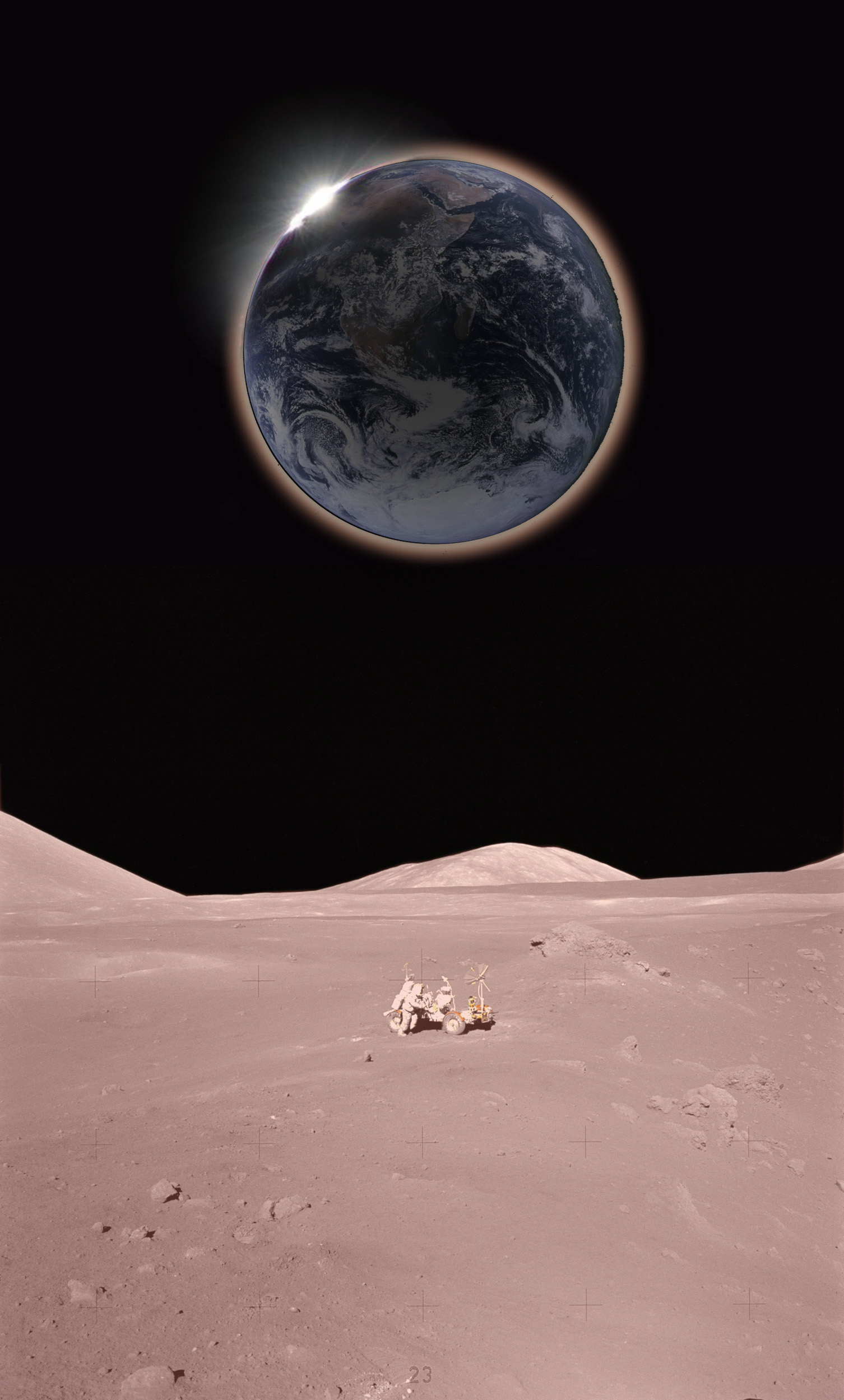
土曜日(3月3日)の月食の一部は広く観測できます。例えば、ヨーロッパ、アフリカ、西アジアの観測者は、月が地球の影を通過する壮大な光景を丸ごと見ることができますが、北アメリカ東部では月はすでに皆既月食の段階で昇っています。もちろん、月の表側に行けば、地球の円盤が太陽を完全に覆い隠す日食と同じ現象を見ることができます。月面観測者の視点から、グラフィックアーティストのハナ・ガートスタイン(イスラエル、ハイファ)は、この合成イラストを提供しています。彼女の絵のトリミング版では、アポロ17号が撮影した地球の画像が、地球の塵の多い大気を太陽光が透過する赤みがかった霞に囲まれています。地球の夜側は、暗く赤みを帯びた月の光に照らされてかすかに見えているが、地球の円盤は太陽の円盤のほぼ4倍の大きさに見えるため、太陽を取り巻くかすかなコロナはほとんど見えなくなる。左上には、太陽自体が地球の縁の後ろに消えつつある様子が写っている。
原文(English)
Parts of Saturday's (March 3) lunar eclipse will be widely visible. For example, skywatchers in Europe, Africa, and western Asia will be able to see the entire spectacle of the Moon gliding through Earth's shadow, but in eastern North America the Moon will rise already in its total eclipse phase. Of course if you traveled to the Moon's near side, you could see the same event as a solar eclipse, with the disk of our fair planet Earth completely blocking out the Sun. For a moon-based observer's view, graphic artist Hana Gartstein (Haifa, Israel) offers this composite illustration. In the cropped version of her picture, an Apollo 17 image of Earth is surrounded with a red-tinted haze as sunlight streams through the planet's dusty atmosphere. Earth's night side remains faintly visible, still illuminated by the dark, reddened Moon, but the disk of the Earth would appear almost four times the size of the Sun's disk, so the faint corona surrounding the Sun would be largely obscured. At the upper left, the Sun itself is just disappearing behind the Earth's limb.
\ この感動を宇宙仲間にシェア /
宇宙をXでシェア
© Hana Gartstein / APOD