
🚀 宇宙の記憶・カレンダー検索
🚀 象徴的な写真:
APOD第1回
🚀 創造の柱
🚀 スピリット火星着陸
🚀 ハッブル超深宇宙
🚀 地球へようこそ|ブルー・マーブル
🚀 エンケラドス
🚀 ベテルギウス
🚀 火星着陸
🚀 青い夕焼け
🚀 冥王星のハート
🚀 皆既日食
🚀 アースライズ再構築
🚀 ブラックホール
🚀 ウェッブ初画像
🚀 アポロ11着陸
APOD30周年(2025年6月16日)
木星、ベスタ、そして天の川
Jupiter, Vesta, and the Milky Way
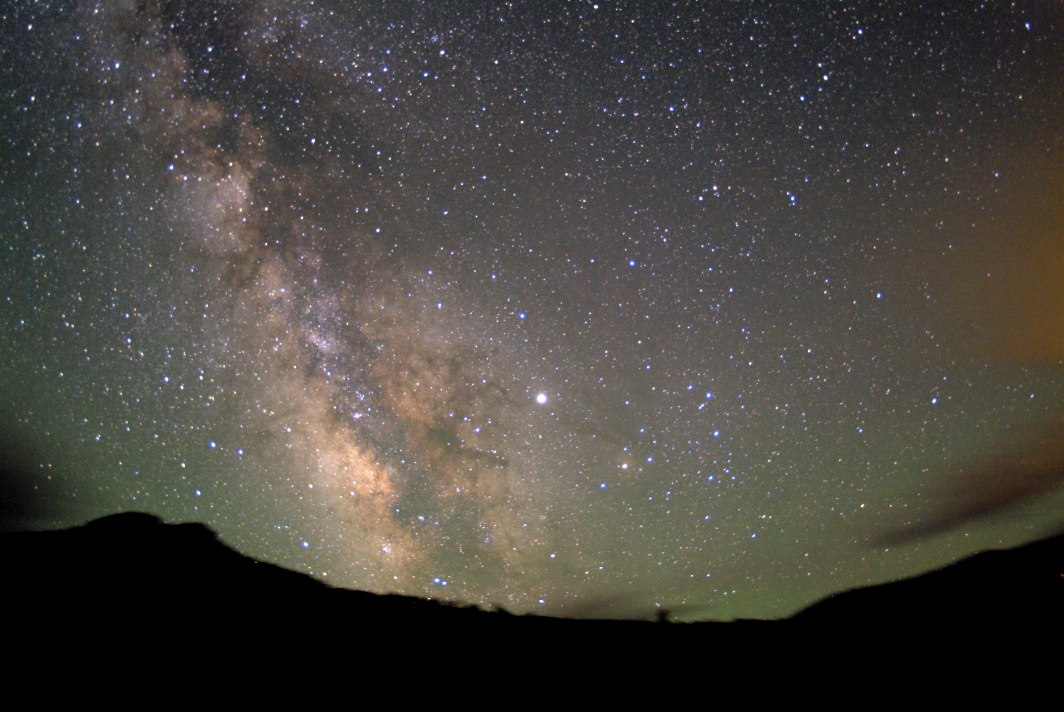
この壮大な空の風景では、アメリカ合衆国コロラド州ステージコーチから見た早朝の南の地平線上に、ガス惑星の木星と星々、そして天の川の宇宙塵の雲が浮かんでいます。木曜日に撮影されたこの写真では、木星が写真の中央付近で最も明るい天体です。見事な天の川とともに、木星は見逃すことはまずありませんが、注意深く観察すると、小惑星帯のベスタも見えます。小惑星の中でベスタは最も明るく、現在、非常に暗く澄んだ空のある場所から肉眼で見えるほどの明るさになっています。ベスタ(および木星)が現在比較的明るく見えるのは、地球の空で太陽と文字通り反対側に位置し、軌道上で地球に最も近い衝に近い位置にあるためです。ベスタにとって、この衝はここ数年で最高の観測機会となります。2007年は、この小惑星の発見200周年にもあたります。来月末から、NASAはベスタ(およびケレス)と小惑星帯を探査することを目的としたドーン探査機の打ち上げを計画しています。
原文(English)
In this gorgeous skyscape, gas giant Jupiter along with the stars and cosmic dust clouds of the Milky Way hang over the southern horizon in the early morning hours as seen from Stagecoach, Colorado, USA. Recorded on Thursday, Jupiter is the brightest object near picture center. Along with the stunning Milky Way, Jupiter is hard to miss, but a careful inspection of the view also reveals main belt asteroid Vesta. Of all the asteroids Vesta is the brightest and is now just bright enough to be visible to the naked eye from locations with very dark, clear skies. Vesta (as well as Jupiter) appears relatively bright now because it is near opposition, literally opposite the Sun in planet Earth's sky and closest to Earth in its orbit. For Vesta, this opposition offers the best viewing in many years. The year 2007 also coincides with the 200th anniversary of the asteroid's discovery. Starting late next month, NASA plans to launch the Dawn mission intended to explore Vesta (and Ceres) and the main asteroid belt.
\ この感動を宇宙仲間にシェア /
宇宙をXでシェア
© Jimmy Westlake
(Colorado
Mountain College) / APOD