
🚀 宇宙の記憶・カレンダー検索
🚀 象徴的な写真:
APOD第1回
🚀 創造の柱
🚀 スピリット火星着陸
🚀 ハッブル超深宇宙
🚀 地球へようこそ|ブルー・マーブル
🚀 エンケラドス
🚀 ベテルギウス
🚀 火星着陸
🚀 青い夕焼け
🚀 冥王星のハート
🚀 皆既日食
🚀 アースライズ再構築
🚀 ブラックホール
🚀 ウェッブ初画像
🚀 アポロ11着陸
APOD30周年(2025年6月16日)
マゼランの大雲
The Large Cloud of Magellan
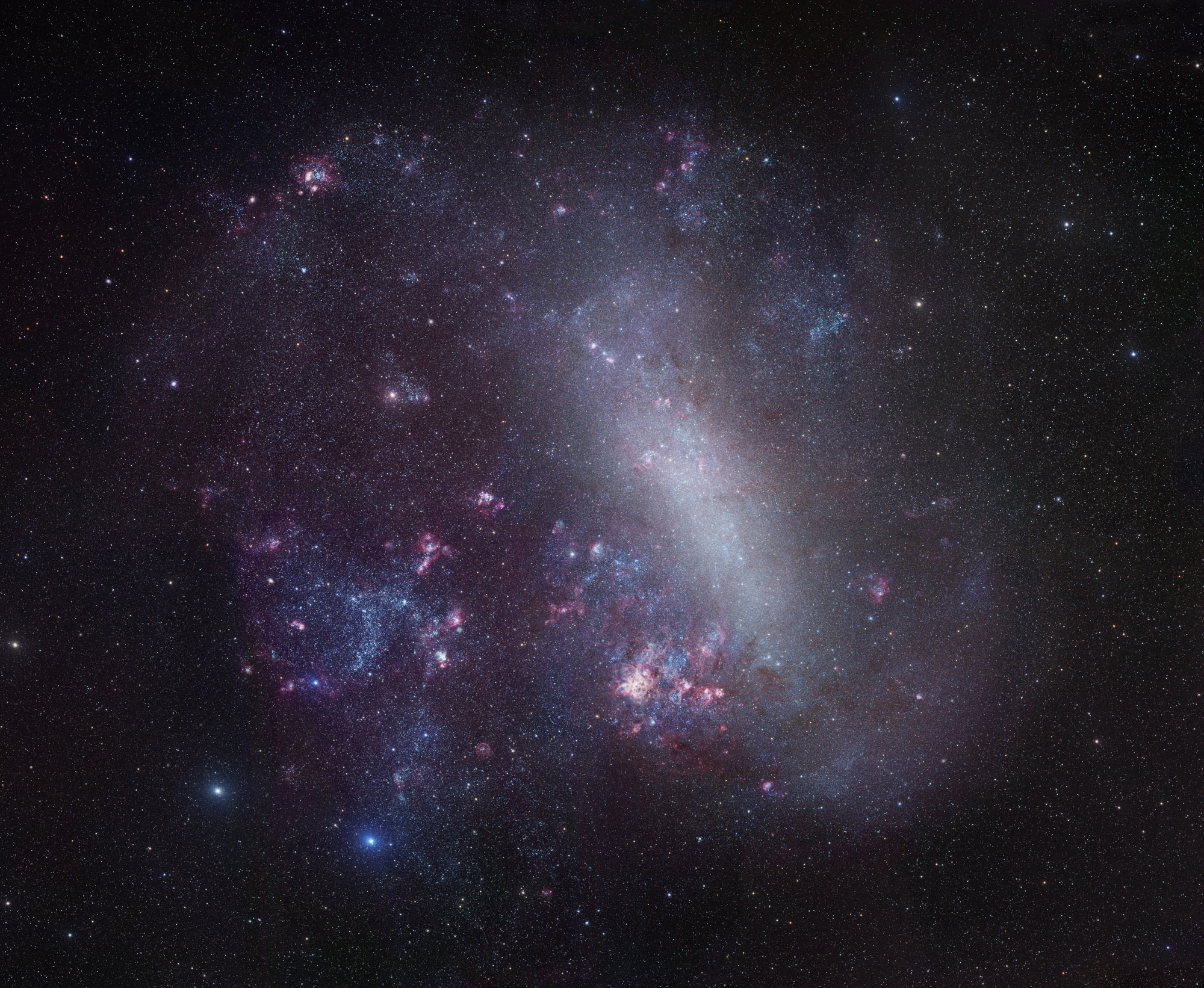
16世紀のポルトガルの航海士フェルディナンド・マゼランとその乗組員は、地球を初めて一周した際に南の空を研究する十分な時間がありました。その結果、南半球の空を見上げる人々から容易に見える2つのぼんやりとした雲のような天体は、マゼランの雲として知られており、現在では、はるかに大きな渦巻銀河である天の川銀河の衛星銀河であることが分かっています。かじき座に位置し、約16万光年離れたところにある大マゼラン雲(LMC)は、10枚のフレームを合成した非常に詳細な画像でここに示されています。約3万光年ほどに広がるこの大マゼラン雲は、天の川銀河の衛星銀河の中で最も質量が大きく、現代において最も近い超新星SN 1987Aが発生した場所です。下部付近に目立つ赤みがかった塊は、大マゼラン雲にある巨大な星形成領域、30ドラドゥス(タランチュラ星雲)です。超新星の位置を特定し、大マゼラン雲の数多くの星団や星雲を巡るには、この分かりやすい図を参照してください。
原文(English)
The 16th century Portuguese navigator Ferdinand Magellan and his crew had plenty of time to study the southern sky during the first circumnavigation of planet Earth. As a result, two fuzzy cloud-like objects easily visible to southern hemisphere skygazers are known as the Clouds of Magellan, now understood to be satellite galaxies of our much larger, spiral Milky Way galaxy. About 160,000 light-years distant in the constellation Dorado, the Large Magellanic Cloud (LMC) is seen here in a remarkably detailed, 10 frame mosaic image. Spanning about 30,000 light-years or so, it is the most massive of the Milky Way's satellite galaxies and is the site of the closest supernova in modern times, SN 1987A. The prominent reddish knot near the bottom is 30 Doradus, or the Tarantula Nebula, a giant star-forming region in the Large Magellanic Cloud. To identify the location of the supernova and navigate your way around the many star clusters and nebulae of the LMC, just consult this well-labeled view.
\ この感動を宇宙仲間にシェア /
宇宙をXでシェア
© Robert Gendler / APOD