
🚀 宇宙の記憶・カレンダー検索
🚀 象徴的な写真:
APOD第1回
🚀 創造の柱
🚀 スピリット火星着陸
🚀 ハッブル超深宇宙
🚀 地球へようこそ|ブルー・マーブル
🚀 エンケラドス
🚀 ベテルギウス
🚀 火星着陸
🚀 青い夕焼け
🚀 冥王星のハート
🚀 皆既日食
🚀 アースライズ再構築
🚀 ブラックホール
🚀 ウェッブ初画像
🚀 アポロ11着陸
APOD30周年(2025年6月16日)
ギブス・エウロパ
Gibbous Europa
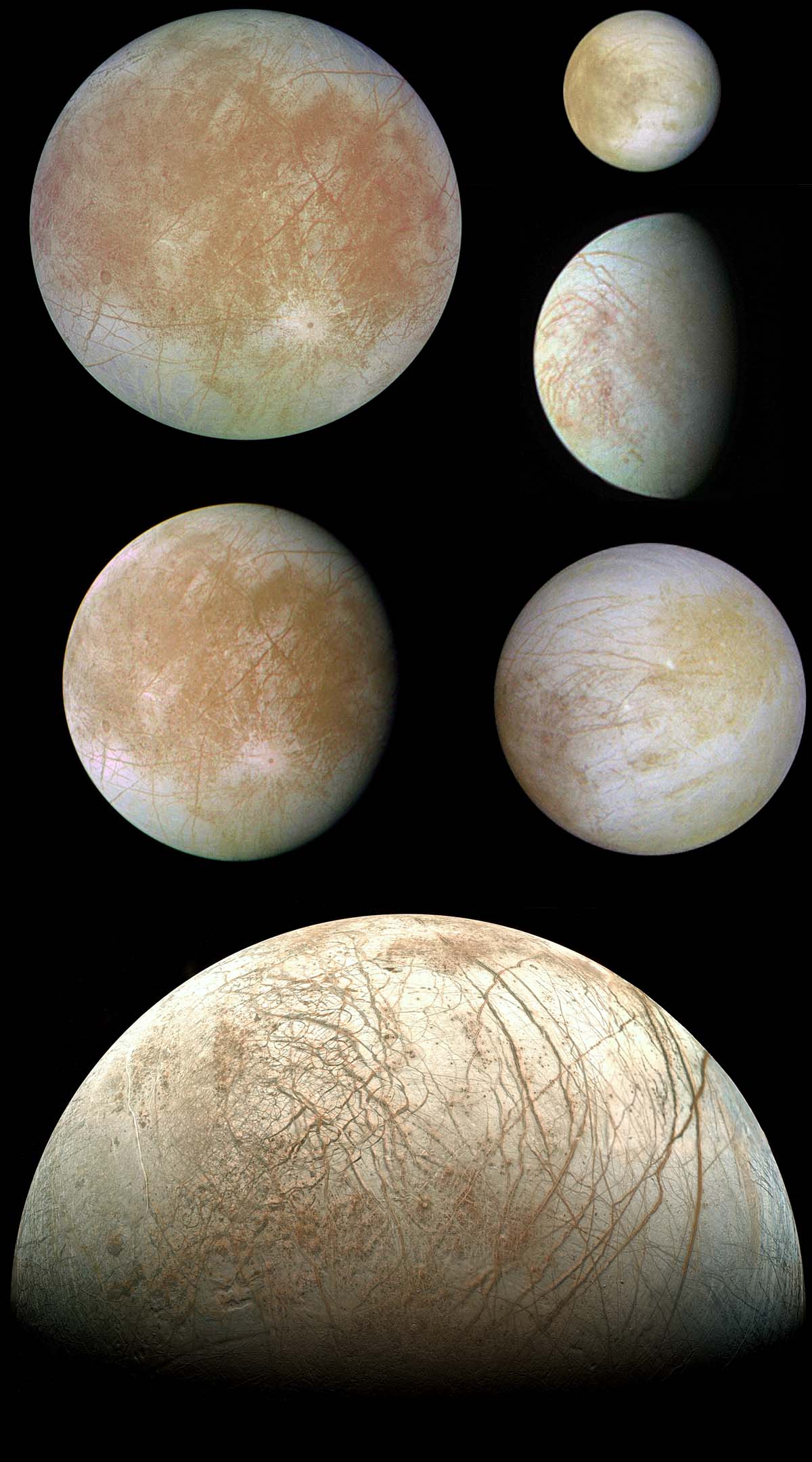
この月の満ち欠けは見覚えがあるかもしれませんが、月そのものはそうではないかもしれません。実際、この凸月は木星の衛星エウロパの一部を示しています。ロボット探査機ガリレオは、1995年から2003年にかけて木星を周回するミッション中にこの画像モザイクを撮影しました。明るい氷の平原、地平線まで続く亀裂、そして氷と土の両方を含むと思われる暗い斑点が見えます。隆起した地形は明暗境界線付近で特に顕著で、影を落としています。エウロパは地球の月とほぼ同じ大きさですが、はるかに滑らかで、高地や大きな衝突クレーターはほとんどありません。ガリレオ探査機からの証拠と画像は、氷の表面の下に液体の海が存在する可能性を示唆しています。これらの海に生命が存在するという推測を検証するために、ESAとNASAは共同で、エウロパをより詳細に調査することを目的とした探査機「エウロパ・ジュピター・システム・ミッション」の予備開発を開始しました。表面の氷が十分に薄ければ、将来のミッションでは水中ロボットを海中に投入し、海底に潜って生命体を探す可能性がある。
原文(English)
Although the phase of this moon might appear familiar, the moon itself might not. In fact, this gibbous phase shows part of Jupiter's moon Europa. The robot spacecraft Galileo captured this image mosaic during its mission orbiting Jupiter from 1995 - 2003. Visible are plains of bright ice, cracks that run to the horizon, and dark patches that likely contain both ice and dirt. Raised terrain is particularly apparent near the terminator, where it casts shadows. Europa is nearly the same size as Earth's Moon, but much smoother, showing few highlands or large impact craters. Evidence and images from the Galileo spacecraft, indicated that liquid oceans might exist below the icy surface. To test speculation that these seas hold life, ESA and NASA have together started preliminary development of the Europa Jupiter System Mission , a spacecraft proposed to better study Europa. If the surface ice is thin enough, a future mission might drop hydrobots to burrow into the oceans and search for life.
\ この感動を宇宙仲間にシェア /
宇宙をXでシェア
© NASA / APOD